Chronic headaches are not all the same condition, and treating them as if they are is one of the most common reasons people spend years managing headache pain without ever resolving it. Tension headaches and cervicogenic headaches feel similar – both produce head pain, both can become chronic, and both are often lumped together as “stress headaches” – but they have different origins and respond to different treatments. Getting the distinction right is the starting point for actually fixing the problem rather than just dulling it.
What Are Tension Headaches?
Tension headaches are the most common headache type. They’re characterized by a dull, pressure-like pain that’s often described as a band or vice squeezing around the head. The pain is typically bilateral – felt on both sides – and doesn’t usually worsen with physical activity. Nausea and light sensitivity can occur but are less pronounced than in migraines.
The exact mechanism of tension headaches is still debated in the research literature, but they’re generally understood to involve central sensitization – the nervous system becomes hypersensitized to pain signals – combined with pericranial muscle tenderness (tightness in the muscles of the scalp, temples, and upper neck). Stress, poor sleep, dehydration, and prolonged muscle tension are common triggers.
Importantly, tension headaches can have a cervical component – the muscle tension that contributes to them often originates in the upper cervical and suboccipital muscles. This is where the overlap with cervicogenic headaches becomes clinically significant.
What Are Cervicogenic Headaches?
Cervicogenic headaches are headaches caused by a structural problem in the cervical spine. The term “cervicogenic” literally means “originating from the cervix” – the neck. The pain is referred – it originates in the cervical joints, discs, nerves, or muscles and is felt in the head.
The neurological pathway that makes this possible is well established. The upper three cervical nerve roots (C1, C2, C3) share connections with the trigeminal nerve – the primary sensory nerve of the face and head. When the upper cervical spine is dysfunctional, irritated signals can travel through this shared pathway and be perceived as head pain. The brain, in effect, gets confused about where the pain is coming from.
Cervicogenic headaches are often misdiagnosed as tension headaches or migraines because the head pain is the presenting complaint and the cervical origin isn’t immediately obvious. This is particularly true when patients seek care from providers who don’t routinely evaluate the cervical spine as part of headache assessment.
How to Tell Them Apart: Key Distinguishing Features
While a clinical evaluation is the definitive way to distinguish between these headache types, certain symptom patterns provide useful clues.
Location and Pattern of Pain
Tension headaches typically produce bilateral, diffuse pain – a band around the head or pressure at the temples. Cervicogenic headaches more often produce unilateral pain – one side of the head – that starts at the base of the skull or the upper neck and radiates forward into the temple, behind the eye, or across the forehead. The one-sided onset from the neck is a strong indicator of cervicogenic origin.
Neck Movement and Posture as Triggers
This is one of the most diagnostically useful features. If your headaches are reliably triggered or worsened by specific neck positions – sustained looking downward, turning the head to one side, or sustained postures like reading or desk work – that strongly suggests a cervicogenic component. Tension headaches are more often triggered by stress, fatigue, or dehydration rather than specific neck mechanics.
Tenderness at the Base of the Skull
Palpating the suboccipital region – the muscles and joint structures at the base of the skull – often reproduces the headache pain in cervicogenic presentations. When pressing on these structures provokes or replicates the familiar head pain, it confirms the cervical spine is involved. This is something Dr. Freeman assesses as part of the physical examination for every headache patient at Vancouver Spinal Care.
Response to Neck Treatment
Perhaps the most practical distinguishing test: do interventions targeting the cervical spine reduce the headaches? If cervical manipulation, mobilization, or soft tissue work in the upper neck reliably reduces headache frequency and intensity, that’s strong evidence for a cervicogenic driver – regardless of what the headaches have been labeled previously.
Why This Distinction Matters for Treatment
Tension headaches are often managed with a combination of stress reduction, sleep improvement, hydration, muscle relaxation techniques, and medication. When there’s a cervical component, addressing the upper cervical spine through chiropractic care can significantly reduce the muscle tension and joint dysfunction that feeds into the tension headache cycle.
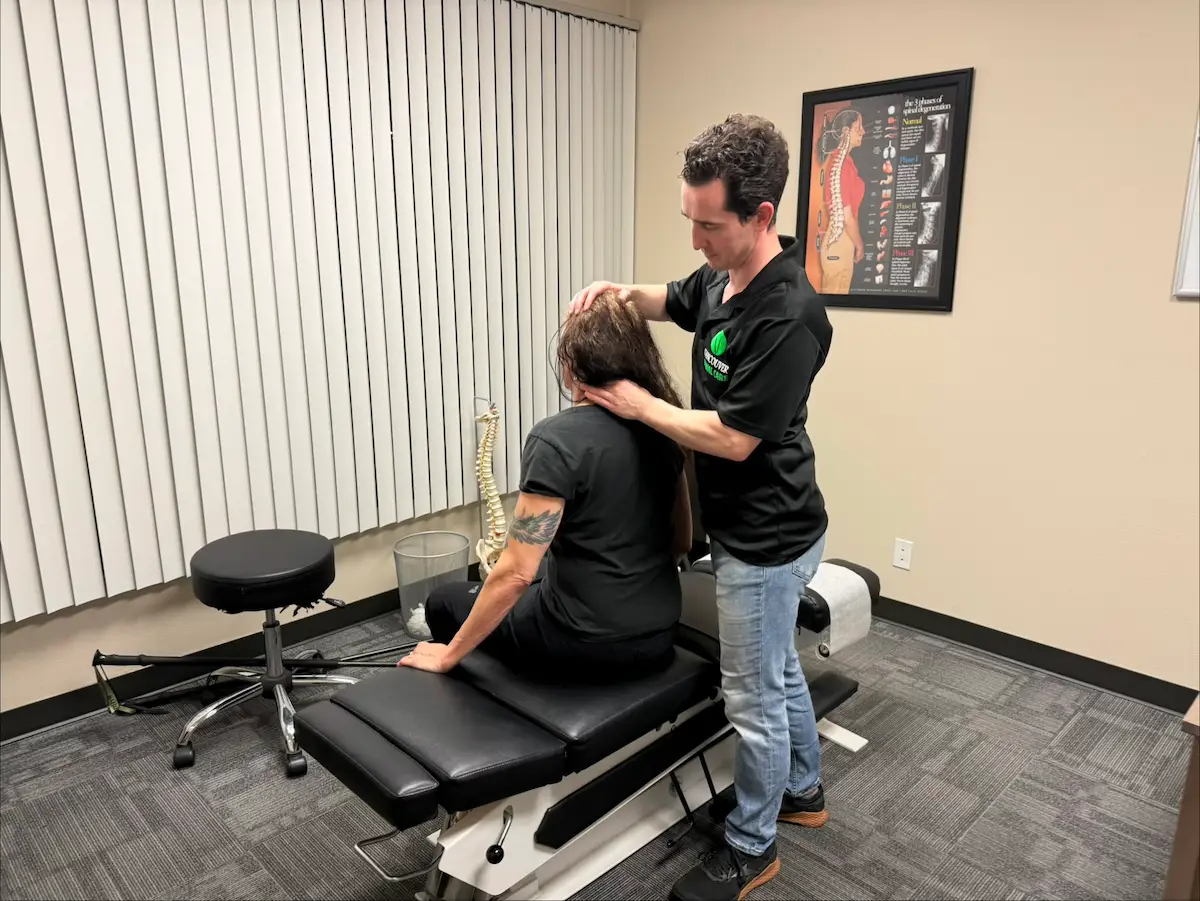
Cervicogenic headaches, by contrast, often don’t respond well to headache medications because the source is mechanical rather than neurochemical. What does work – and often dramatically – is addressing the cervical spine directly. Upper cervical chiropractic adjustments, soft tissue work in the suboccipital region, and correction of forward head posture are the interventions most likely to produce lasting relief for cervicogenic presentations.
Many patients who come to Vancouver Spinal Care with chronic headaches have been managing them with medication for years without understanding that their cervical spine was the primary driver. When the neck is properly addressed, the headache frequency often drops significantly – sometimes to near zero for pure cervicogenic presentations – in a way that medication alone never achieved.
How We Evaluate Headaches at Vancouver Spinal Care
Every headache patient at our clinic receives a thorough evaluation that includes a detailed symptom history – pattern, location, triggers, duration, associated symptoms – alongside a clinical examination that specifically assesses the cervical spine. This includes range of motion testing, palpation of the suboccipital and upper cervical structures, neurological testing, and the Nervous System Scan to map tension and inflammation patterns in the cervical region.
Diagnostic X-rays of the cervical spine are often recommended to assess alignment, curve status, and disc spaces. For patients with long-standing or complex headache presentations, this structural picture is essential context for understanding what’s driving the symptoms.
From there, Dr. Freeman builds a treatment plan specific to the findings. For patients with a clear cervicogenic component, chiropractic care targeting the upper cervical spine is typically the core of the approach. For patients with mixed tension and cervicogenic features, the plan addresses both the structural component and the broader contributing factors like posture, screen habits, and sleep.
Frequently Asked Questions
Can I have both tension and cervicogenic headaches at the same time?
Yes, and this is actually common. Many chronic headache sufferers have both a cervical structural component and a central sensitization component. Addressing the cervical spine often reduces the overall headache burden significantly even when the picture is mixed – because removing the structural driver reduces the total input that’s keeping the nervous system sensitized.
How many chiropractic visits does it take to see improvement in cervicogenic headaches?
Many patients with cervicogenic headaches notice meaningful improvement within four to six visits – sometimes sooner. The speed of response depends on how long the cervical dysfunction has been present and how established the headache pattern is. Dr. Freeman will give you a realistic picture of expected progress at the initial evaluation.
You Don’t Have to Just Live With Chronic Headaches
If you’ve been dealing with recurring headaches in Vancouver, WA and haven’t gotten a clear answer about what’s driving them, a cervical spine evaluation is a logical and often overlooked next step. Vancouver Spinal Care has been helping Clark County headache patients find lasting relief for over 15 years – often in patients who had given up on finding a solution. Schedule an appointment online or call us at 360-694-0300.