Carpal tunnel syndrome doesn’t always require surgery – and for many patients in Vancouver, WA, conservative chiropractic care addressing both the wrist and the cervical spine produces meaningful relief without going under the knife. The key is understanding what’s actually driving the symptoms, because carpal tunnel is one of those conditions where the diagnosis is often correct but the full picture of what’s contributing is frequently missed.
What Carpal Tunnel Syndrome Actually Is
The carpal tunnel is a narrow passageway on the palm side of the wrist, formed by the wrist bones and the transverse carpal ligament. The median nerve – which supplies sensation to the thumb, index, middle, and part of the ring finger – runs through this tunnel alongside several flexor tendons.
Carpal tunnel syndrome occurs when the median nerve becomes compressed within this tunnel, typically due to inflammation of the surrounding tendons, thickening of the transverse carpal ligament, or swelling from repetitive stress. The result is the classic symptom pattern most patients recognize: numbness and tingling in the thumb and first two or three fingers, hand weakness particularly with grip and pinching, and often nighttime symptoms that wake patients from sleep as fluid shifts increase pressure in the tunnel while lying down.
Why the Cervical Spine Is Part of the Picture
This is where many carpal tunnel treatments fall short – by treating the wrist alone without considering the cervical spine. The median nerve originates from nerve roots at the C6, C7, and C8 levels of the cervical spine. When these nerve roots are irritated or compressed in the neck – from a disc issue, spinal misalignment, or degenerative changes – they become sensitized along their entire length, including at the wrist.
This sensitization makes the nerve significantly more vulnerable to compression at the carpal tunnel. A nerve that’s already under some degree of mechanical stress in the cervical spine has less tolerance for additional compression downstream. This is sometimes called the “double crush” phenomenon – compression at two points along the same nerve, each of which might be tolerable on its own but together produce significant symptoms.
The practical implication is important: treating the wrist without evaluating and addressing the cervical contribution often produces incomplete or temporary results. Patients who have carpal tunnel release surgery and continue to have symptoms sometimes have unresolved cervical nerve root involvement as the persistent source.
Evaluating neck pain and cervical nerve function is a standard part of how Dr. Freeman approaches upper extremity complaints at Vancouver Spinal Care.
What Causes Carpal Tunnel – Who’s at Risk
Repetitive hand and wrist use is the most common contributing factor – particularly jobs that involve sustained wrist flexion or extension, high grip force, or vibrating tools. Data entry workers, cashiers, assembly line workers, mechanics, and tradespeople are among the occupational groups with the highest incidence. This makes carpal tunnel syndrome a workers’ compensation-eligible condition in many cases when it’s occupationally caused.
Other contributing factors include pregnancy (fluid retention increases pressure in the carpal tunnel, which is why carpal tunnel symptoms are very common in the third trimester and typically resolve after delivery), hypothyroidism, diabetes, rheumatoid arthritis, and wrist injury history. Women are diagnosed with carpal tunnel at higher rates than men, partly due to anatomically narrower carpal tunnels on average.
How Chiropractic Care Addresses Carpal Tunnel at Vancouver Spinal Care
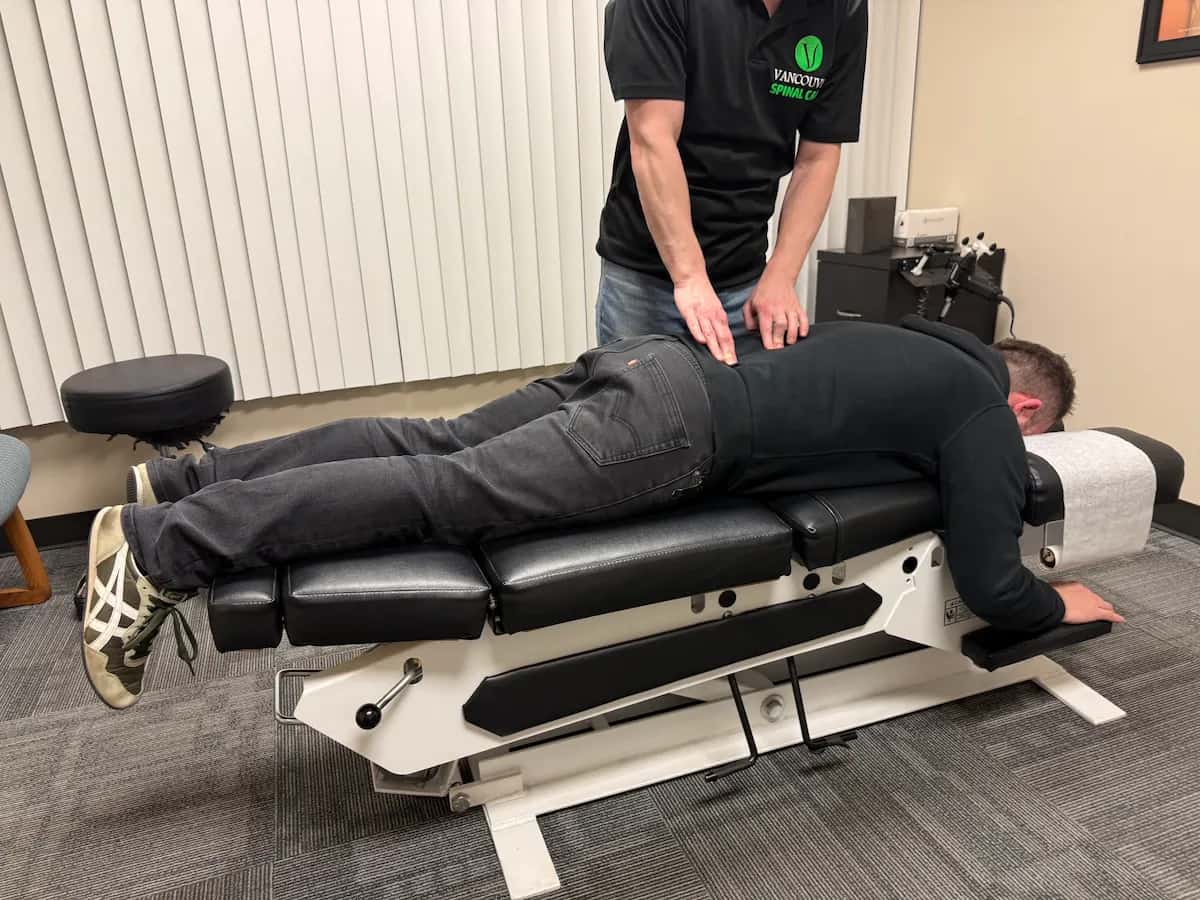
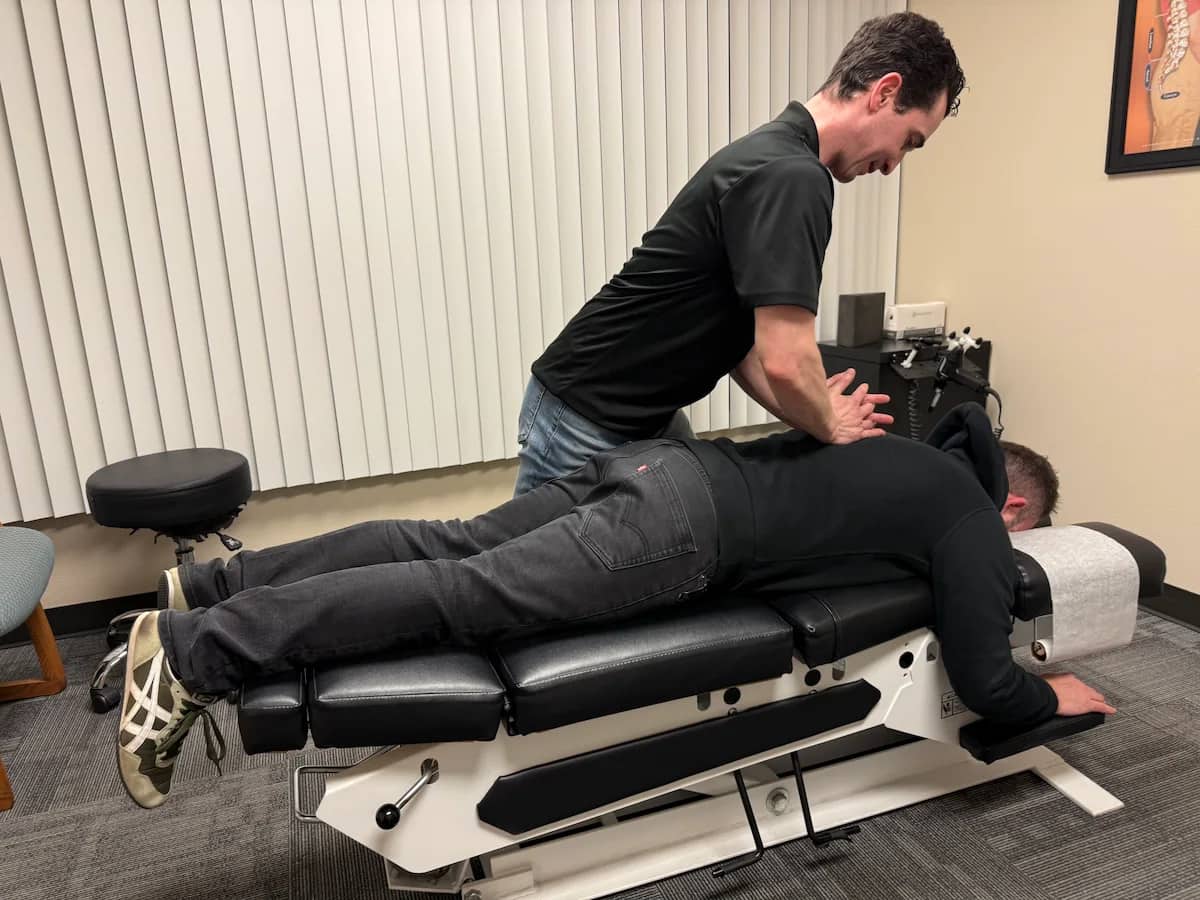
Our approach to carpal tunnel and wrist pain starts with a comprehensive evaluation – not just of the wrist, but of the cervical spine and the entire upper extremity from the neck through the fingers. This includes neurological testing to determine which nerve roots are involved, orthopedic testing for median nerve provocation at the wrist, range of motion assessment, and grip strength measurement.
Diagnostic X-rays assess the cervical spine for misalignment and disc space changes that might be contributing to nerve root sensitization. The Nervous System Scan identifies areas of elevated tension and neurological stress along the spine.
Extremity Adjusting for the Wrist and Hand
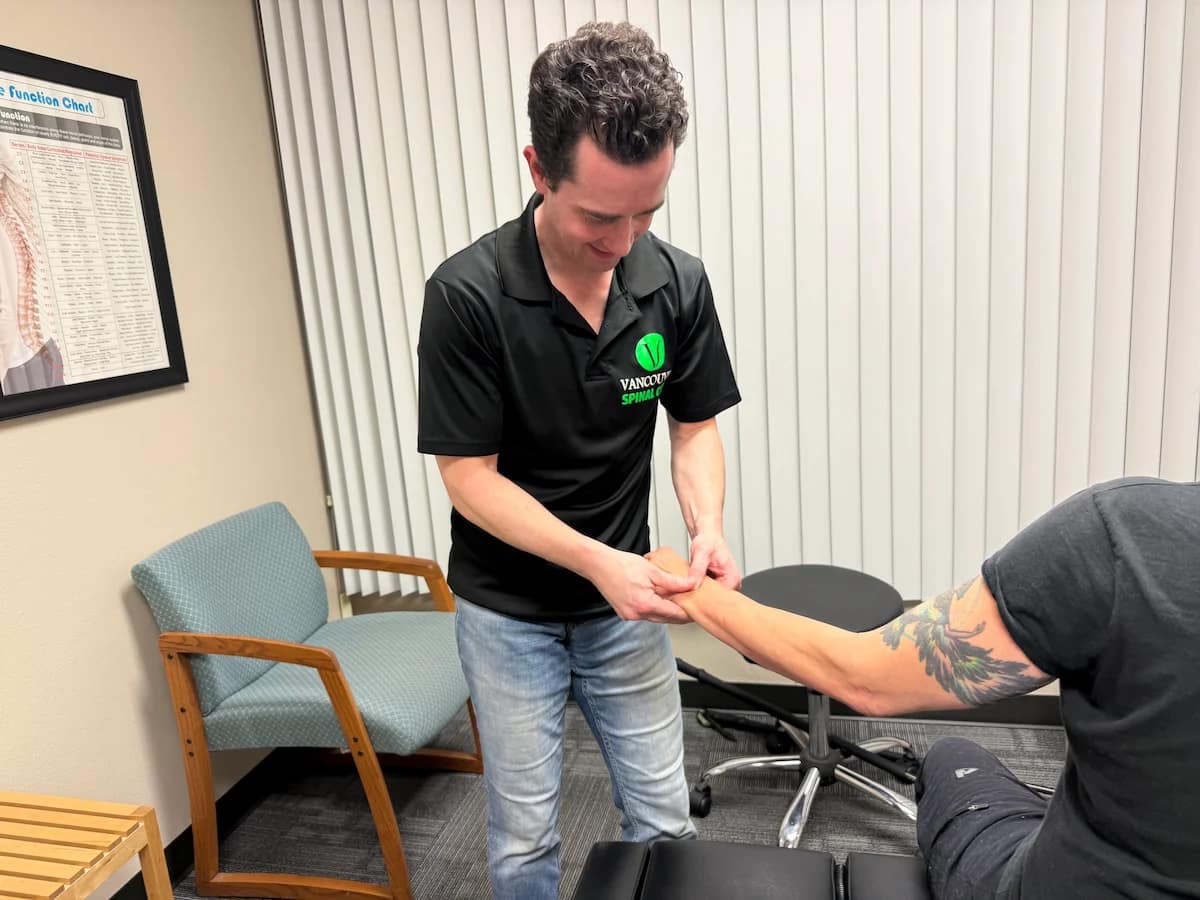
Extremity adjusting is one of the techniques that sets Vancouver Spinal Care apart from practices that only treat the spine. The wrist, carpal bones, and joints of the hand can develop the same kind of restricted motion and misalignment as spinal joints – and adjusting these structures directly improves joint mechanics and reduces the mechanical stress on the median nerve within the tunnel. Chiropractic care that includes wrist and hand adjusting is more directly targeted to carpal tunnel than spinal care alone.
Cervical Spine Treatment
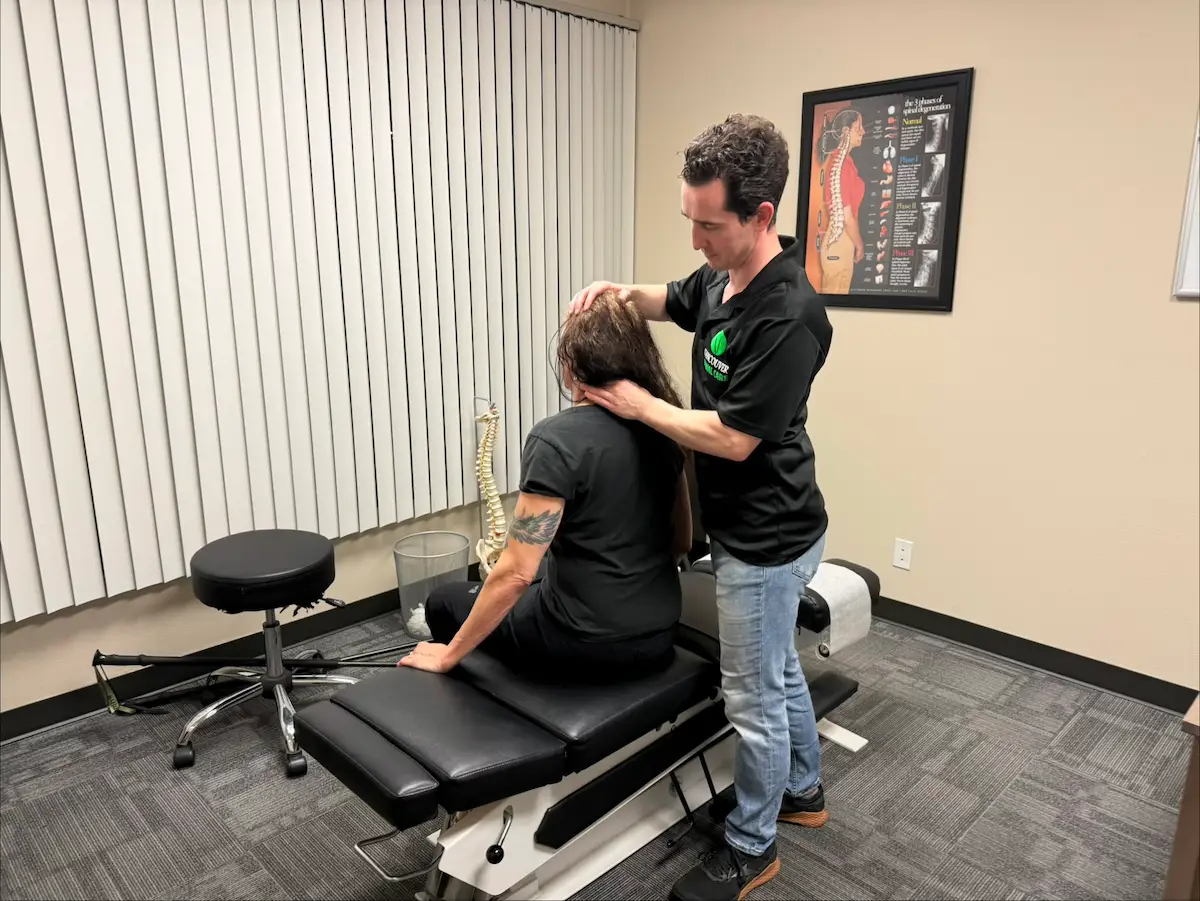
When the evaluation reveals cervical nerve root involvement – which it does in a significant proportion of upper extremity cases – treatment addresses the cervical spine alongside the wrist. Restoring cervical alignment and reducing nerve root irritation takes pressure off the median nerve from above, which reduces the double-crush dynamic and allows the wrist-level treatment to be more effective.
Soft Tissue Work and Rehabilitation
The flexor tendons and surrounding soft tissue that share the carpal tunnel with the median nerve contribute to compression when they’re inflamed or restricted. Soft tissue techniques that address this inflammation, combined with specific wrist and forearm stretching and strengthening protocols, support the joint work and help prevent recurrence.
When Surgery Is and Isn’t the Right Call
Carpal tunnel release surgery – which involves cutting the transverse carpal ligament to decompress the tunnel – is appropriate in some cases. Severe carpal tunnel syndrome with significant muscle wasting in the hand (thenar atrophy), constant rather than intermittent numbness, or complete loss of sensation are presentations where surgical evaluation is warranted. If nerve conduction studies show severe median nerve compression with significant conduction delay, that also tips the balance toward surgical consideration.
For mild to moderate carpal tunnel – which is the majority of presentations – conservative care is a reasonable first-line approach that most hand surgeons would support trying before scheduling an operation. Many patients achieve lasting relief without surgery when the full picture, including the cervical contribution, is properly addressed.
Dr. Freeman is direct about this distinction. If your presentation suggests you need a surgical referral, he’ll tell you. If conservative care is a reasonable option for your case, he’ll tell you that too – along with a realistic picture of what to expect and how long it typically takes.
Frequently Asked Questions
Can carpal tunnel come back after surgery?
Yes. Recurrence after carpal tunnel release is documented, particularly when the contributing factors – repetitive occupational use, cervical nerve involvement, or underlying metabolic conditions – haven’t been addressed. This is one reason some post-surgical patients continue to have symptoms or develop them again within a few years.
Is carpal tunnel covered by workers’ comp or L&I?
When carpal tunnel syndrome is caused or significantly aggravated by occupational activity, it’s typically eligible for workers’ compensation coverage in Washington State, including L&I. Our team handles the documentation and billing coordination for these cases directly.
Your Wrist Pain Deserves a Complete Evaluation
If you’re dealing with hand numbness, wrist pain, or grip weakness in Vancouver, WA – whether it’s been diagnosed as carpal tunnel or you’re still trying to figure out what’s causing it – a thorough evaluation that includes the cervical spine is the right starting point. Vancouver Spinal Care has been helping Clark County patients find conservative solutions to upper extremity problems for over 15 years. Schedule your evaluation online or call us at 360-694-0300.