Tech neck is a real structural problem – not just a catchy name for soreness after a long day on your phone. When the head consistently sits forward of the shoulders, the cervical spine absorbs forces it wasn’t designed to handle, and over time those forces produce changes in the spine’s structure that don’t reverse on their own. At Vancouver Spinal Care, we see tech neck presentations constantly among Vancouver, WA patients of all ages – and the damage it causes is both more significant and more preventable than most people realize.
What Tech Neck Actually Is
Tech neck describes the postural pattern – and its spinal consequences – that comes from sustained forward head position during screen use. When you tilt your head forward to look at a phone, tablet, or laptop, your head shifts in front of its optimal position directly above the shoulders.
The physics of this are straightforward and striking. A neutral head position places approximately 10 to 12 pounds of load on the cervical spine. For every inch the head moves forward, the effective load increases dramatically – at two inches forward, the spine is managing roughly 20 to 30 pounds. At four or five inches of forward displacement, which is common during phone use, that load can reach 50 to 60 pounds or more. The muscles, ligaments, and joints of the cervical spine absorb that load hour after hour, day after day.
The term “text neck” is sometimes used interchangeably, though tech neck is broader – it includes computers, tablets, gaming, and any prolonged screen use, not just texting. The mechanism is the same regardless of the device.
What Tech Neck Does to Your Cervical Spine Over Time
The short-term effects are the ones most people notice – muscle fatigue, neck tension, and that aching discomfort between the shoulder blades after a long screen session. These are manageable and often dismissed as normal. The longer-term effects are where the real problem lies.
Cervical Curve Loss and Reversal
The cervical spine is supposed to have a natural inward curve – a lordosis – that distributes load efficiently through the vertebrae and discs. Forward head posture gradually reduces this curve. In advanced cases, the cervical curve actually reverses – becoming a kyphosis, curving forward instead of inward. A reversed cervical curve is a structural change that significantly increases stress on the anterior disc spaces and can accelerate degenerative changes at the C5-C6 and C6-C7 levels where most cervical disc problems occur.
This is one reason tech neck is more than a posture issue. It’s a mechanical problem with structural consequences that accumulate silently over years.
Disc Compression and Accelerated Degeneration
Sustained forward head posture loads the front of the cervical discs asymmetrically. Over time, this uneven compression contributes to disc degeneration, reduced disc height, and increased risk of disc bulging or herniation at the most loaded levels. Patients who present with cervical disc issues in their 30s and 40s increasingly have a history of heavy screen use that began in adolescence – a timeline that reflects years of accumulated mechanical stress.
Muscle Imbalance and Chronic Tension
Forward head posture creates a predictable pattern of muscle imbalance. The muscles at the back of the neck and upper back become chronically lengthened and overstrained from working against the forward pull of the head. The muscles at the front of the neck and chest become shortened and tight. This imbalance perpetuates the forward posture and makes it harder to correct without addressing the spinal mechanics directly.
Who Gets Tech Neck – It’s Not Just Adults
This is worth stating clearly: tech neck is increasingly a pediatric and adolescent problem. Children and teenagers are often the heaviest smartphone and tablet users, and their spines are still developing during the years of heaviest use. The cervical curve develops during childhood and adolescence – when forward head posture disrupts that development during the growth years, the structural consequences can be more significant and harder to reverse than the same pattern developed in adulthood.
We see tech neck presentations in Vancouver patients as young as 11 and 12. Parents who notice their child’s head consistently sitting forward, or who see their child rubbing the back of their neck after school, should take that seriously.
How We Assess and Treat Tech Neck at Vancouver Spinal Care
The evaluation for a tech neck presentation at our Orchards clinic includes postural assessment to quantify the degree of forward head displacement, cervical range of motion testing, diagnostic X-rays to assess the status of the cervical curve and disc spaces, and the Nervous System Scan to map muscle tension and inflammation patterns. Together these give a clear picture of how far along the structural changes are and what the treatment approach should be.
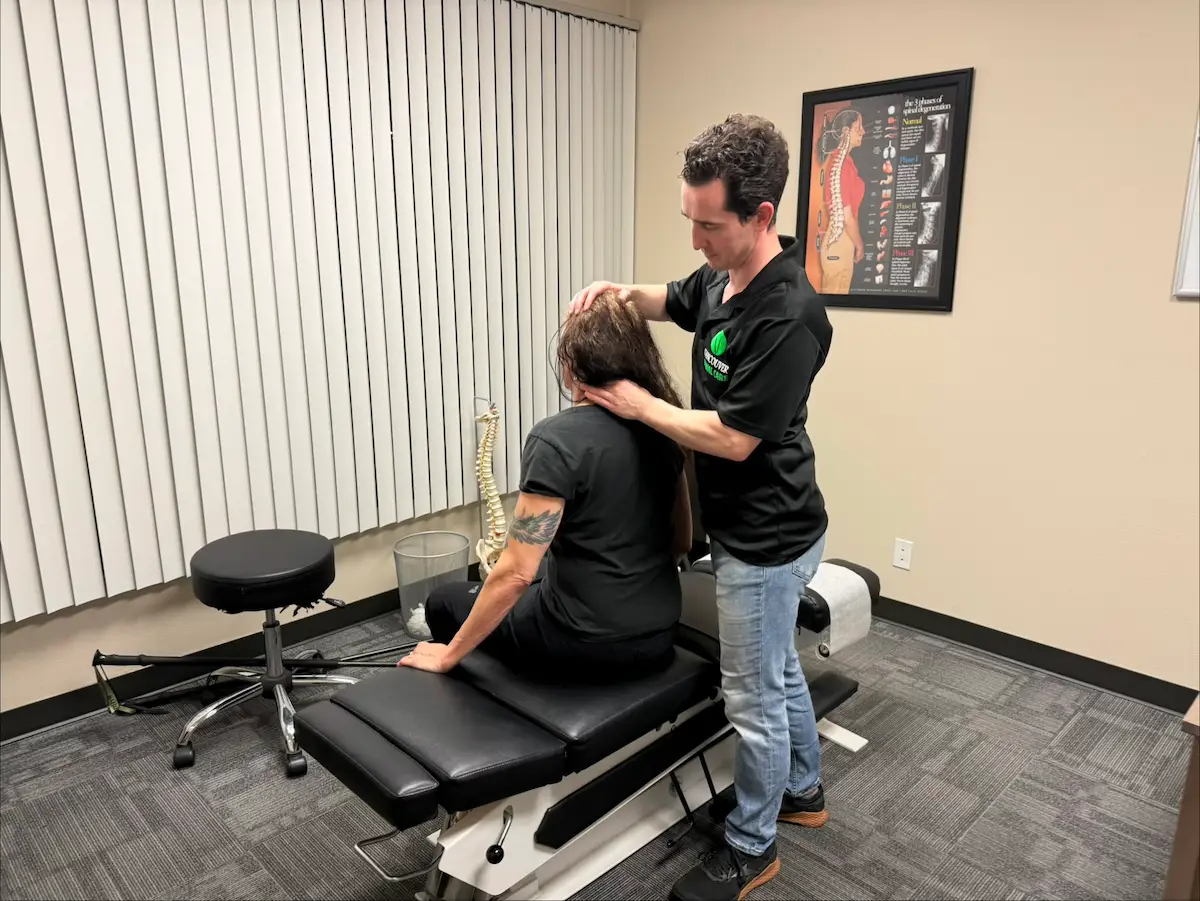
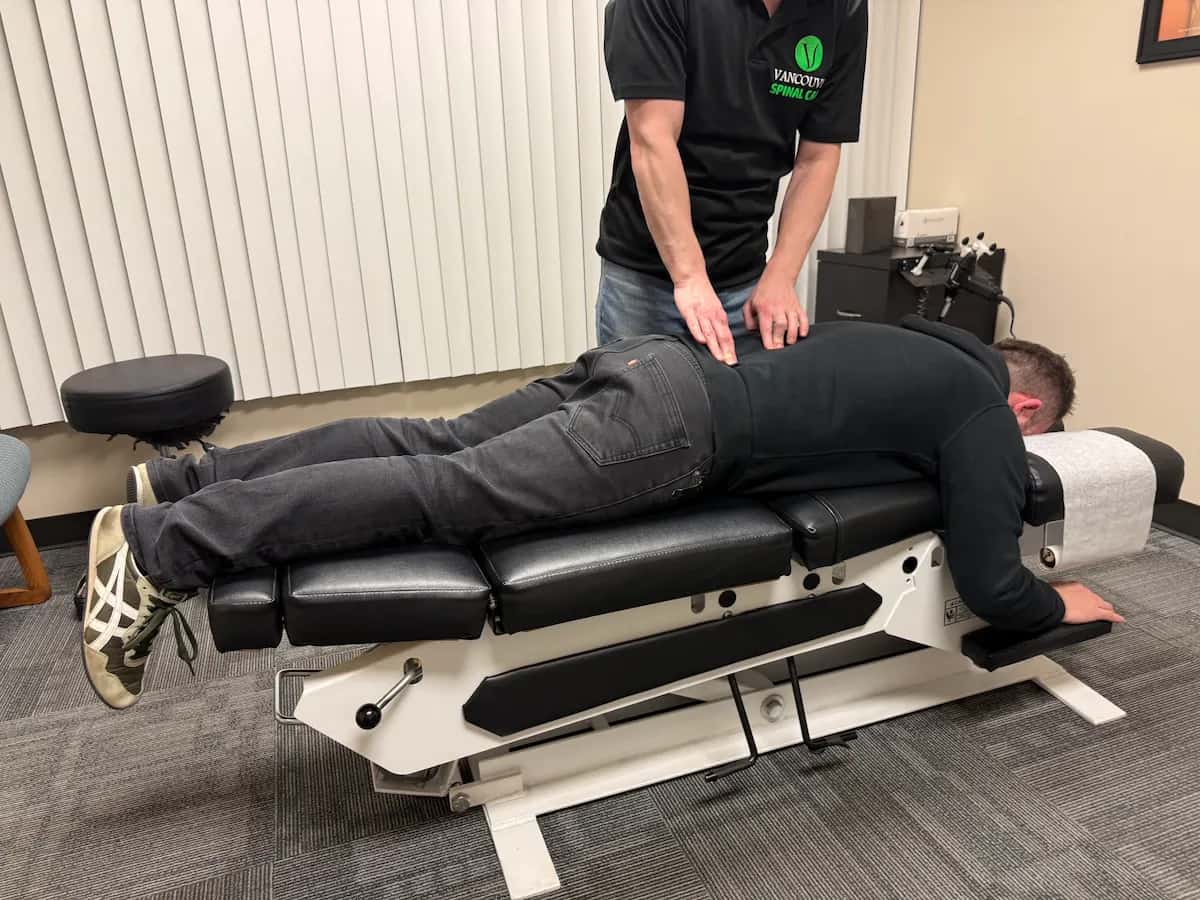
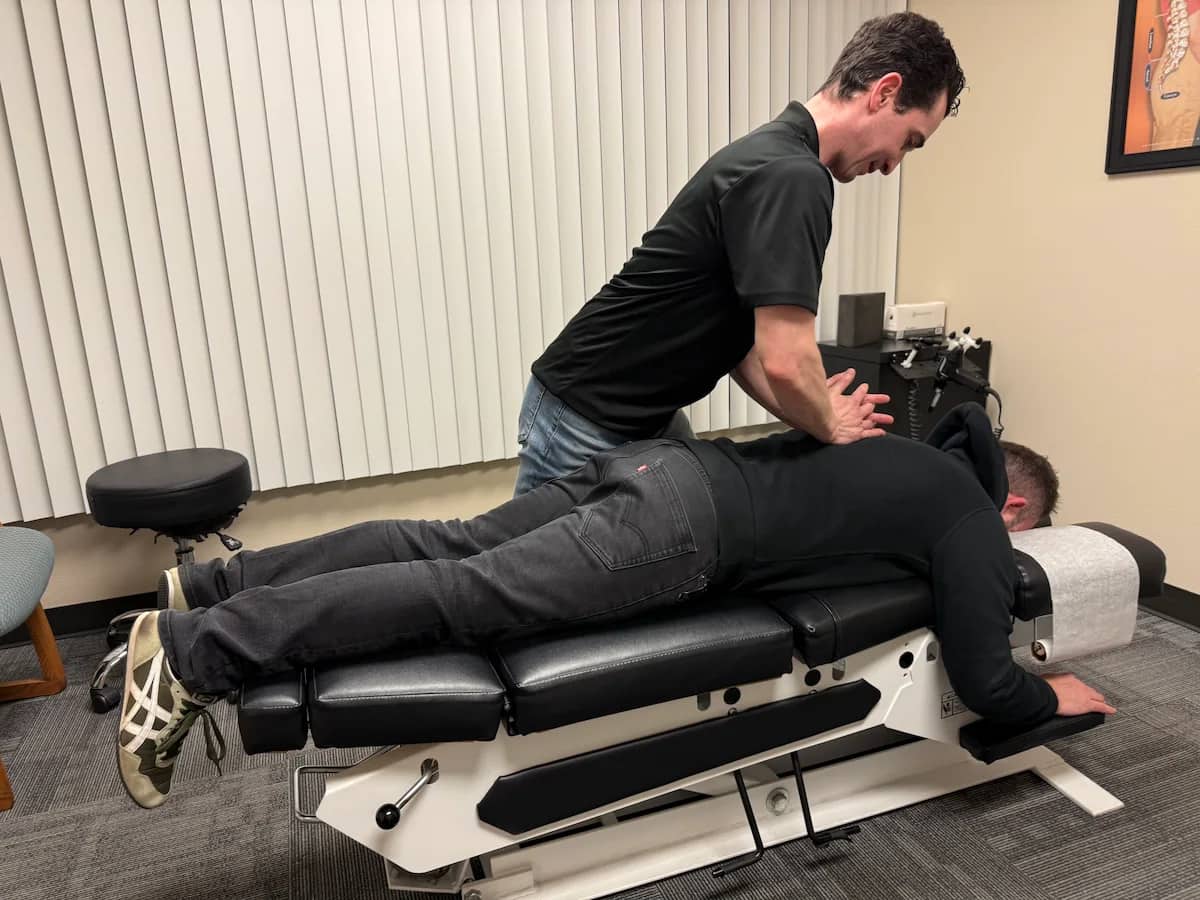
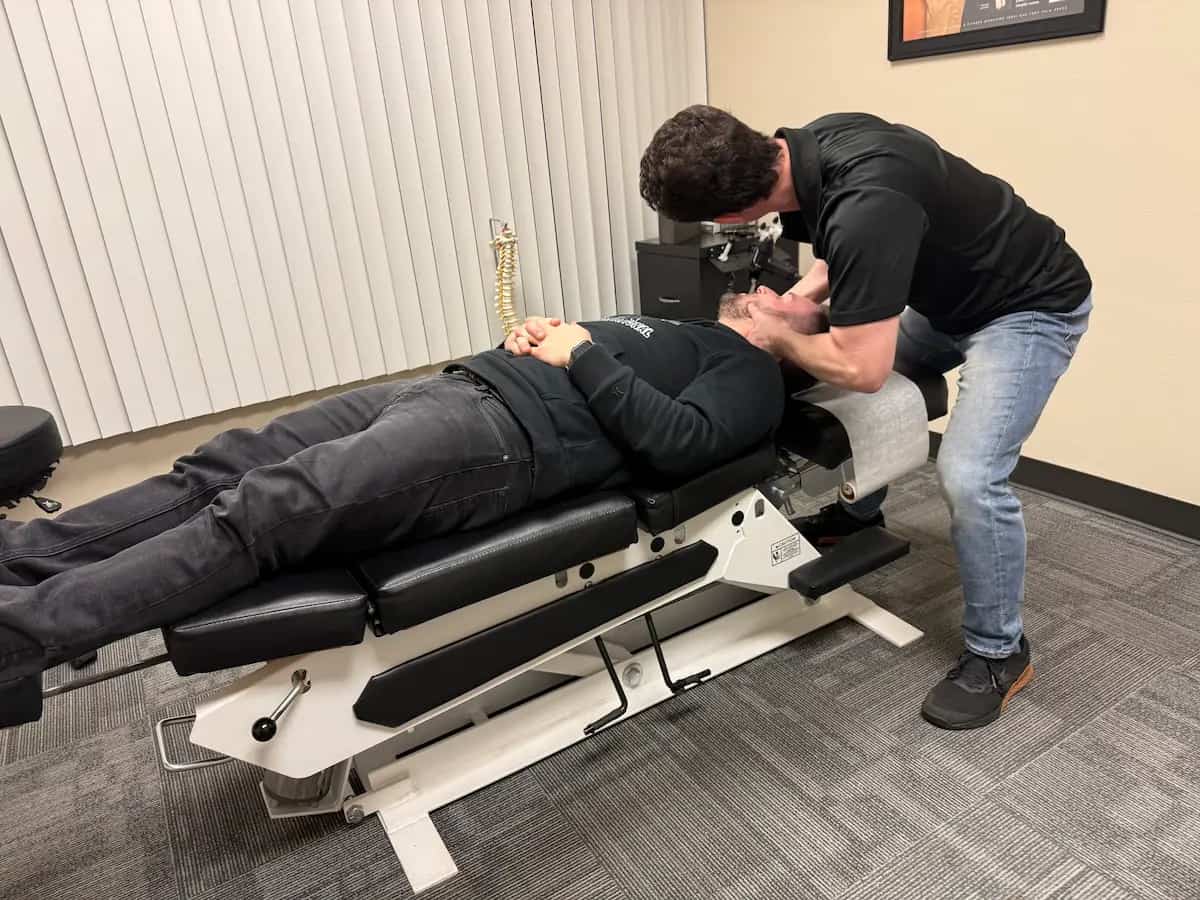
For most tech neck patients, the core of treatment is chiropractic care focused on the cervical and upper thoracic spine – restoring proper joint mechanics, reducing nerve irritation, and beginning to work toward curve restoration. Upper cervical adjusting is often central to this work, given how much of the cervical curve status depends on the alignment of C1 and C2.
The rehabilitation component is equally important. The muscle imbalances that maintain forward head posture need to be directly addressed – strengthening the deep cervical flexors that support proper head position and releasing the tight anterior muscles that pull the head forward. Without this functional component, spinal gains from adjustments tend to revert when the patient goes back to the same posture patterns.
What You Can Change Right Now
While chiropractic care addresses the structural component, daily habits determine how fast the problem progresses or improves. A few changes that make a meaningful difference:
Raise your phone to eye level rather than looking down at it. This single habit change eliminates the primary mechanical stressor for most people. For computer work, position the monitor so the top third of the screen is at eye level – not the center, which causes most people to look slightly downward. Take frequent breaks during prolonged screen sessions – even 60 seconds of moving and looking into the distance every 30 to 45 minutes interrupts the sustained load cycle. And be aware of where your head sits during the break – many people look down at their phone during a computer break, which provides no relief at all.
Frequently Asked Questions
Can tech neck be reversed?
Mild to moderate tech neck – particularly in younger patients – responds well to chiropractic care combined with postural habit changes. The cervical curve can often be partially or significantly restored when the structural changes haven’t become too advanced. More severe or long-standing changes, particularly in older patients, may not fully reverse but can be significantly improved and stabilized to prevent further progression.
How long does tech neck treatment take?
Early-stage presentations often show meaningful improvement within six to eight weeks of consistent care. Moderate cases with measurable cervical curve loss typically require a longer course of treatment – several months – to achieve meaningful structural change. Dr. Freeman will give you a realistic picture based on what the X-rays and examination show at your initial evaluation.
Your Screen Habit Is Reshaping Your Spine – But It’s Not Too Late
Tech neck is one of those problems that feels minor until it isn’t. The neck tension and soreness people normalize as part of modern life is often the early signal of structural changes that compound quietly over years. Getting evaluated before significant curve loss has occurred makes the whole process faster and more effective.
Vancouver Spinal Care is located in the Orchards neighborhood and serves patients throughout neck pain Vancouver, WA and Clark County. If you’re dealing with neck tension, forward head posture, or screen-related discomfort, we’d like to help. Schedule an appointment online or call us at 360-694-0300.