Waking up stiff and sore every morning isn’t just an annoyance – it’s a signal that something in your spine needs attention. Morning back stiffness that takes 20 or 30 minutes to loosen up, or low back pain that’s at its worst right after you get out of bed, is one of the most common complaints we hear from patients at Vancouver Spinal Care. And it’s almost never just “sleeping in a bad position.” There’s usually something structural going on that’s worth understanding and addressing.
Why Mornings Are the Worst Time for Back Pain
Several things happen to the spine during sleep that explain why mornings can be particularly rough for people with underlying spinal issues.
During the night, your intervertebral discs rehydrate. When you’re upright, the discs are compressed by the weight of your body – fluid gets squeezed out gradually throughout the day. When you lie down, that pressure is removed and the discs absorb fluid back in, expanding slightly. This is actually healthy and necessary for disc nutrition. But it also means your discs are at their thickest and most hydrated first thing in the morning – which makes them less flexible and more vulnerable to compression if you move the wrong way getting up.
Overnight, muscle activity drops significantly. The muscles that support and stabilize your spine are relatively quiet during sleep. When a spinal segment is already irritated or misaligned, the loss of that active muscular support during sleep can allow inflammation to settle in around the joint – and that inflammation is what produces the deep aching stiffness many patients feel when they first wake up.
Additionally, prolonged stillness in a position that doesn’t distribute load evenly through the spine – which can happen with a worn-out mattress, poor sleep posture, or existing spinal misalignments – allows those irritated segments to stiffen in a compromised position overnight.
What Morning Back Stiffness Is Usually Telling You
The pattern of your morning stiffness gives useful clinical information about what’s driving it. A few common presentations:
Stiffness That Loosens Up Quickly with Movement
If your back is stiff first thing but feels significantly better within 10 to 15 minutes of moving around, you’re likely dealing with joint stiffness from spinal misalignment or mild degenerative joint changes. Movement helps because it pumps synovial fluid back into the joint spaces, temporarily relieving the stiffness. The fact that it keeps coming back every morning, though, means the underlying joint mechanics issue is still present.
Stiffness That Lasts Longer and Gets Worse with Rest
Morning stiffness that takes 30 minutes or more to improve – or that’s accompanied by pain and doesn’t clearly improve with gentle movement – can indicate more significant spinal joint dysfunction, disc issues, or in some cases inflammatory arthritis. This pattern warrants a proper evaluation rather than continued self-management.
Pain That’s Worst on Standing Up from Lying Down
The transition from horizontal to vertical is a mechanical moment that loads the lumbar spine quickly. If this specific movement is what triggers or sharpens the pain, it often points to lumbar instability, disc involvement, or sacroiliac joint dysfunction – all conditions that respond well to chiropractic care when properly evaluated.
Common Causes of Morning Back Pain We See in Vancouver Patients
Lumbar Spinal Misalignment
When the lumbar vertebrae are even slightly out of their optimal alignment, the surrounding muscles work harder to stabilize the area. During the day, movement keeps these muscles relatively functional despite the extra load. During sleep, when those muscles relax and movement stops, the misaligned joints can produce the aching, inflammatory stiffness that greets you in the morning. Restoring alignment through chiropractic adjustments addresses the source of this pattern rather than just managing the morning symptom.
Disc Degeneration or Irritation
Discs that are dehydrated, narrowed, or irritated are more sensitive to the overnight rehydration process described above. The increased disc volume in the morning creates more pressure on already irritated tissue – which is why some patients with disc issues actually feel their worst first thing and improve as the day goes on and the discs compress back down. This is the opposite pattern from most other causes of back pain, and it’s diagnostically useful.
Sacroiliac Joint Dysfunction
The sacroiliac (SI) joints connect the base of the spine to the pelvis. When these joints are restricted or inflamed, morning stiffness is often concentrated in the low back and into the buttocks – sometimes on one side more than the other. SI joint dysfunction is one of the more commonly missed sources of low back pain and morning stiffness, particularly in patients who’ve had previous treatment focused exclusively on the lumbar vertebrae.
Muscle Guarding Around Chronic Misalignment
When a spinal misalignment has been present for a long time, the surrounding muscles develop a chronic guarding pattern – they stay partially contracted to protect the unstable or irritated segment. Overnight, this tension recalibrates in ways that produce significant stiffness by morning. This is a common presentation in patients who’ve been managing back pain for years without addressing the structural cause.
What You Can Do Right Now
A few practical things that can reduce morning back stiffness while you’re working on the underlying cause:
Before you get out of bed, spend a minute doing gentle knee-to-chest stretches – drawing each knee toward your chest slowly while lying on your back. This gently mobilizes the lumbar joints before you put load on them. When you do get up, roll to your side first and push yourself up with your arms rather than doing a straight sit-up movement, which loads the lumbar discs at their most pressurized point of the day. And take a few minutes to walk slowly before doing anything that requires bending or lifting.
These habits help. But they’re managing the symptom, not fixing what’s creating it. If morning stiffness is a daily pattern for you, it’s telling you the spine needs attention – and the longer that pattern continues unaddressed, the more established the underlying dysfunction becomes.
How We Evaluate and Treat Morning Back Pain at Vancouver Spinal Care
The evaluation starts with understanding the full pattern of your symptoms – when they’re worst, what relieves them, how long you’ve had them, and what your daily activity and sleep setup look like. From there, Dr. Freeman combines orthopedic and neurological testing, diagnostic X-rays, and the Nervous System Scan to build a complete structural and functional picture.
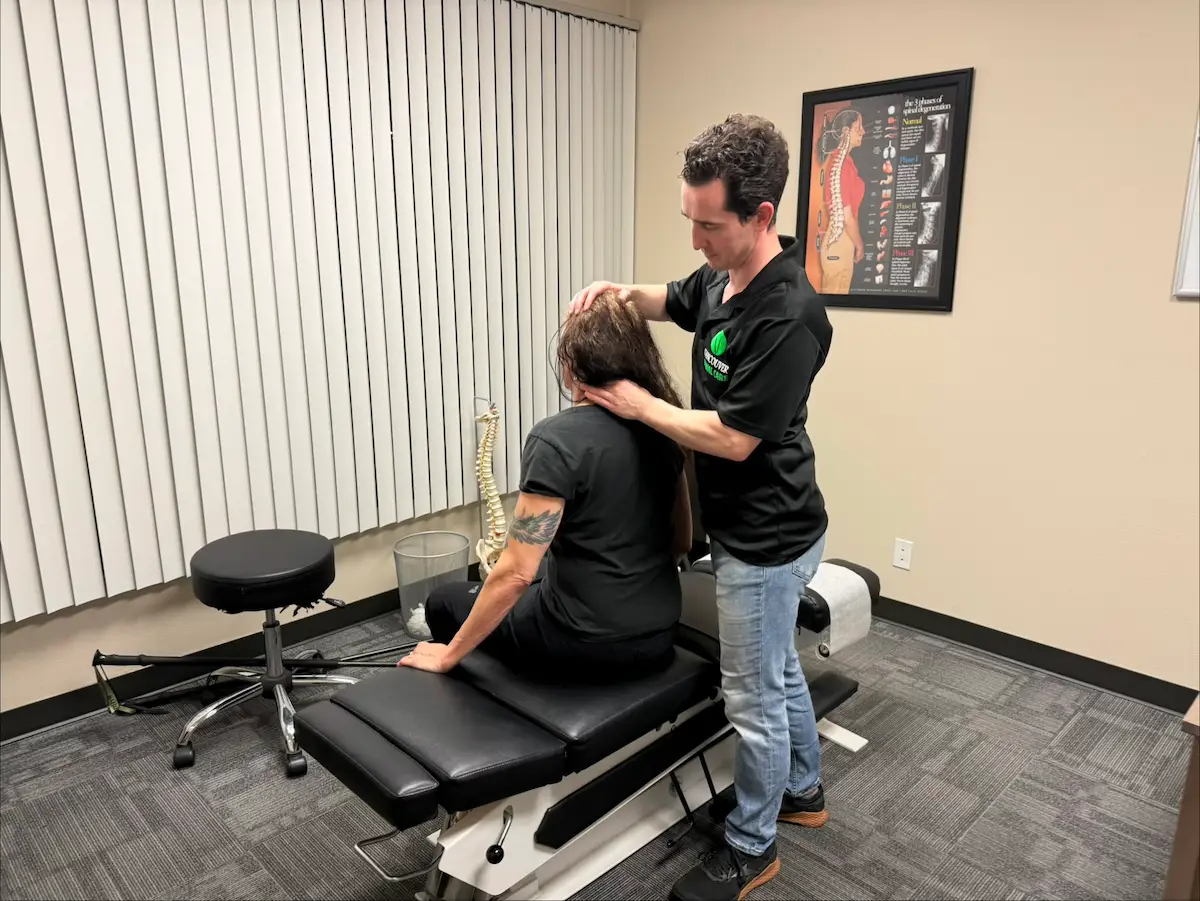
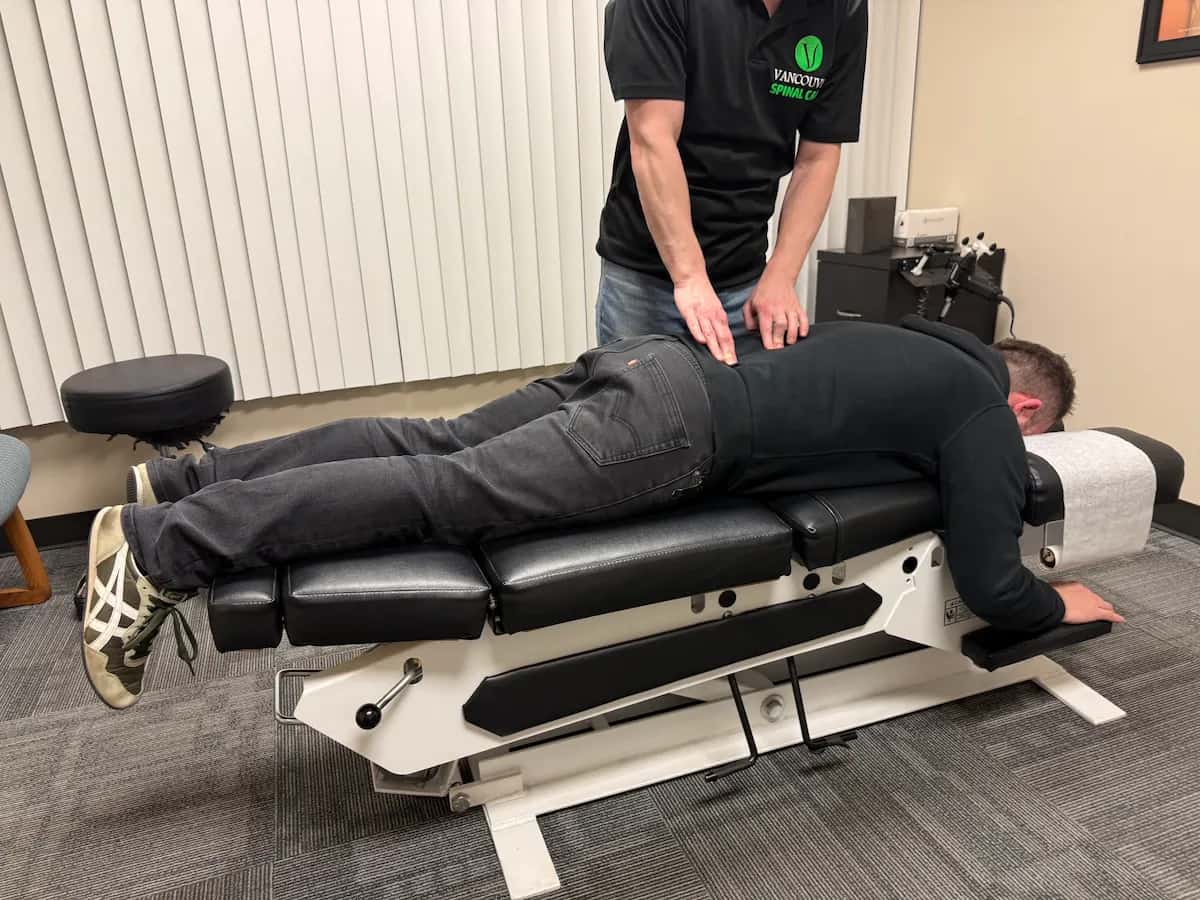
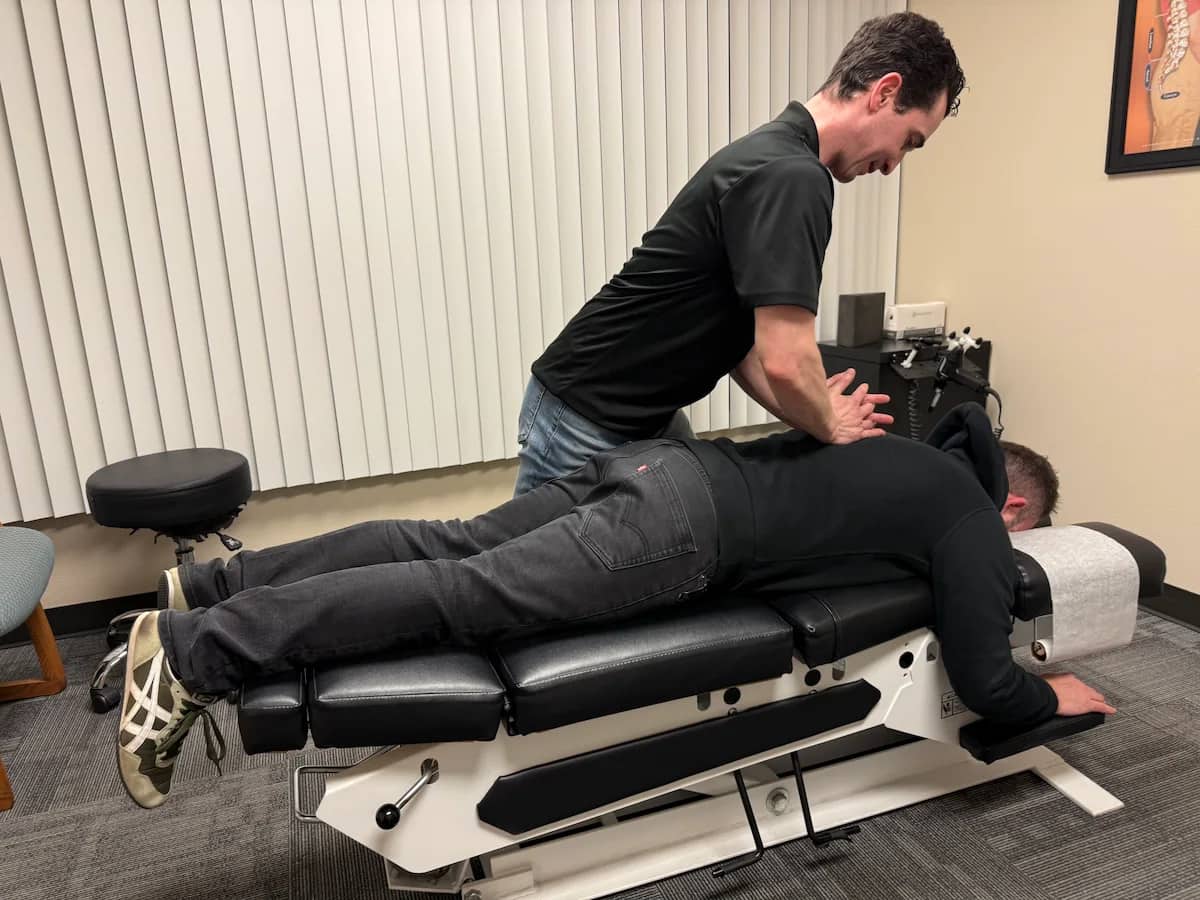
Treatment is built around what the evaluation reveals. For most morning stiffness presentations, lumbar and sacral chiropractic adjustments restore joint mobility and reduce the inflammatory pattern that builds overnight. As care progresses, the rehabilitation component addresses the muscle function and movement patterns that help the spine maintain better alignment between visits.
Frequently Asked Questions
Could my mattress be causing my morning back pain?
Mattress quality does matter – a sagging or overly soft mattress doesn’t provide consistent spinal support during sleep and can worsen an existing spinal problem. That said, in our experience, the mattress is rarely the root cause. More commonly, a spinal misalignment or disc issue is the primary driver, and the mattress is amplifying it. Addressing the spinal problem first usually makes a bigger difference than a mattress change alone.
Is morning stiffness a sign of arthritis?
It can be, but it’s not specific to arthritis. Mechanical causes – misalignment, disc changes, SI joint dysfunction – are far more common drivers of morning stiffness than inflammatory arthritis. A proper evaluation distinguishes between these causes and shapes care accordingly.
You Shouldn’t Have to Start Every Day in Pain
Morning back stiffness that’s become part of your daily routine is your spine asking for help. Vancouver Spinal Care has been helping Vancouver, WA patients get to the bottom of recurring back pain for over 15 years. If you’re tired of starting every day stiff and sore, let’s find out what’s driving it. Schedule an appointment online or call us at 360-694-0300.