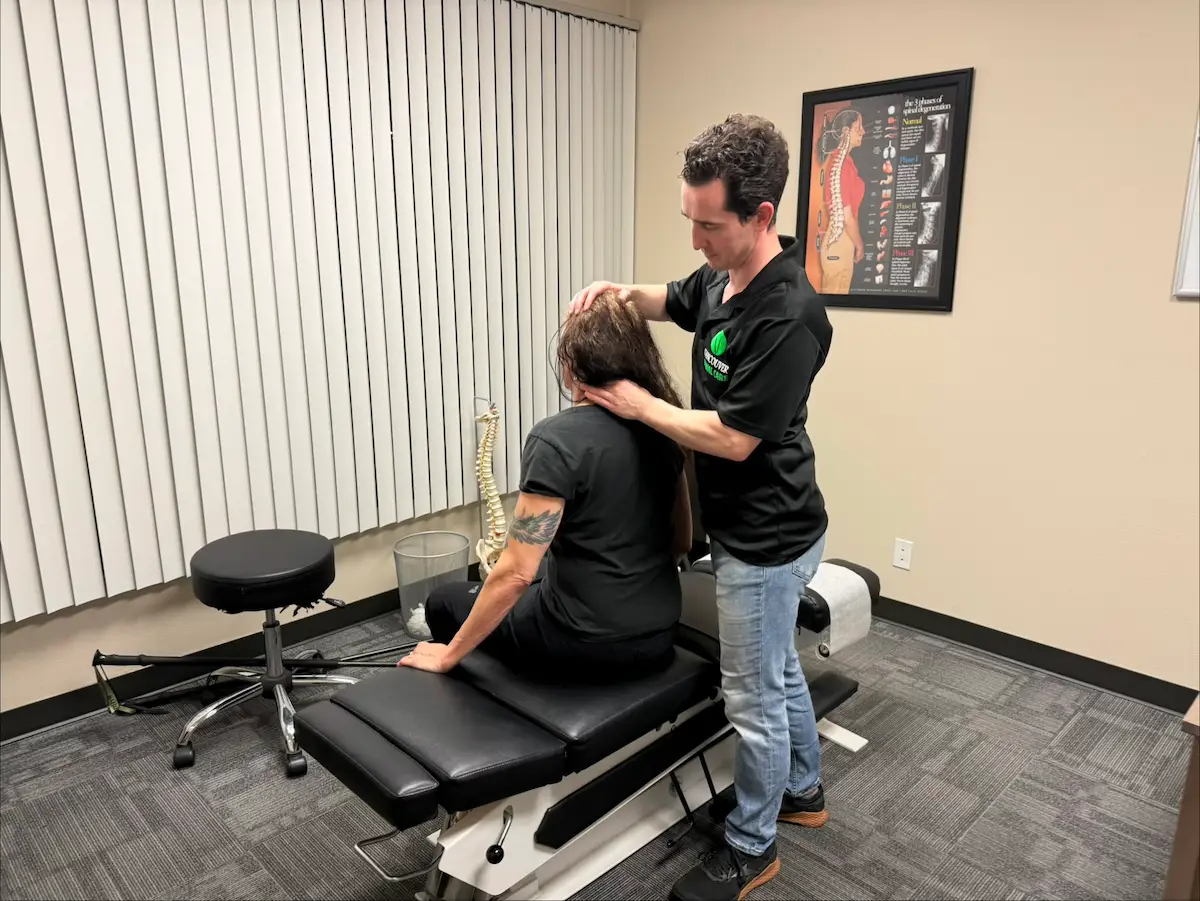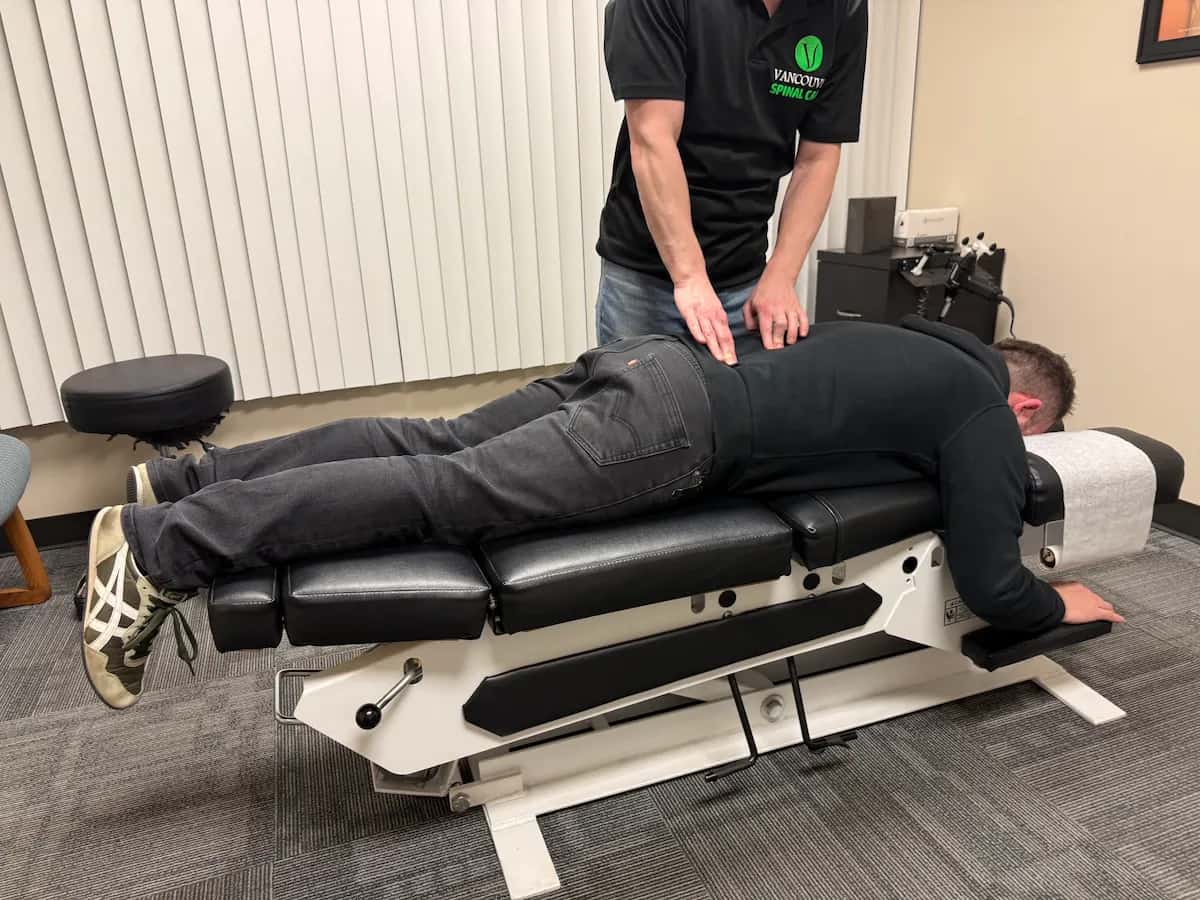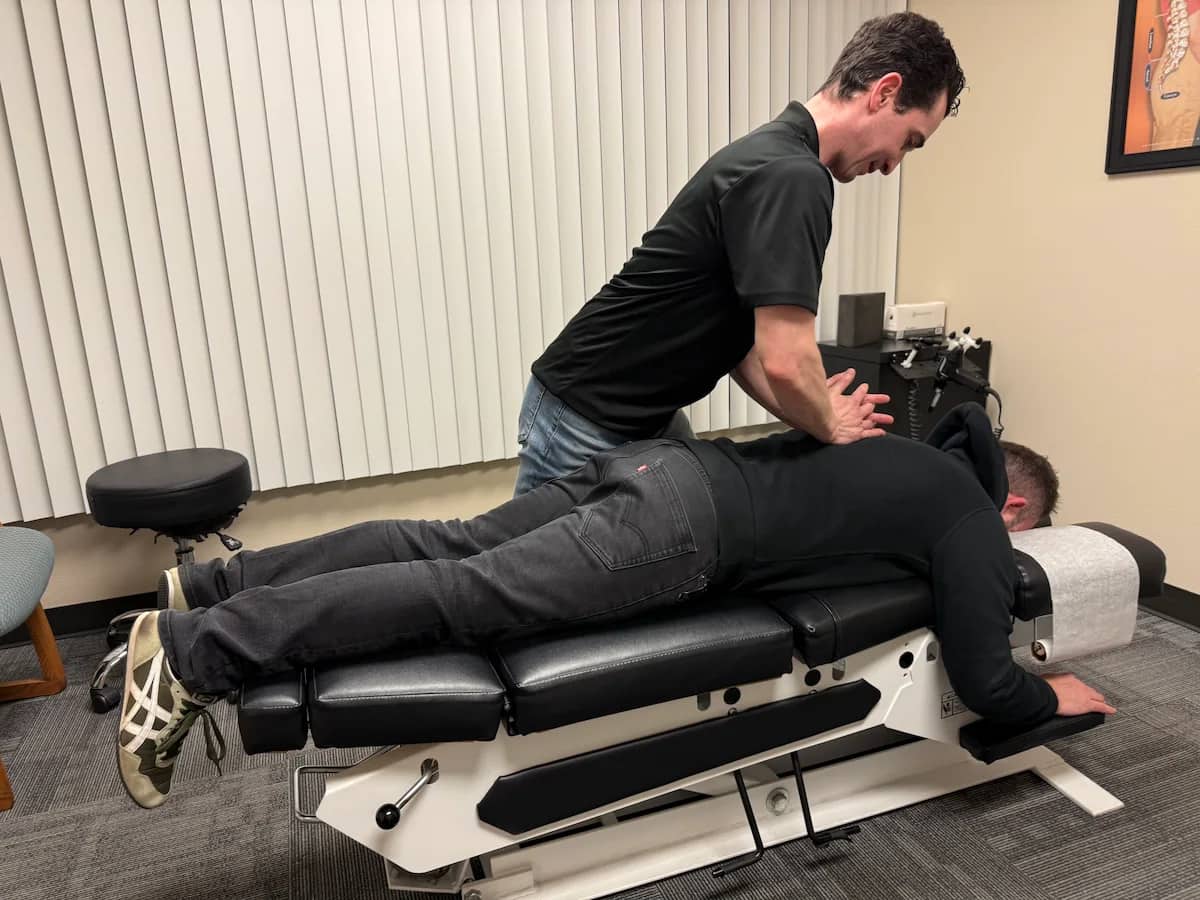

Firefighters, police officers, paramedics, construction workers, electricians, and plumbers share something in common beyond their trades: they put their bodies through physical demands that most healthcare providers don’t fully understand or account for in treatment. At Vancouver Spinal Care, we see a significant number of first responders and trades workers from throughout Clark County – and the care we provide is built around what your job actually requires, not a generic back pain protocol.
Why Occupational Demands Shape How We Treat You
The spine and joints of a firefighter who regularly carries 60 pounds of gear up stairs, performs forced-entry operations, and drags hose lines are under categorically different stress than those of an office worker. A concrete finisher who spends hours bent forward finishing floors, or an electrician working overhead in confined spaces, develops injury patterns and musculoskeletal vulnerabilities that are specific to those work demands.
Treating these patients the way you’d treat a general back pain population misses the point. The evaluation needs to understand what the job actually demands. The treatment needs to restore function that’s relevant to returning to that specific work. And the rehabilitation component needs to build the kind of occupational-specific strength and movement capacity that keeps the injury from recurring when the worker goes back to full duty.
Dr. Freeman’s background in Exercise Science is directly relevant here. Understanding how work-specific movements load the spine and joints – and how to rebuild movement capacity that’s appropriate for those demands – is part of what his training addresses. It’s a more specific and practically useful approach than general chiropractic care for this patient population.
First Responders: What We See and How We Help
Firefighters
Firefighters face a combination of heavy physical demands – gear weight, victim rescue, hose advancement, ladder work – combined with the neurological and cardiovascular stress of emergency response. Musculoskeletal injuries in firefighters most commonly affect the lower back, shoulders, and knees. The shoulder demands of overhead work and rescue operations make shoulder joint integrity and rotator cuff health particularly important.
Beyond acute injuries, firefighters accumulate significant spinal stress over a career from the sustained compression of wearing SCBA and turnout gear, repeated heavy lifting, and vehicle vibration from apparatus. Regular chiropractic maintenance during an active career – not just treatment after injuries – keeps the spine functioning well and reduces the accumulation that leads to career-ending chronic problems.
Law Enforcement
Police officers develop a distinctive musculoskeletal profile from years of wearing a duty belt – typically 15 to 25 pounds of equipment carried asymmetrically on the hips. This sustained unilateral loading creates predictable sacroiliac and lumbar problems, hip imbalances, and postural compensation patterns. Add in prolonged vehicle sitting, physical confrontations, and the neuromuscular impact of high-stress situations, and law enforcement careers produce a specific injury profile that we see regularly from Clark County officers.
The duty belt-related SI joint and lumbar problems are particularly common and often go unaddressed for years because officers manage them as “normal” discomfort rather than a treatable condition. They’re not – and addressing them early, before they become chronic, makes a significant difference in long-term spinal health and career longevity.
Paramedics and EMTs
Patient lifting and transfer – particularly in confined spaces like small apartments, stairwells, and the back of an ambulance – is one of the highest injury-risk activities in any occupation. The combination of awkward body mechanics, unpredictable patient movement, and urgency creates exactly the conditions for lumbar disc and SI joint injuries. Back pain is the leading cause of disability claims among EMS personnel, and most of it is preventable or manageable with proper musculoskeletal care.
Trades Workers: The Spinal Demands of Physical Work
Construction Workers
Construction encompasses one of the broadest ranges of physical demands of any industry – from concrete work and heavy lifting to overhead framing and confined-space electrical. The cumulative spinal load over a construction career is substantial, and back injuries are a leading cause of workers’ compensation claims in Washington State’s construction sector.
Vancouver Spinal Care accepts Washington State L&I and workers’ compensation for construction-related injuries. Our evaluation process accounts for the specific demands of construction work when assessing functional capacity and establishing return-to-work restrictions – which matters for documentation that holds up in the claim process.
Electricians, Plumbers, and HVAC Technicians
Trades that involve working in confined spaces, sustained overhead positions, and repeated bending create specific injury patterns in the cervical spine, lumbar spine, and shoulders. Electricians who spend hours running conduit with arms overhead develop thoracic and shoulder problems. Plumbers who work under sinks and in crawl spaces accumulate cervical and lumbar stress from sustained awkward postures. These occupation-specific patterns require occupation-aware treatment.
Landscapers and Agricultural Workers
Clark County’s substantial agricultural and landscaping sector means we see significant occupational back and shoulder injuries from this work category. Heavy lifting, repetitive bending and stooping, equipment vibration, and sustained outdoor physical work create a high-injury-risk environment. L&I coverage applies to most agricultural and landscaping employees in Washington State.
Workers’ Comp, L&I, and Occupational Documentation
First responders and trades workers who sustain on-the-job injuries have specific rights under Washington State L&I and workers’ compensation that protect their ability to receive treatment and return to work safely. Vancouver Spinal Care accepts both L&I and workers’ comp, and our in-house administrative team handles all claim paperwork, billing coordination, and progress documentation.
For first responders – particularly those covered under city or county benefit plans rather than standard L&I – the coverage structure may differ. Our team will verify your specific coverage before the first visit so there are no surprises.
The functional capacity documentation we provide is written with occupational specificity – noting what job demands the worker can and cannot perform, and what the clinical basis for those restrictions is. For workers in physically demanding occupations, vague restrictions (“avoid heavy lifting”) are less useful than specific ones (“unable to lift more than 20 lbs from floor to waist”). That specificity is something Dr. Freeman’s functional assessment is designed to produce.
Prevention Is Part of the Program Too
For active first responders and trades workers who aren’t currently injured, regular chiropractic care is one of the most cost-effective tools for staying that way. The functional movement assessment component of our sports performance and rehabilitation program identifies movement pattern weaknesses and spinal vulnerabilities before they produce injuries – the same principle that makes pre-season athletic screening valuable applies directly to high-demand occupational settings.
A firefighter who comes in periodically for maintenance care – keeping the lumbar spine aligned, the SI joints balanced, and the shoulder mechanics healthy – is significantly less likely to end up on workers’ comp leave than one who only seeks care after an acute injury. That’s not a guarantee, but it’s a well-supported principle that serious occupational health programs are built around.
You Work Hard. Your Healthcare Should Keep Up.
If you’re a first responder or trades worker in Vancouver, WA and you’ve been managing occupational back pain, shoulder problems, or joint issues as part of the job – you don’t have to. Vancouver Spinal Care understands what your work demands and builds care plans around getting you back to full capacity and keeping you there. Schedule an appointment online or call us at 360-694-0300.