Sciatica and piriformis syndrome produce overlapping symptoms – pain, burning, or tingling that runs from the buttock down the leg – but they originate in different places and respond to different treatments. Treating one when the other is the actual problem is one of the most common reasons patients struggle to get lasting relief from leg pain. Getting the diagnosis right is the starting point for getting the treatment right.
What Is Sciatica?
True sciatica is nerve pain caused by compression or irritation of the sciatic nerve root where it exits the lumbar spine – most commonly at the L4, L5, or S1 vertebral levels. The compression is usually caused by a herniated or bulging disc, spinal stenosis (narrowing of the spinal canal), or a misaligned vertebra pressing on the nerve root.
Because the sciatic nerve is formed by nerve roots from the lower lumbar and sacral spine and travels all the way down through the buttock, thigh, calf, and into the foot, compression at the spinal level produces symptoms anywhere along that entire pathway. That’s the defining characteristic of lumbar radiculopathy – the source is in the spine, but the pain is felt down the leg.
What Is Piriformis Syndrome?
Piriformis syndrome is a condition where the piriformis muscle – a small, deep muscle located in the buttock that helps with hip rotation – irritates or compresses the sciatic nerve in the gluteal region rather than at the spine.
The sciatic nerve runs directly beneath the piriformis muscle in most people (and in a small percentage of the population, actually passes through it). When the piriformis becomes tight, inflamed, or goes into spasm, it can press on the sciatic nerve and produce pain that travels down the leg in a pattern that closely mimics lumbar radiculopathy.
The key distinction: in piriformis syndrome, the nerve is being compressed in the buttock, not in the spine. The lumbar discs and vertebrae are not the source of the problem.
Why the Distinction Matters for Treatment
This is where getting the diagnosis right becomes critical. Sciatica driven by lumbar disc compression responds to spinal decompression, lumbar adjustments, and interventions targeting the vertebral level creating the nerve compression. The goal is to take pressure off the nerve root at the spine.
Piriformis syndrome, by contrast, responds to releasing the piriformis muscle itself – through soft tissue techniques, targeted stretching, hip and gluteal rehabilitation, and in some cases adjusting the sacroiliac joint and hip, which can contribute to piriformis dysfunction. Spinal adjustments alone won’t resolve a piriformis problem if the muscle is the actual source of compression.
A patient treated for lumbar sciatica when the real problem is the piriformis may see partial improvement from spinal care, but the underlying muscle dysfunction keeps pulling the nerve into compression. They improve, plateau, and wonder why they’re not getting all the way better. In our experience in Vancouver, this is a more common scenario than most patients realize.
How to Tell the Difference: Symptom Patterns
While a proper clinical evaluation is the definitive way to distinguish between the two, symptom patterns can offer useful clues.
Signs That Point More Toward Lumbar Sciatica
Pain that originates clearly in the low back and radiates downward is a strong indicator of lumbar nerve root involvement. Symptoms that are aggravated by sitting, bending forward, coughing, or sneezing – all of which increase pressure on the lumbar discs – also suggest a spinal source. Pain that travels all the way past the knee and into the calf or foot is more typical of true radiculopathy. Numbness or weakness in a specific dermatomal pattern (a specific region of the leg corresponding to a particular nerve root) points toward lumbar disc involvement.
Signs That Point More Toward Piriformis Syndrome
Pain that’s centered in the deep buttock rather than the low back is a key feature of piriformis syndrome. Symptoms that worsen with prolonged sitting – especially sitting on a hard surface or with the hip rotated inward – are characteristic. Pain with direct pressure over the piriformis muscle (the deep buttock area), relief with external hip rotation, and the absence of clear low back involvement all suggest the piriformis as the culprit. Pain that rarely extends below the knee is also more consistent with piriformis syndrome than with lumbar radiculopathy.
It’s worth noting that the two conditions can coexist. A patient can have both a lumbar disc issue creating nerve root irritation and a tight piriformis compressing the nerve further downstream – what’s sometimes called a “double crush” presentation. This is one reason comprehensive evaluation matters more than treating based on symptoms alone.
How Dr. Freeman Evaluates Leg Pain at Vancouver Spinal Care
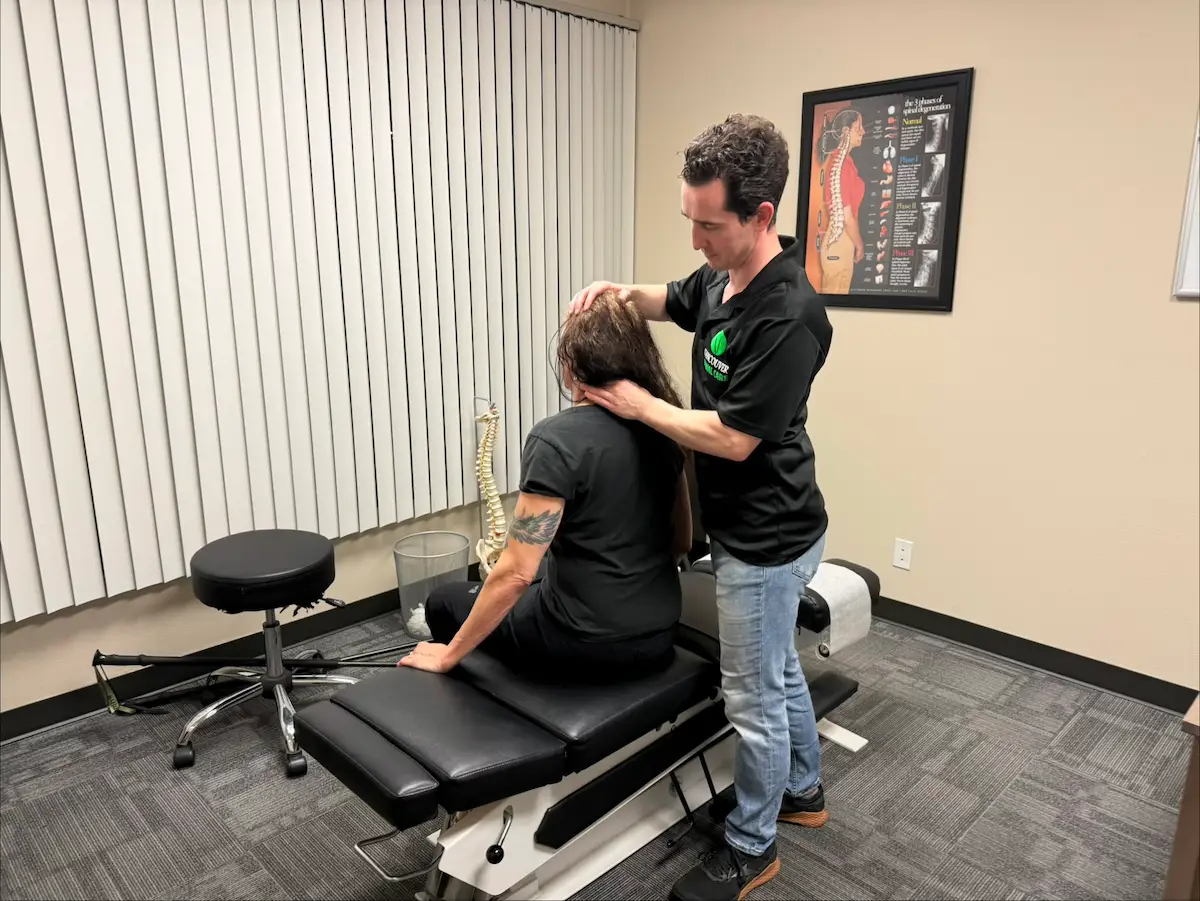
Distinguishing between lumbar sciatica and piriformis syndrome requires both a thorough clinical examination and the right diagnostic tools. Dr. Freeman’s evaluation for leg pain presentations includes orthopedic and neurological testing to identify which spinal levels are involved (or whether the spine is involved at all), palpation and functional testing of the piriformis and surrounding hip musculature, and assessment of hip mechanics and range of motion.
Diagnostic X-rays provide the structural picture of the lumbar spine. The Nervous System Scan maps where muscle tension and inflammation are concentrated – which helps distinguish between spinal and muscular sources. Dr. Freeman’s Exercise Science background is particularly valuable here, because evaluating how the hip and pelvis are moving – and how that affects the piriformis – requires a functional movement perspective that goes beyond a standard chiropractic assessment.
Treatment at Vancouver Spinal Care for Both Conditions
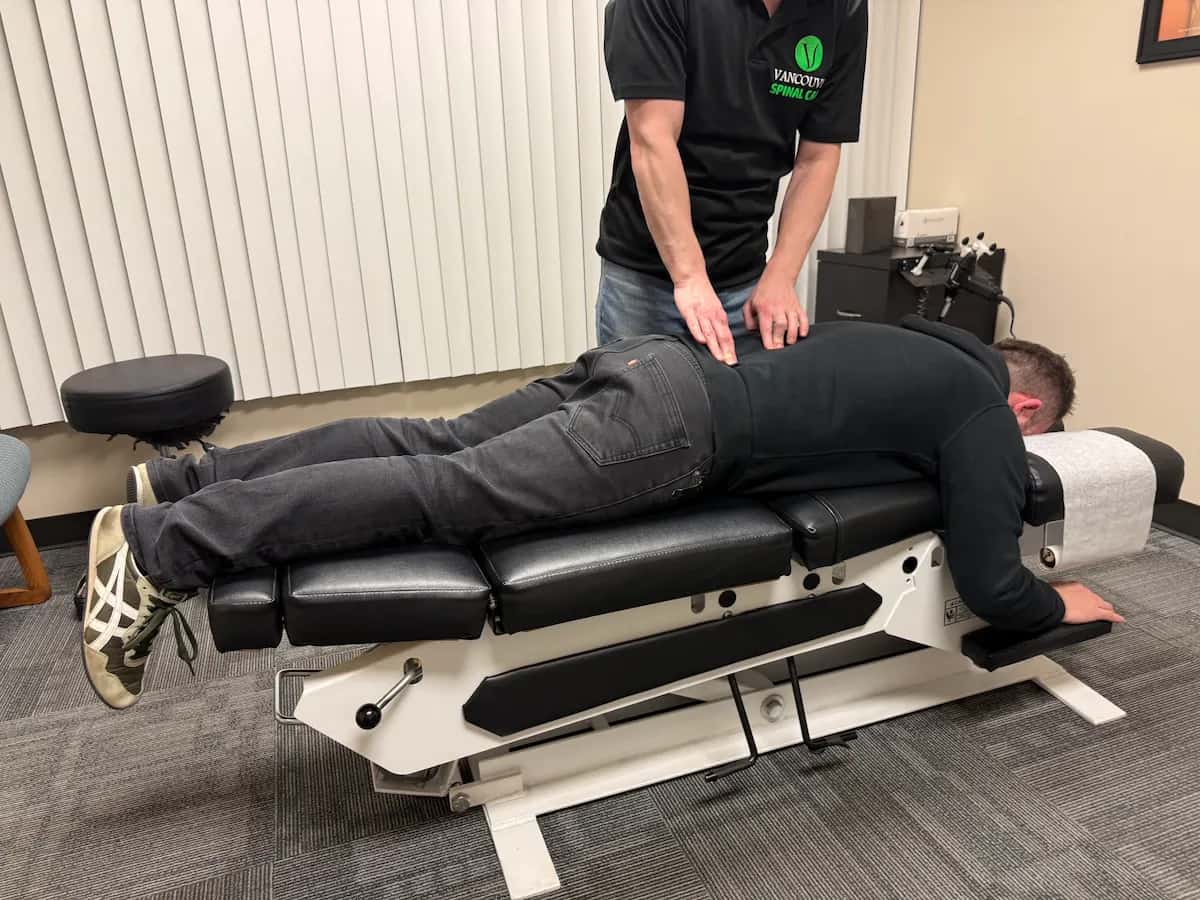
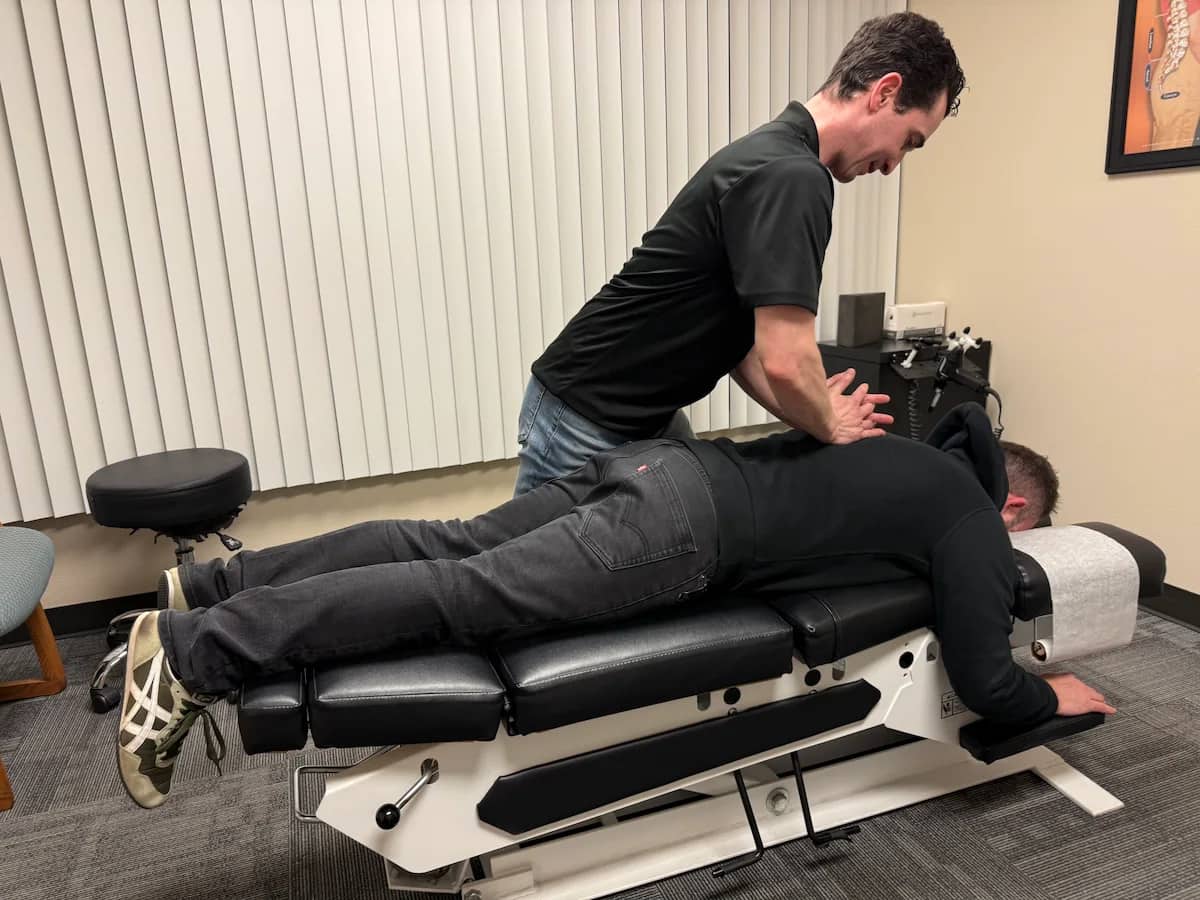
For true lumbar sciatica, care focuses on reducing nerve root compression through lumbar and sacral chiropractic adjustments, restoring disc health, and addressing the movement patterns that are loading the lumbar spine asymmetrically. Most patients with lumbar-driven sciatica begin noticing real improvement within a few weeks of consistent care.
For piriformis syndrome, the approach shifts to soft tissue work targeting the piriformis and surrounding hip muscles, sacroiliac joint evaluation and adjustment where relevant, and a specific rehabilitation protocol that addresses the hip weakness and movement patterns – particularly inhibited glutes – that typically allow the piriformis to become overloaded in the first place. Without addressing the muscular root cause, piriformis syndrome tends to keep recurring even after the acute episode resolves.
Frequently Asked Questions
Can an MRI distinguish between sciatica and piriformis syndrome?
An MRI can identify lumbar disc herniations and other structural changes at the spine, which supports a lumbar sciatica diagnosis. However, MRI is not particularly reliable for diagnosing piriformis syndrome – the muscle itself rarely shows obvious changes on imaging even when it’s the source of the problem. Clinical examination and functional testing are often more informative for piriformis presentations than imaging alone.
How long does it take piriformis syndrome to resolve?
Mild to moderate piriformis syndrome often responds well within four to eight weeks of consistent care that addresses both the muscle and the underlying movement dysfunction. Chronic cases that have been present for months or years may take longer. The key is addressing the hip and gluteal function that allowed the piriformis to become overloaded – without that, the condition tends to recur.
Should I avoid sitting if I have piriformis syndrome?
Prolonged sitting – particularly on hard surfaces – tends to aggravate piriformis syndrome because it places the hip in a position that loads the muscle and compresses the nerve. Frequent position changes, a cushioned seat, and avoiding crossing the legs can help manage symptoms between appointments. Dr. Freeman will give you specific guidance based on your presentation.
Stop Guessing and Get Properly Evaluated
If you’ve been dealing with buttock and leg pain in Vancouver, WA and you’re not sure whether it’s sciatica, piriformis syndrome, or something else entirely, the answer is a thorough evaluation – not more trial and error. Vancouver Spinal Care is located in the Orchards neighborhood and has been helping Clark County patients get accurate diagnoses and lasting relief for over 15 years. Schedule an appointment online or call us at 360-694-0300.