Yes, chiropractic care can help with a herniated disc – but how much it helps, and what the approach looks like, depends on where the disc is, how severe the herniation is, and what symptoms it’s producing. Most patients with lumbar or cervical disc herniations are good candidates for conservative chiropractic care before considering injections or surgery, and many achieve significant relief without needing either. At Vancouver Spinal Care, disc presentations are one of the more common and complex cases Dr. Freeman evaluates and treats.
What a Herniated Disc Actually Is
Between each vertebra in your spine sits an intervertebral disc – a structure with a tough outer ring (the annulus fibrosus) and a gel-like center (the nucleus pulposus). The disc acts as a shock absorber and spacer, allowing the spine to move while maintaining proper spacing between vertebrae.
A herniation occurs when the outer ring weakens or cracks and the inner material pushes through – either bulging outward or rupturing completely. When that displaced disc material contacts a nearby nerve root, it produces the pain, numbness, tingling, or weakness that most patients associate with a herniated disc.
The terms “herniated disc,” “bulging disc,” and “slipped disc” are often used interchangeably, though they describe slightly different stages of the same process. A bulge is a broader, more contained outward protrusion. A herniation is more focal and involves actual displacement of the nucleus material. Either can produce significant symptoms depending on where the disc is located and whether nerve tissue is involved.
Where Disc Herniations Most Commonly Occur
Lumbar Spine (Lower Back)
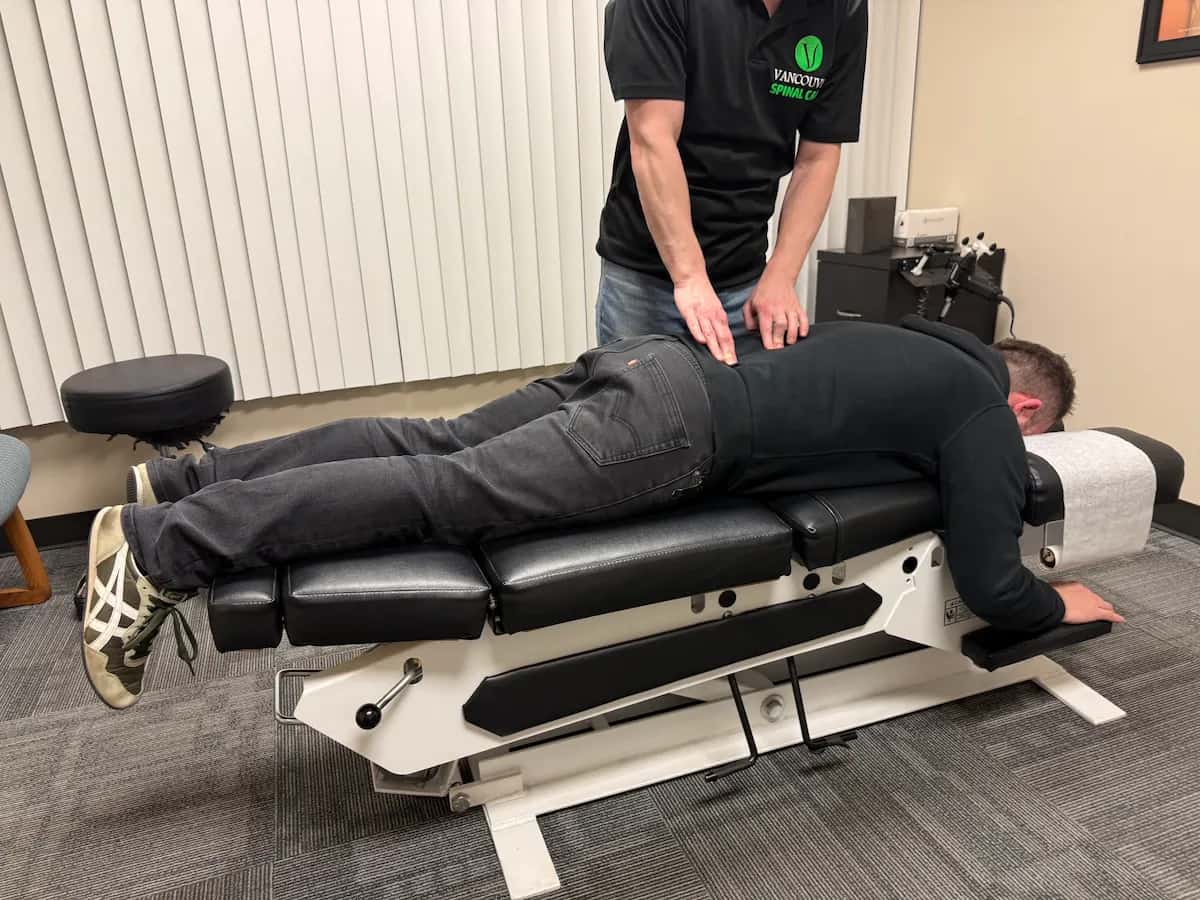
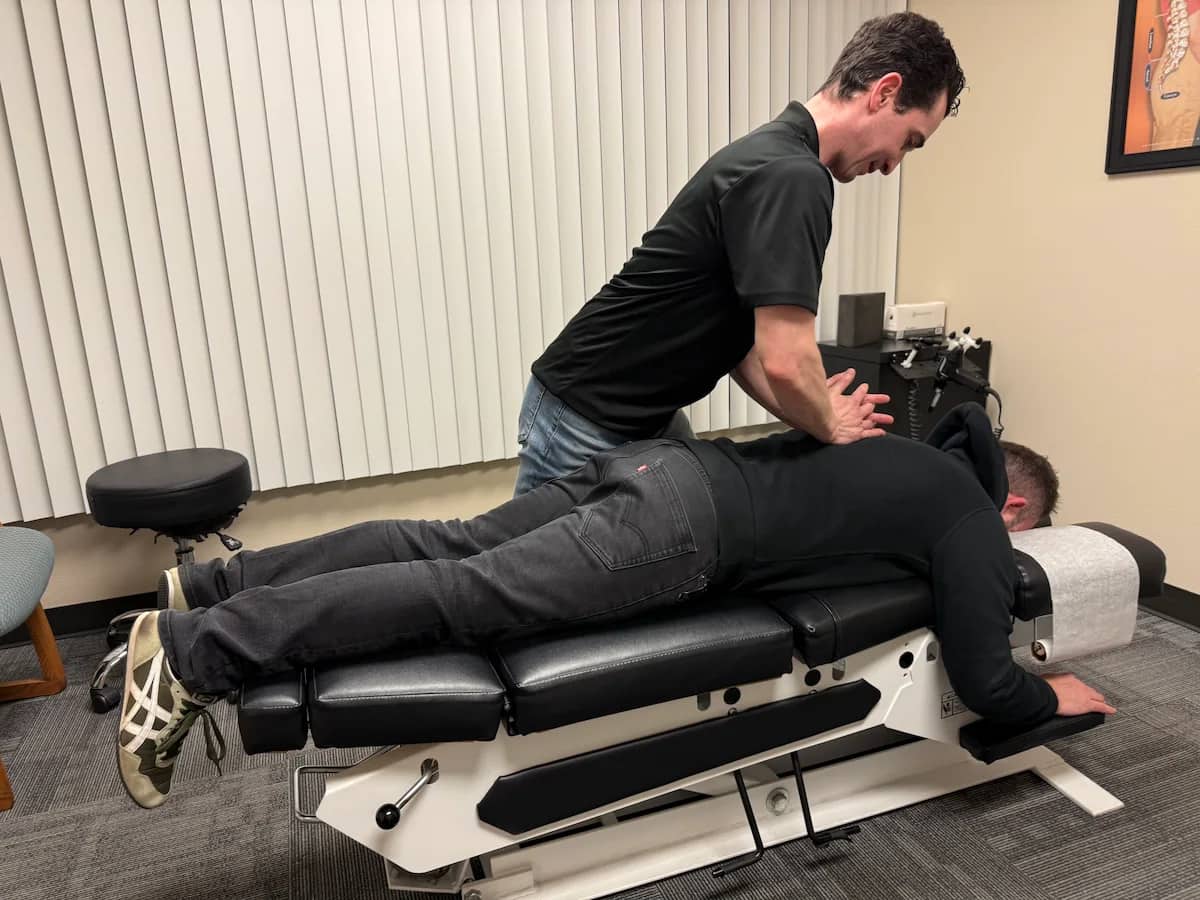
The lumbar spine – particularly L4-L5 and L5-S1 – is where the majority of disc herniations occur. These levels carry the most load in the spine and experience the highest degree of mechanical stress over time. A lumbar disc herniation pressing on a nerve root typically produces low back pain along with radiating symptoms into the buttock, leg, or foot – the classic presentation of sciatica.
Cervical Spine (Neck)
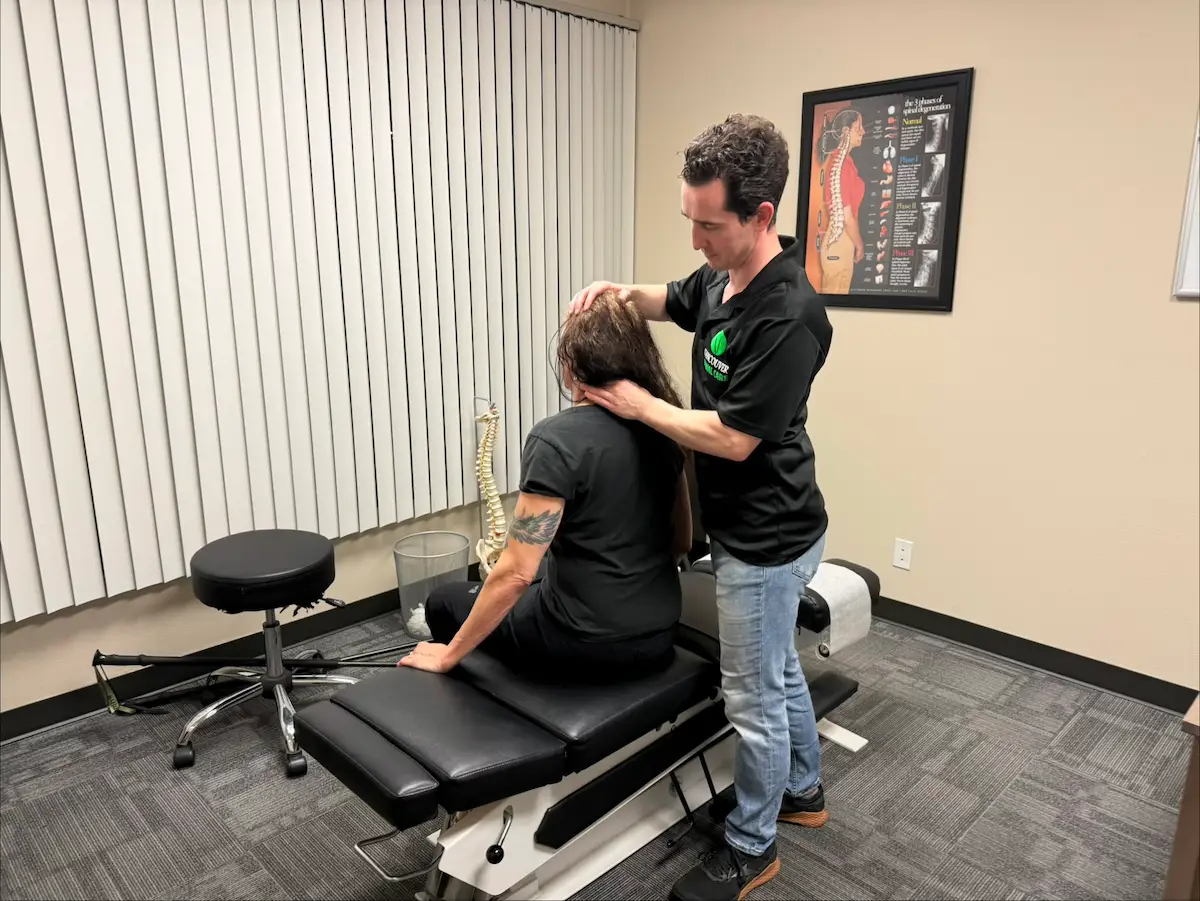
Cervical disc herniations – most common at C5-C6 and C6-C7 – compress nerve roots that travel into the shoulder, arm, and hand. The result is often neck pain combined with radiating arm pain, weakness in the grip, or numbness and tingling in specific fingers. Cervical herniations are less common than lumbar but often more disruptive to daily function because of how much we rely on arm and hand strength.
How Chiropractic Care Addresses a Herniated Disc
The goal of chiropractic care for disc herniations isn’t to “push the disc back in” – that’s a persistent misconception. What chiropractic adjustments do is restore proper spinal alignment and joint mechanics, which reduces the mechanical loading on the affected disc and takes pressure off the irritated nerve root.
When a spinal segment is misaligned, it distributes load unevenly across the disc – accelerating the degeneration that contributes to herniation and keeping the area inflamed. Restoring alignment changes those mechanics. It doesn’t reverse the herniation overnight, but it creates the conditions in which the disc can begin to heal and the nerve can decompress.
Research on lumbar disc herniations consistently shows that the majority of disc herniations reduce significantly over time – the displaced material is gradually reabsorbed by the body – and that conservative care produces outcomes comparable to surgery for most patients who aren’t experiencing severe neurological deficits. Surgery is appropriate in a subset of cases, but it’s rarely the necessary first step.
What to Expect from Disc Treatment at Vancouver Spinal Care
Disc cases require a more careful and specific approach than general back pain. The evaluation starts with a thorough clinical examination – orthopedic and neurological testing to identify which nerve root is involved and how significantly, followed by diagnostic X-rays and the Nervous System Scan.
For acute disc presentations where the nerve is significantly irritated, the early phase of care is conservative – lower-force techniques, instrument-assisted adjusting, and work to reduce the inflammation driving the acute symptoms before more direct spinal work begins. Pushing too hard too early on an acutely irritated disc is counterproductive, and Dr. Freeman adjusts the approach based on where you are in the acute-to-subacute progression.
As the acute phase settles, chiropractic adjustments to the affected spinal levels restore proper mechanics, and the treatment plan begins incorporating the rehabilitation component – addressing the core stability and movement patterns that reduce recurrence risk over the long term.
When Chiropractic Is and Isn’t Appropriate for a Disc Herniation
Chiropractic care is appropriate for most disc herniations that aren’t producing severe or progressive neurological deficits. If you have pain, some numbness or tingling, and manageable symptoms, conservative chiropractic care is a reasonable first-line approach that most orthopedic and spine specialists would support trying before more invasive options.
There are situations where a referral or co-management is the right call. Cauda equina syndrome – a rare but serious condition involving loss of bladder or bowel control from severe lumbar compression – requires emergency surgical evaluation and is not a chiropractic case. Rapidly progressive neurological weakness – muscle loss, foot drop, inability to use the hand – also warrants urgent medical evaluation alongside or ahead of chiropractic care.
Dr. Freeman is direct about these distinctions. If your presentation suggests something that needs surgical consultation or advanced imaging first, he’ll tell you and help coordinate that. The goal is your recovery through the right pathway – not keeping every case in the chiropractic lane regardless of what the clinical picture shows.
Do I Need an MRI Before Seeing a Chiropractor for a Disc Problem?
Not necessarily. For most disc presentations, a thorough clinical examination combined with X-rays gives sufficient information to begin conservative care. MRI is most useful when the clinical picture suggests severe nerve involvement, when a patient isn’t responding to conservative care as expected, or when surgical evaluation is being considered.
If you already have MRI findings, bring the imaging and the radiology report to your first appointment – it’s useful information. But lack of an MRI is not a reason to delay starting care if the clinical presentation warrants it.
Frequently Asked Questions
How long does it take to recover from a herniated disc with chiropractic care?
Most patients with an acute lumbar disc herniation begin noticing meaningful improvement within three to six weeks of consistent conservative care. Full resolution – including the disc reabsorption process – often takes several months. Cervical herniations follow a similar timeline. Recovery is faster when care begins promptly and when the patient actively participates in the rehabilitation component of their plan.
Can a herniated disc come back after treatment?
The same disc can re-herniate, and adjacent levels can develop their own problems over time – particularly if the underlying movement patterns and load distribution that contributed to the original herniation aren’t addressed. That’s why the rehabilitation and education component of care at Vancouver Spinal Care is as important as the adjustments themselves.
Find Out if Chiropractic Is Right for Your Disc Problem
If you’ve been diagnosed with a herniated disc in Vancouver, WA – or if you’re dealing with back or neck pain and leg or arm symptoms that suggest disc involvement – a thorough evaluation is the starting point. Vancouver Spinal Care has been helping disc patients throughout Clark County and Southwest Washington avoid unnecessary procedures and get back to their lives for over 15 years. Schedule an appointment online or call us at 360-694-0300.