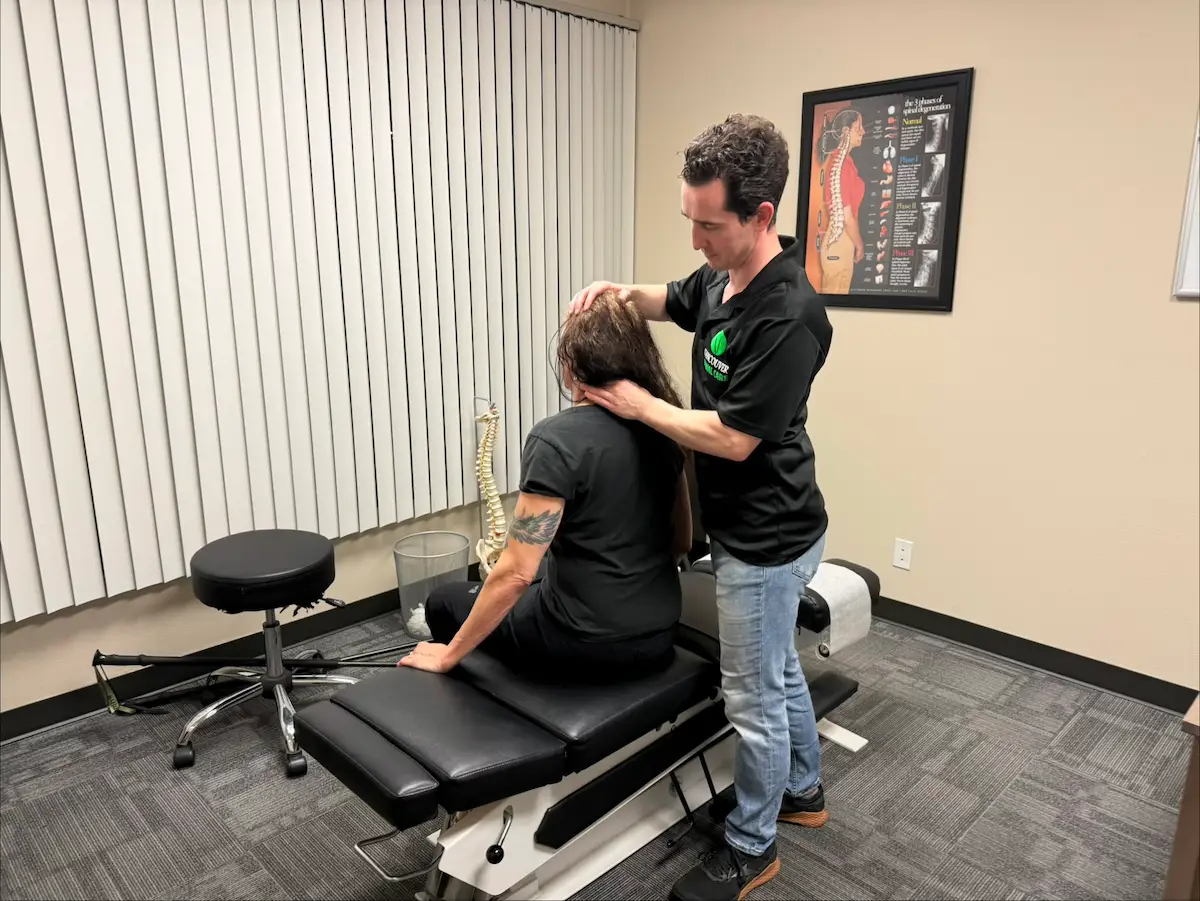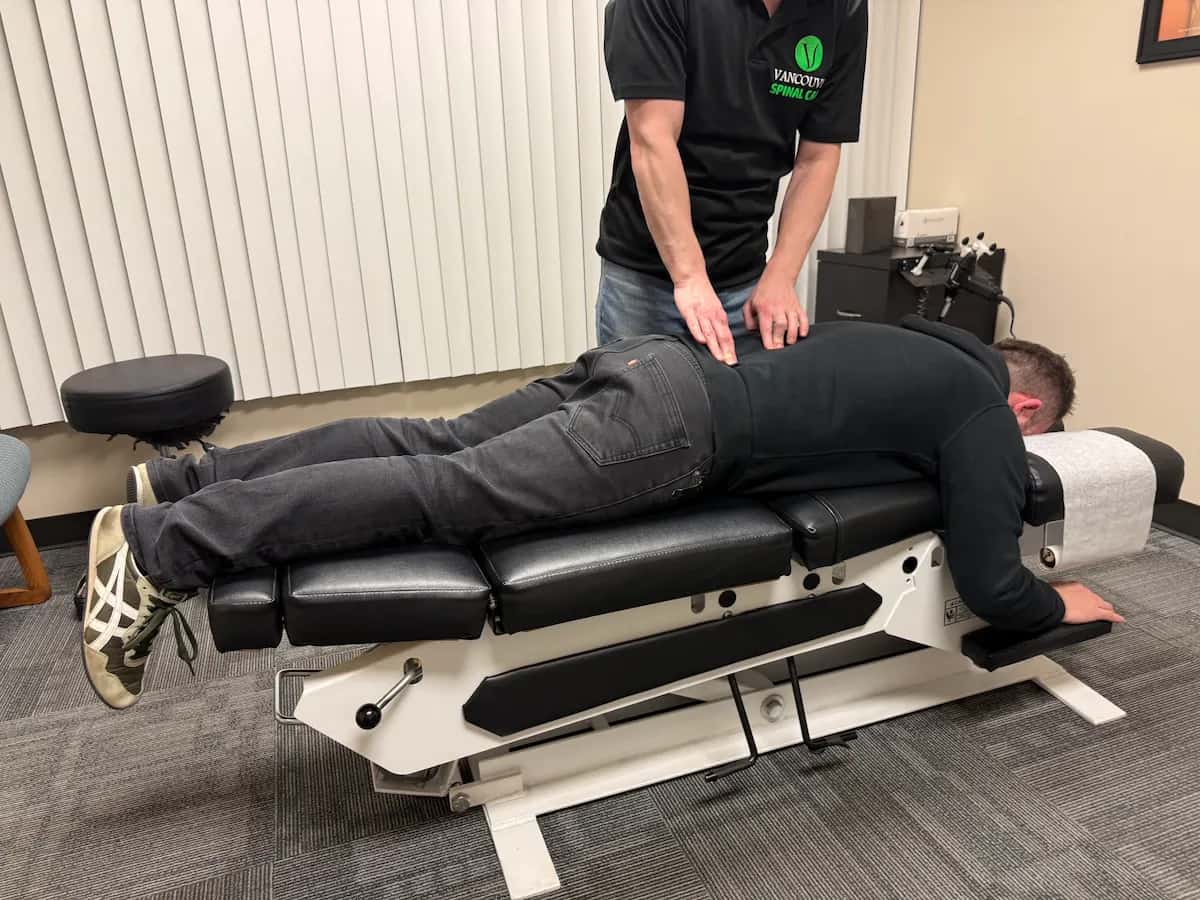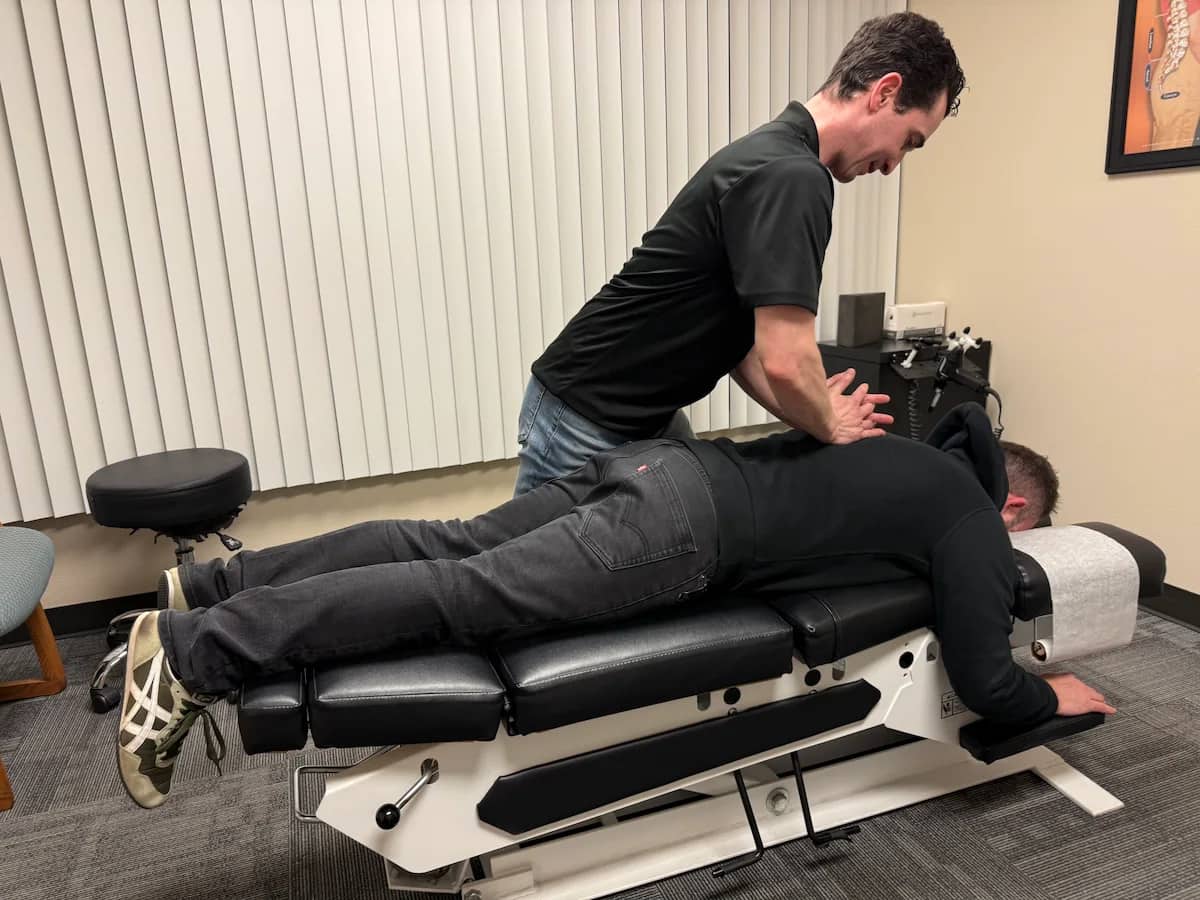

A Nervous System Scan is a non-invasive diagnostic tool that maps muscle tension and inflammation patterns along the spine – revealing information about how your nervous system is functioning that a standard X-ray simply can’t show. At Vancouver Spinal Care, we use it as part of our initial evaluation for new patients and to track progress throughout care. It’s one of the tools that lets us build treatment plans based on what’s actually happening in your body rather than educated guesswork.
Why X-Rays Alone Don’t Tell the Full Story
X-rays are valuable. They show us the structure of the spine – the alignment of vertebrae, the spacing between discs, and any degenerative changes that have occurred over time. That structural picture matters and it shapes how we approach care.
But structure and function are two different things. You can have a spine that looks reasonably normal on X-ray and still have significant nervous system dysfunction – elevated muscle tension, areas of chronic inflammation, and disrupted nerve signaling that are driving pain, limited mobility, and other symptoms. Conversely, some patients have structural changes visible on X-ray but their nervous system is adapting well and their symptoms are minimal.
To understand what’s actually happening functionally, you need a tool that looks at the nervous system directly. That’s what the Nervous System Scan provides.
How the Nervous System Scan Works
The scan works by measuring surface electromyography (sEMG) and thermal readings along the spine. Here’s what each component detects:
Surface EMG (Muscle Activity)
The surface EMG component measures the electrical activity of the muscles running alongside the spine. When a spinal segment is misaligned or a nerve is irritated, the surrounding muscles compensate – they work harder, stay contracted longer, and develop asymmetrical tension patterns between the left and right side. These patterns are often invisible to a physical exam but show up clearly on an sEMG reading.
Elevated and asymmetrical muscle activity is a reliable indicator of where the nervous system is under stress – even in areas that might not be causing obvious pain yet. This is one reason the scan is useful not just for identifying current problems but for finding areas that are heading toward a problem if left unaddressed.
Thermal Scan (Autonomic Nervous System)
The thermal component measures temperature differences on either side of the spine. The autonomic nervous system – the part of the nervous system that regulates involuntary body functions like circulation, organ function, and temperature regulation – runs along the spine and exits through the same nerve roots that control the muscles and tissues of the body.
When there’s interference in autonomic nerve function, it shows up as temperature asymmetry – one side of the spine running warmer or cooler than the other at a given level. These thermal differences indicate areas of neurological stress that correlate with spinal dysfunction.
What the Scan Results Look Like
The results come back as a color-coded map of the spine, showing where tension and inflammation are concentrated and how severe they are. It’s a visual representation that Dr. Freeman reviews with patients during the consultation – because one of the core values at Vancouver Spinal Care is making sure you understand what’s happening in your own body.
Seeing the scan results is often a meaningful moment for patients. Many people have been managing chronic tension or low-grade discomfort for so long that they’ve normalized it. When the scan shows elevated activity at specific spinal levels – sometimes in areas that haven’t been causing obvious pain – it reframes the picture and helps patients understand why certain symptoms have been occurring.
How the Scan Shapes Your Treatment Plan
The Nervous System Scan doesn’t replace Dr. Freeman’s clinical judgment – it informs it. Combined with the structural information from X-rays and the functional picture from a physical examination, the scan helps identify which spinal segments need the most attention, whether there are areas of neurological involvement beyond what the patient is reporting, and how the treatment plan should be prioritized.
It also provides a baseline. When you come back in for re-evaluation, a follow-up scan shows objectively how the nervous system has responded to care – where tension has decreased, where alignment improvements are reflected in better neurological function, and what still needs attention. That’s a more reliable measure of progress than pain levels alone, which are subjective and can fluctuate for all sorts of reasons.
The Scan Is Completely Comfortable and Non-Invasive
There are no needles, no electrical current delivered to the body, no discomfort of any kind. The scanner is passed gently along the spine in a process that takes just a few minutes. It’s suitable for patients of all ages – including children and pregnant women – which fits well with the family-focused practice we run at Vancouver Spinal Care.
Patients who are nervous about their first chiropractic visit often find the scan process reassuring. It’s a straightforward, objective assessment that shows exactly what we’re working with before any treatment begins.
Why This Tool Sets Vancouver Spinal Care Apart
Not every chiropractic clinic uses Nervous System Scanning. Many rely on X-rays and physical examination alone, which provides useful information but leaves gaps in the functional picture. The combination of structural and neurological assessment that we use at our Orchards clinic is closer to the standard of care you’d expect from a sports medicine facility – which makes sense given Dr. Freeman’s background in Exercise Science and his work with competitive athletes.
For patients who have been to other chiropractors and felt like something was missing – like the treatment helped but nobody could explain exactly why things were going wrong – the scan often fills in those blanks. It takes the guesswork out of the evaluation and makes the treatment rationale clear from the first visit.
You can learn more about how Dr. Freeman approaches diagnosis and care on his bio page, or explore the full scope of what our chiropractic adjustments service involves.
Frequently Asked Questions
Is the Nervous System Scan covered by insurance?
Coverage varies by insurance plan. Our team verifies benefits before your first visit and will let you know exactly what to expect from a billing standpoint. We accept most major insurance plans, as well as workers’ comp and personal injury coverage.
How often is the scan repeated during care?
Typically at the initial evaluation and then at key re-evaluation points during care – usually every four to six weeks, or when the clinical picture suggests a significant change. The re-evaluation scan is an important part of tracking progress objectively rather than relying solely on how a patient feels on any given day.
Can the scan detect conditions that need to be referred out?
The scan helps identify patterns of neurological stress associated with spinal dysfunction. It’s not a diagnostic tool for diseases or conditions outside the scope of chiropractic care. If the clinical picture suggests something that warrants medical referral, Dr. Freeman will tell you directly and help coordinate that.
See What’s Actually Going On in Your Spine
If you’ve been dealing with back pain, neck pain, headaches, or other symptoms and haven’t gotten a clear picture of what’s driving them, the Nervous System Scan is a good place to start. It’s included as part of the new patient evaluation at Vancouver Spinal Care – so from your very first visit, you’ll have objective information about what’s happening and a treatment plan built around that specific picture.
We serve patients throughout Vancouver, WA, Orchards, and the surrounding Clark County area. Schedule your evaluation online or give us a call at 360-694-0300.