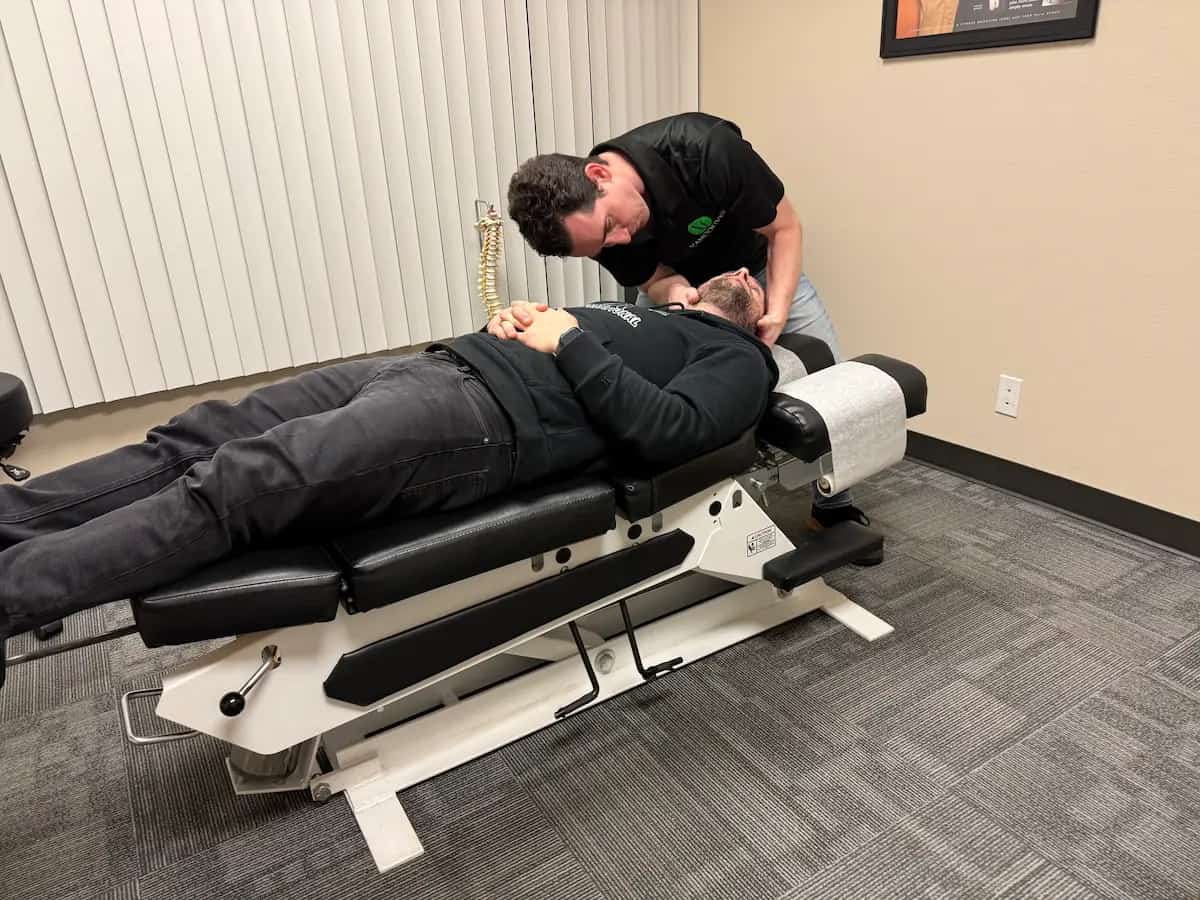
Neck pain from desk work is one of the most common complaints we see at Vancouver Spinal Care – and it’s almost never just “muscle tightness.” If you spend most of your day at a computer and your neck aches by mid-afternoon, there’s usually something structural going on that stretching alone won’t fix. The good news is that it’s very treatable, and most patients start feeling real relief within a few visits.
Why Desk Work Is So Hard on Your Neck
Your head weighs roughly 10 to 12 pounds when it’s sitting directly over your shoulders. But for every inch it shifts forward – which happens naturally when you lean toward a screen – the effective load on your cervical spine roughly doubles. By the time your head is just two or three inches forward, your neck muscles are working as if they’re holding up 30 to 40 pounds.
Do that for six to eight hours a day, five days a week, and you start to understand why office workers in Vancouver are dealing with chronic neck pain at younger and younger ages. It’s not just about posture. It’s about what that sustained load does to the joints, discs, and nerves in your cervical spine over time.
The Problem With Just “Pushing Through It”
Most people try to manage desk-related neck pain on their own – a heating pad here, some ibuprofen there, maybe a few YouTube stretches. And sometimes those things help temporarily. But if the underlying spinal alignment issues aren’t addressed, the pain tends to keep coming back, and often gets worse.
We see this pattern constantly at our clinic. A patient will come in after months of managing their neck pain on their own, and when we run a Nervous System Scan and take diagnostic X-rays, we find cervical misalignments that have been building up for years. The pain was the signal – and it went unanswered long enough that the problem compounded.
What “Tech Neck” Actually Means
You’ve probably heard the term “tech neck” – it’s become a catch-all phrase for the neck and upper back pain caused by prolonged screen use. But the clinical picture is more specific than the name suggests.
Tech neck typically involves a forward head posture, reduced cervical curve (your neck is supposed to have a natural curve – when it straightens or reverses, that’s a problem), muscle imbalances between the front and back of the neck, and in more advanced cases, nerve irritation that can cause headaches, arm tingling, or shoulder pain.
The cervical curve matters more than most people realize. That natural “C” shape in your neck acts as a shock absorber. When it flattens out – which forward head posture accelerates – the spine loses its ability to distribute load evenly, and the joints start to wear in ways they shouldn’t.
How We Assess and Treat Neck Pain at Vancouver Spinal Care
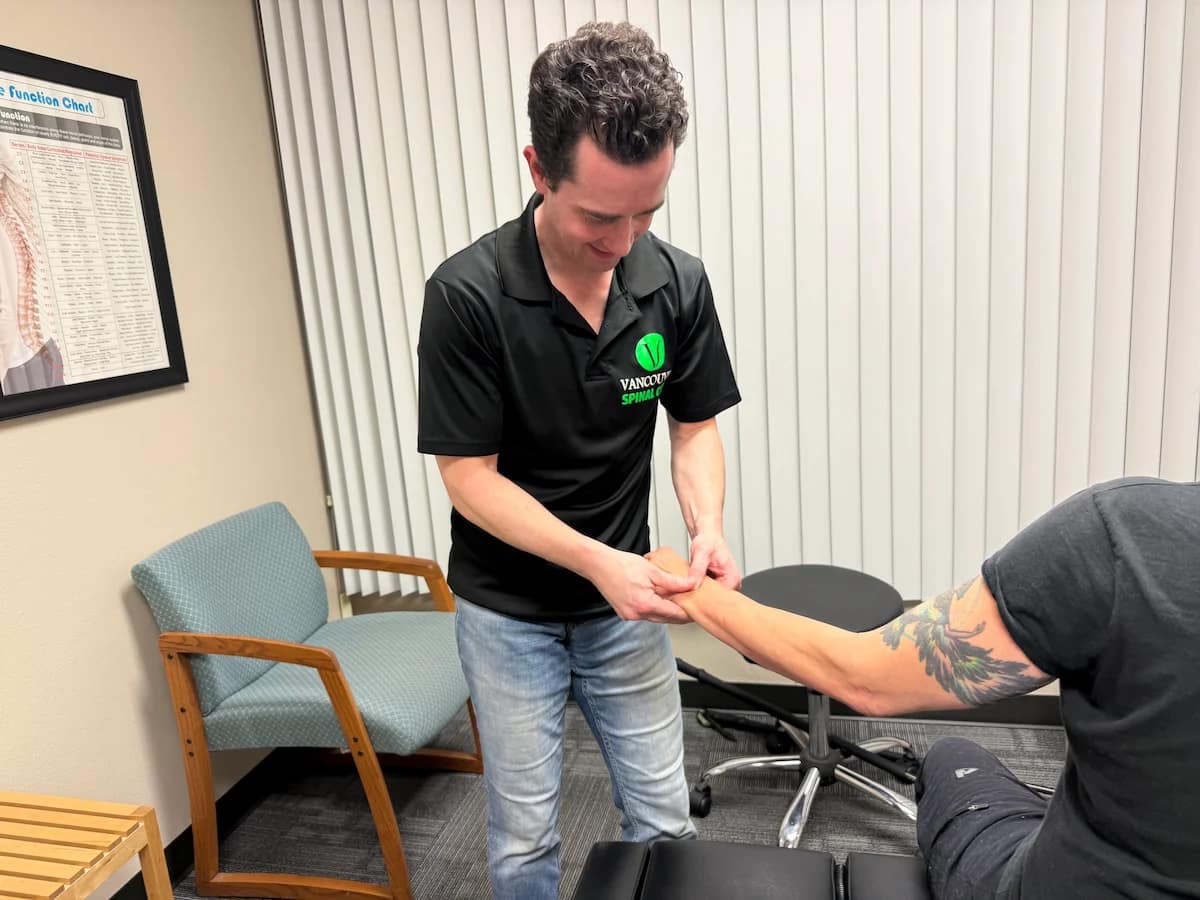
When a patient comes in with desk-related neck pain, we don’t just start adjusting. We want to understand exactly what’s happening first. That means a thorough consultation with Dr. Freeman, diagnostic X-rays to assess the cervical spine structure and curve, and a Nervous System Scan that reveals where inflammation and muscle tension are concentrated.
That combination gives us a clear picture – not just where it hurts, but why it hurts and what’s driving it. From there, Dr. Freeman builds a personalized treatment plan.
Chiropractic Adjustments for the Cervical Spine
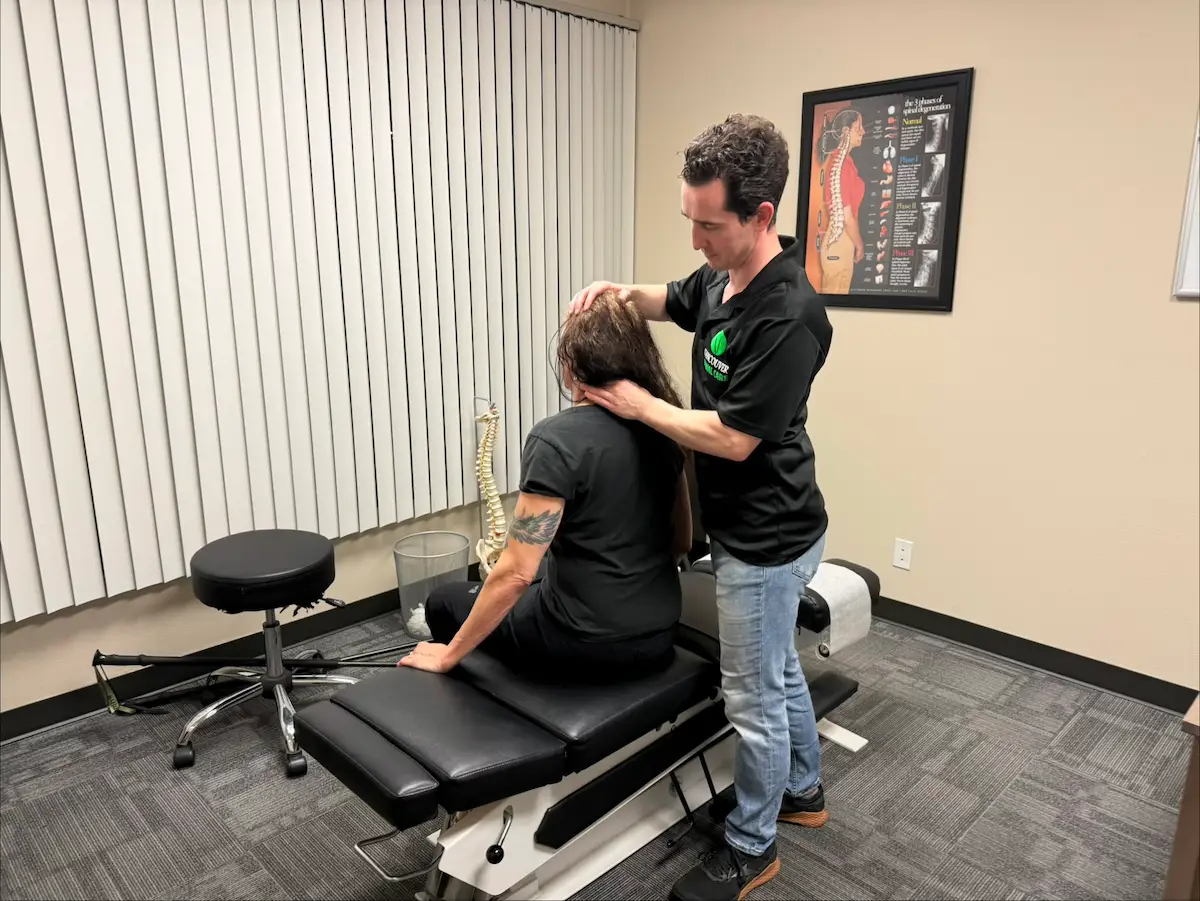
For most desk-related neck pain, chiropractic adjustments are the core of treatment. Specifically, upper cervical adjusting – which targets the top of the spine where the head meets the neck – can be especially effective for forward head posture and tech neck presentations.
The goal isn’t just to reduce pain. It’s to restore proper joint motion, take pressure off irritated nerves, and start working toward a healthier cervical curve. That’s what produces lasting results rather than temporary relief.
What About the Upper Back and Shoulders?
Neck pain and upper back pain almost always travel together. When your cervical spine is out of alignment, the muscles of the upper back and shoulders compensate – and those compensations create their own problems. Dr. Freeman’s background in exercise science means he pays attention to these movement patterns, not just the isolated area that hurts.
If your shoulder or upper back is contributing to your neck issues, that gets addressed as part of your care plan. We also treat shoulder pain directly, which overlaps with many neck presentations.

What You Can Do Between Appointments
Chiropractic care works faster when patients take an active role in their recovery. A few things that make a real difference for desk workers:
Monitor Your Screen Position
Your monitor should be at eye level so your head isn’t tipping down to see it. Even a small downward tilt sustained for hours adds up quickly. A monitor riser or a wall-mounted arm can make this easy to fix.
Take Movement Breaks
The human spine wasn’t designed for eight hours of static sitting. A brief movement break every 45 to 60 minutes – even just standing up and doing a few neck rolls – can interrupt the muscle fatigue cycle before it turns into pain.
Watch Where Your Phone Lives
Phone use is often a bigger culprit than the computer. When you’re looking down at your phone – whether texting, scrolling, or reading – your head is in the exact position that drives tech neck. Bringing the phone up to eye level whenever possible is a habit worth building.
When Neck Pain Deserves Professional Attention
Some neck pain is just soreness that resolves on its own. But there are signs that suggest something more is going on and that you should get evaluated sooner rather than later.
Pay attention if you’re experiencing pain that radiates into your shoulder, arm, or fingers – this can indicate nerve involvement. The same goes for frequent headaches that seem to start at the base of the skull, numbness or tingling in your hands, pain that doesn’t improve after a few days of rest, or stiffness that’s getting worse over time rather than better.
Neck pain that has a neurological component – nerve pressure causing symptoms down the arm – tends to respond very well to chiropractic care when it’s caught before it becomes chronic. Waiting typically makes these cases harder to resolve.
A Note on “Just Living With It”
We talk to a lot of Vancouver patients who’ve been managing neck pain for years because they assumed it was just part of desk life. It’s not. Chronic neck pain and poor cervical alignment have downstream effects – on headache frequency, sleep quality, shoulder function, and even mood. You don’t have to earn your way into care by waiting until things get bad enough.
Dr. Freeman’s approach is built on education and root-cause treatment. When patients understand what’s actually happening in their spine and why, they’re much better equipped to make changes that last. That’s different from the “come in, get adjusted, see you in two weeks” model – there’s a real investment in helping you understand your own body.
Frequently Asked Questions
How many visits does it usually take to see improvement in desk-related neck pain?
Most patients begin noticing real improvement within three to six visits, though this varies based on how long the issue has been present and what the X-rays and scans show. Chronic cases that have built up over years may take longer to fully resolve than more recent presentations.
Is chiropractic adjustment for the neck safe?
Cervical chiropractic adjustments are safe when performed by a trained Doctor of Chiropractic. At Vancouver Spinal Care, Dr. Freeman evaluates every patient’s X-rays and scans before adjusting – so the approach is always informed by what’s actually happening in your spine, not a generic technique applied to everyone.
Can a standing desk fix my neck pain?
Standing desks can help reduce some of the strain from prolonged sitting, but they don’t correct existing spinal misalignments. They’re a useful tool as part of a broader approach – but if you already have cervical joint dysfunction or a reduced cervical curve, a desk change alone won’t address that.
Ready to Stop Managing and Start Fixing?
If neck pain is following you home from work every day, it’s worth finding out what’s actually driving it. The team at Vancouver Spinal Care in the Orchards neighborhood has been helping Vancouver residents get to the bottom of their pain for over 15 years. Schedule an appointment online or call us at 360-694-0300 – we’d be glad to take a look.