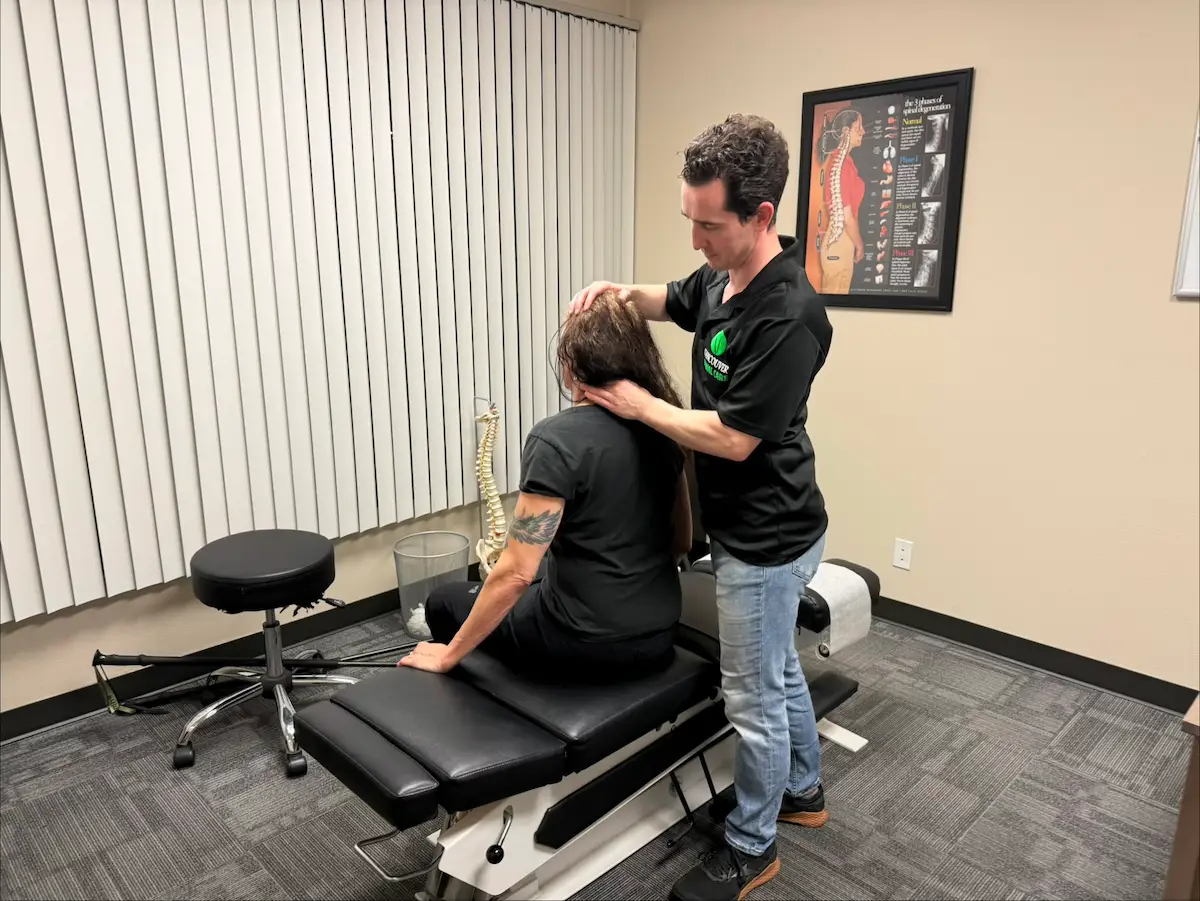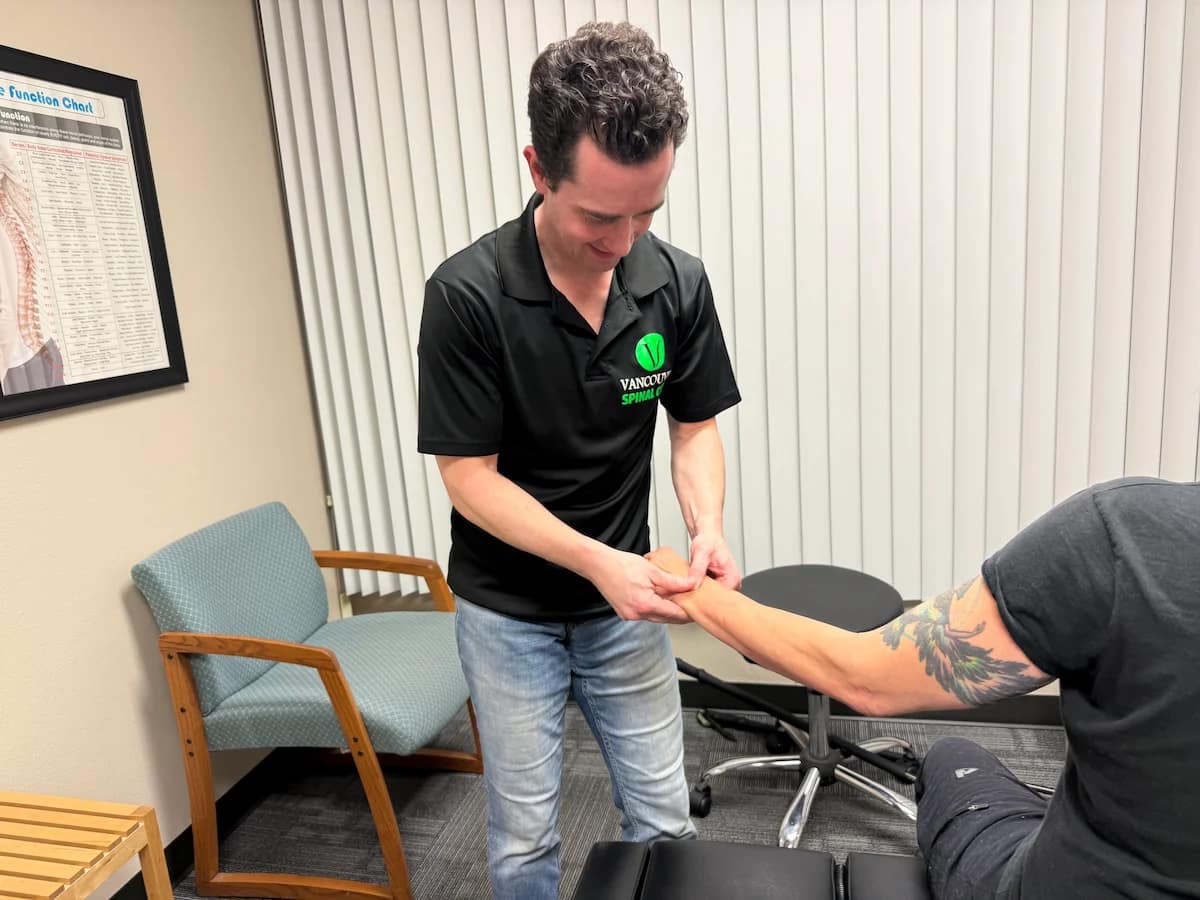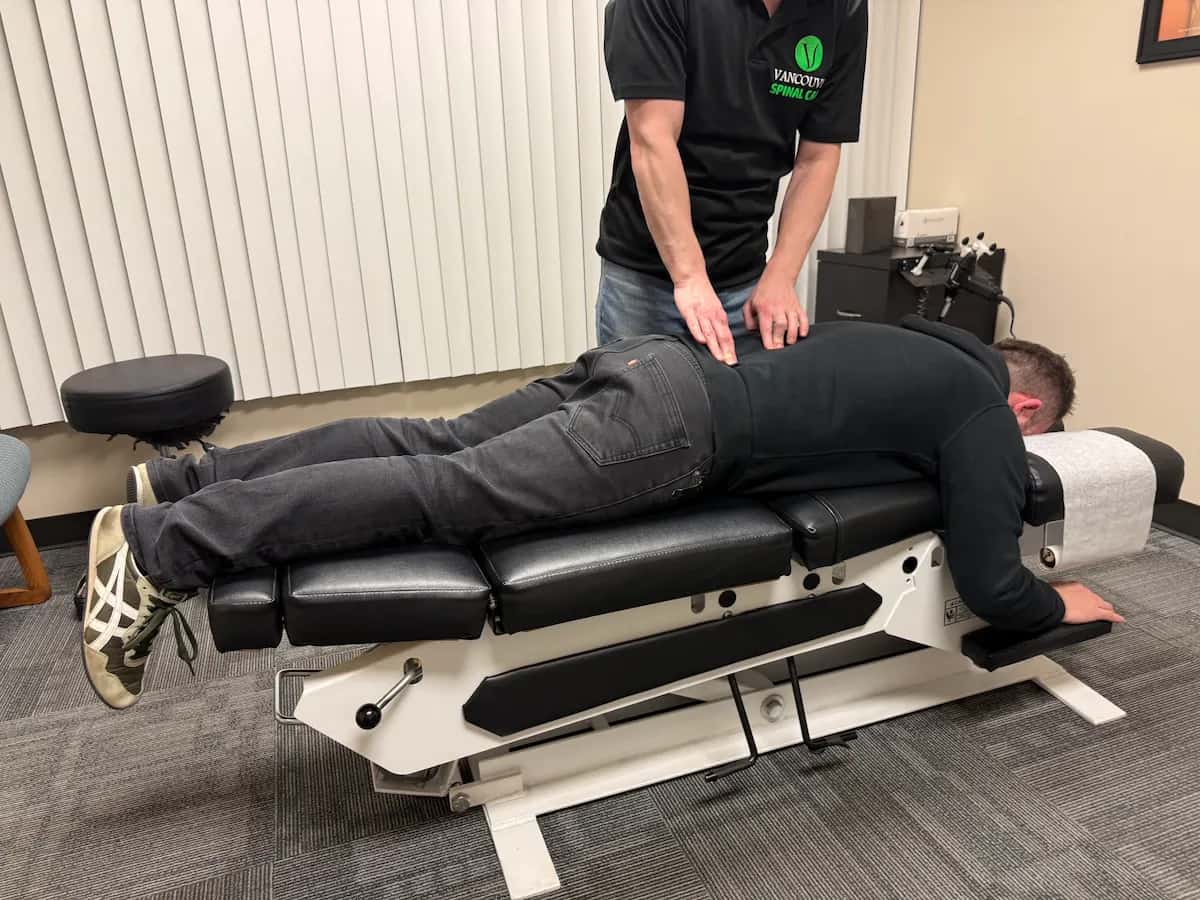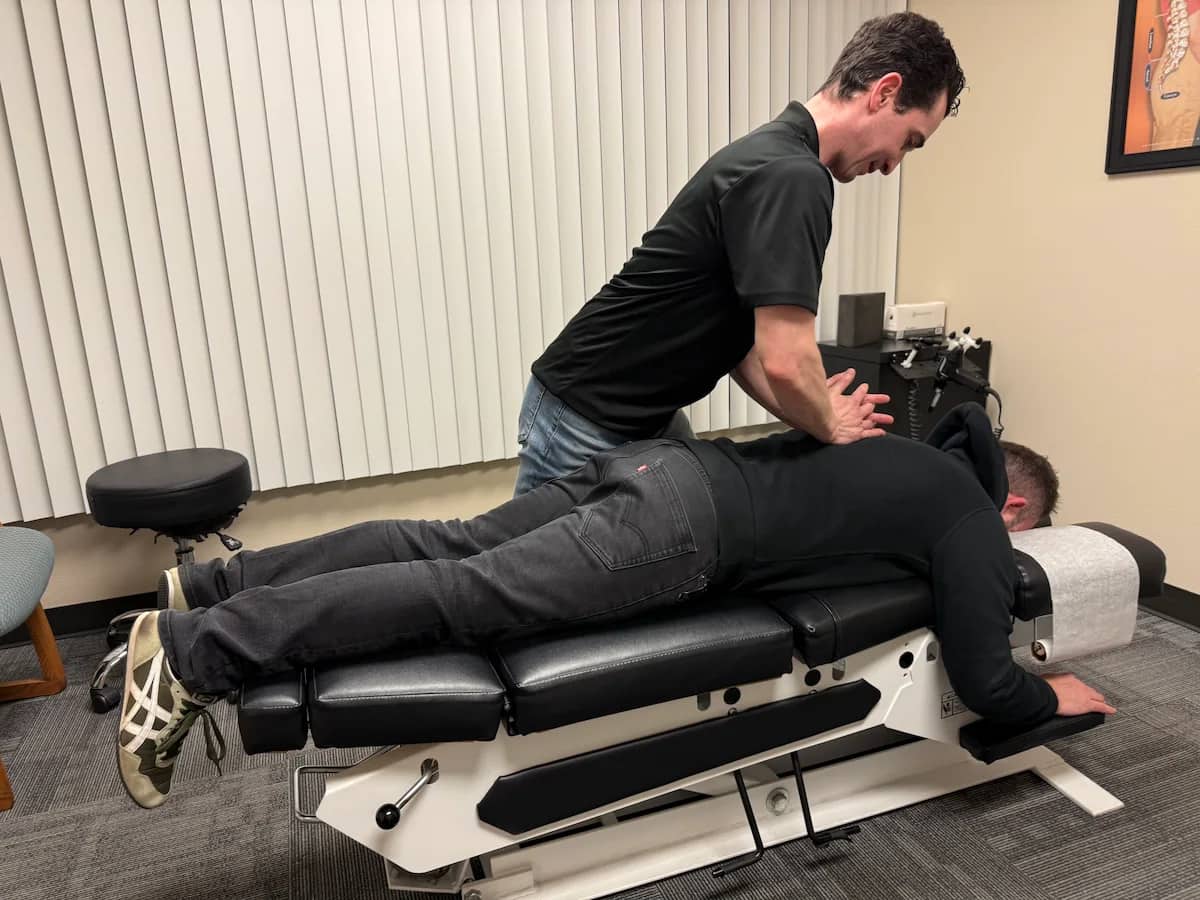
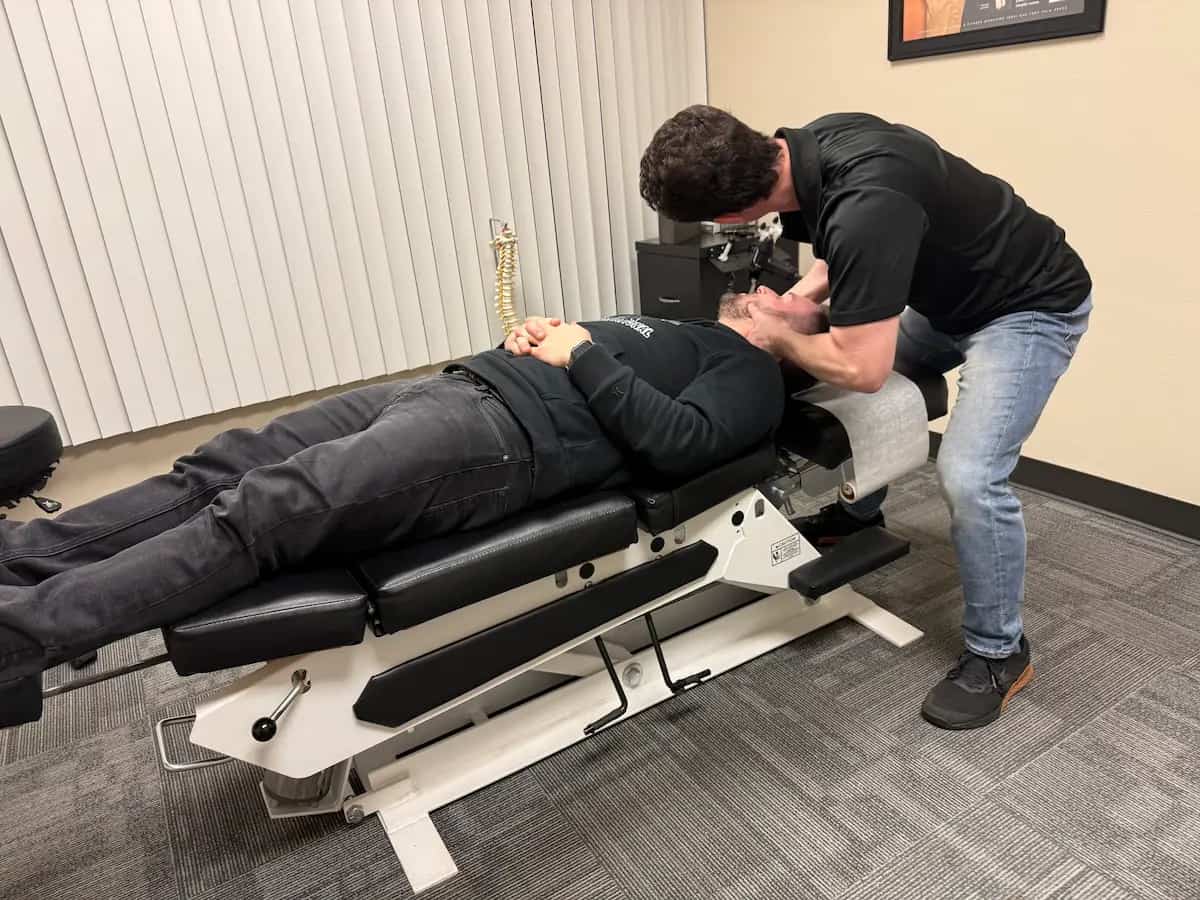
Most chiropractors focus on the spine. Dr. Scott Freeman focuses on the spine and how the whole body moves – and that difference matters more than it might sound. His undergraduate degree in Exercise Science from Eastern Washington University, followed by his Doctor of Chiropractic from Life West Chiropractic College, gives him a perspective on the body that shapes everything from how he evaluates new patients to how he builds treatment plans. It’s one of the things that makes Vancouver Spinal Care genuinely different from a lot of other chiropractic clinics in the area.
What Exercise Science Actually Means in a Chiropractic Context
Exercise Science is the study of how the body moves, adapts to physical stress, and recovers from injury. It covers biomechanics (how forces act on the body during movement), anatomy and physiology at a functional level, strength and conditioning principles, and motor learning – how the nervous system learns and refines movement patterns.
When you layer that foundation under a chiropractic education, something clicks differently. A chiropractor without that background might ask: “Where does it hurt?” An exercise science-trained chiropractor is also asking: “How are you moving? What patterns are creating stress on that area? What’s compensating for what?”
That’s the lens Dr. Freeman brings to every patient he sees at our Vancouver, WA clinic.
Why Movement Matters as Much as Structure
Traditional chiropractic – and medicine generally – has historically focused on structure. Is the spine aligned? Is the disc herniated? Is the joint space normal on X-ray? These are important questions. But structure and movement tell different stories, and you need both to understand what’s actually going on.
Here’s a simple example. Two patients can have identical spinal X-rays but completely different movement patterns. One of them moves efficiently and is largely pain-free. The other has developed compensatory patterns that load one side of the spine more than the other, causing pain even though the imaging looks the same. If you only look at the structure, you’ll miss the movement problem – and the movement problem is often what’s keeping someone in pain.
Dr. Freeman’s training means he evaluates both. The structural picture tells him what’s happening in the spine. The movement picture tells him why – and what needs to change functionally to keep the problem from recurring.
Functional Movement Screening: A Tool Most Chiropractors Don’t Use
One of the most concrete expressions of Dr. Freeman’s exercise science background is his use of Functional Movement Screening. This is a systematic evaluation that identifies movement pattern weaknesses, asymmetries, and compensations that increase injury risk and often contribute to pain.
A Functional Movement Screen looks at fundamental movement patterns – things like squatting, lunging, reaching overhead, and rotating. These movements reveal how well different parts of the body are working together, where mobility is restricted, and where stability is lacking.
For athletes, this information is invaluable. Our sports performance and rehabilitation program uses Functional Movement Screening as a cornerstone of athlete assessment – and it’s part of why Division I and Division II college coaches have relied on Dr. Freeman’s evaluations during the recruitment process. That’s not something most chiropractors can offer, and it comes directly from his movement-focused training.
For non-athletes, the screening is equally useful. A desk worker whose hip flexors are tight and whose glutes aren’t firing properly is loading their lumbar spine in every step they take. A parent who lifts their kids with rounded shoulders is setting up a rotator cuff problem over time. These patterns are invisible without a movement-based evaluation – and they’re exactly what Dr. Freeman is trained to spot.
What This Means for Your Treatment Plan
The practical result of this approach is that your care plan at Vancouver Spinal Care isn’t just a series of adjustments. It’s a plan that addresses what’s happening structurally, what’s happening in your movement patterns, and what you can do actively – between visits and after you’re discharged – to stay healthy.
Dr. Freeman’s philosophy is that patients are partners, not passive recipients. “Knowledge is power” isn’t just a slogan for him – it’s how he practices. When you understand why your back pain keeps coming back, what movement patterns are driving it, and what to do about it, you’re much better equipped to stay out of pain long-term than if you just come in, get adjusted, and leave.
That approach also changes the conversation around exercise and daily activity. Dr. Freeman isn’t just telling you to “stretch more” or “strengthen your core” in vague terms. He can identify which muscles are underperforming, which movement patterns need retraining, and what specific exercises will actually address your situation – because he has the training to understand the difference.
How This Background Benefits Specific Patient Types
Athletes
For athletes, the combination of chiropractic and exercise science training is a natural fit. Understanding how sports-specific movement patterns create injury risk – and how to address those patterns through both treatment and training modification – is something that requires both a movement background and a clinical one. Dr. Freeman has worked with athletes at every level, from youth sports through collegiate and adult recreational competition, and his assessments are built on a genuinely comprehensive understanding of what athletic performance demands from the body.
Active Adults and Manual Workers
People who are physically active in their work – construction workers, landscapers, warehouse workers, healthcare professionals who lift patients – develop occupation-specific movement patterns and injury risks. An exercise science perspective helps identify where those patterns create vulnerability and how to address them without just telling someone to “be careful.”
Patients with Recurring Pain
If you’ve been treated for the same problem multiple times without lasting results, a movement-based evaluation often reveals what’s been missed. Recurring neck pain, recurring low back flare-ups, and persistent shoulder problems frequently have a movement pattern component that needs to be addressed alongside the structural work.
The Difference Between “Fixed” and “Better”
One of Dr. Freeman’s core beliefs is that there’s a difference between getting someone out of pain and actually solving their problem. Adjustments can get people out of pain relatively quickly in many cases. But if the movement patterns, muscle imbalances, and lifestyle factors that created the problem in the first place are still there, it’s only a matter of time before the same pain comes back.
The goal of care at Vancouver Spinal Care is to get you to “better” – not just “fixed for now.” That requires treating the structure, addressing the movement, educating the patient, and building a plan that extends beyond the treatment table. That’s what an exercise science background makes possible in a way that a purely structure-focused approach doesn’t.
See the Difference for Yourself
If you’ve been to chiropractors before and felt like something was missing – like the treatment helped temporarily but never really addressed the underlying issue – it might be worth experiencing a movement-focused approach. Dr. Freeman’s background at Eastern Washington University and Life West Chiropractic College gives him a toolkit that most chiropractors simply don’t have.
Vancouver Spinal Care is located in the Orchards neighborhood and has been serving Vancouver, WA and the surrounding communities for over 15 years. To learn more about Dr. Freeman’s background and approach, visit his bio page. When you’re ready to get started, schedule an appointment online or call us at 360-694-0300.