
Whiplash symptoms frequently don’t appear until 24 to 72 hours after a car accident – sometimes longer. This delay is one of the most dangerous aspects of whiplash injuries, because it leads many people to assume they’re fine when the tissue damage is already done. If you were in a collision in Vancouver, WA and you’re not feeling symptoms yet, that’s not necessarily reassurance that nothing happened to your spine.
Why Whiplash Symptoms Are Often Delayed
The mechanism of a whiplash injury – rapid back-and-forth movement of the head and neck – happens in a fraction of a second. The cervical spine absorbs forces it was never designed to handle at that speed, and the muscles, ligaments, discs, and joints of the neck can sustain significant injury in that instant.
But the pain and stiffness don’t always follow immediately. Several biological processes explain the delay. Adrenaline released during and after the accident has a real pain-masking effect – your body’s stress response can suppress pain signals for hours. Inflammation takes time to develop; the peak of swelling and tissue irritation typically occurs between 24 and 72 hours after the injury, which is often when symptoms become noticeable. And muscle guarding – the protective tension the body creates around injured tissue – may not fully manifest until the nervous system has had time to register the extent of the damage.
By the time patients feel the stiffness, headaches, and neck pain that characterize whiplash, the underlying tissue injury is well established. The delay creates a window in which people make the mistake of assuming they’re uninjured – and skip the evaluation that could make a significant difference in their recovery.
What Whiplash Actually Does to the Cervical Spine
The term “whiplash” is commonly used, but it understates what can happen to the cervical spine in a collision. Depending on the speed and direction of impact, a whiplash injury may involve stretching or tearing of the cervical ligaments, disc injury including bulging or herniation, facet joint damage, muscle strain throughout the neck and upper back, and nerve irritation from displaced tissue or altered joint mechanics.
The ligaments of the cervical spine are particularly vulnerable because they stabilize the joints but have limited blood supply, which means they heal slowly. Ligament damage that goes untreated – or undertreated – can lead to chronic cervical instability, which is one reason whiplash patients who don’t receive proper care sometimes develop long-term neck pain and dysfunction that persists for years after the accident.
Recognizing Whiplash Symptoms
The most common symptoms of whiplash and auto accident injuries include neck pain and stiffness (often worse the morning after the accident), reduced range of motion in the cervical spine, headaches that typically start at the base of the skull, shoulder and upper back pain, fatigue, dizziness, and in some cases tingling or numbness into the arms.
Less recognized but common symptoms include difficulty concentrating, sleep disturbance, irritability, and jaw pain. These symptoms – sometimes grouped under the term “whiplash-associated disorders” – reflect the fact that the nervous system disruption from a cervical injury can extend beyond the neck itself.
If you were in a collision and you’re experiencing any of these symptoms – even if they seem mild – it’s worth getting evaluated. Mild initial symptoms don’t reliably predict the severity of the underlying injury.
Why Waiting Is Usually the Wrong Call
There are two main reasons people delay seeking care after a car accident. One is the delayed symptom onset described above – they feel okay immediately after and assume nothing is wrong. The other is that they’re dealing with the practical aftermath of the accident (insurance claims, car repairs, police reports) and put their own health on the back burner.
Both are understandable. But from a clinical standpoint, the window right after an injury is when treatment has the most impact. Inflammation is easier to manage before it peaks and becomes entrenched. Spinal misalignments are easier to correct before the surrounding muscles have adapted and tightened around them. And the longer tissue damage goes unaddressed, the more likely it is to develop into chronic pain.
There’s also a practical consideration for anyone who may need to file a personal injury claim. Gaps between the accident and the start of treatment can be used by insurance adjusters to argue that the injury wasn’t serious or wasn’t caused by the collision. Prompt evaluation creates a clear, contemporaneous record.
How We Treat Whiplash at Vancouver Spinal Care
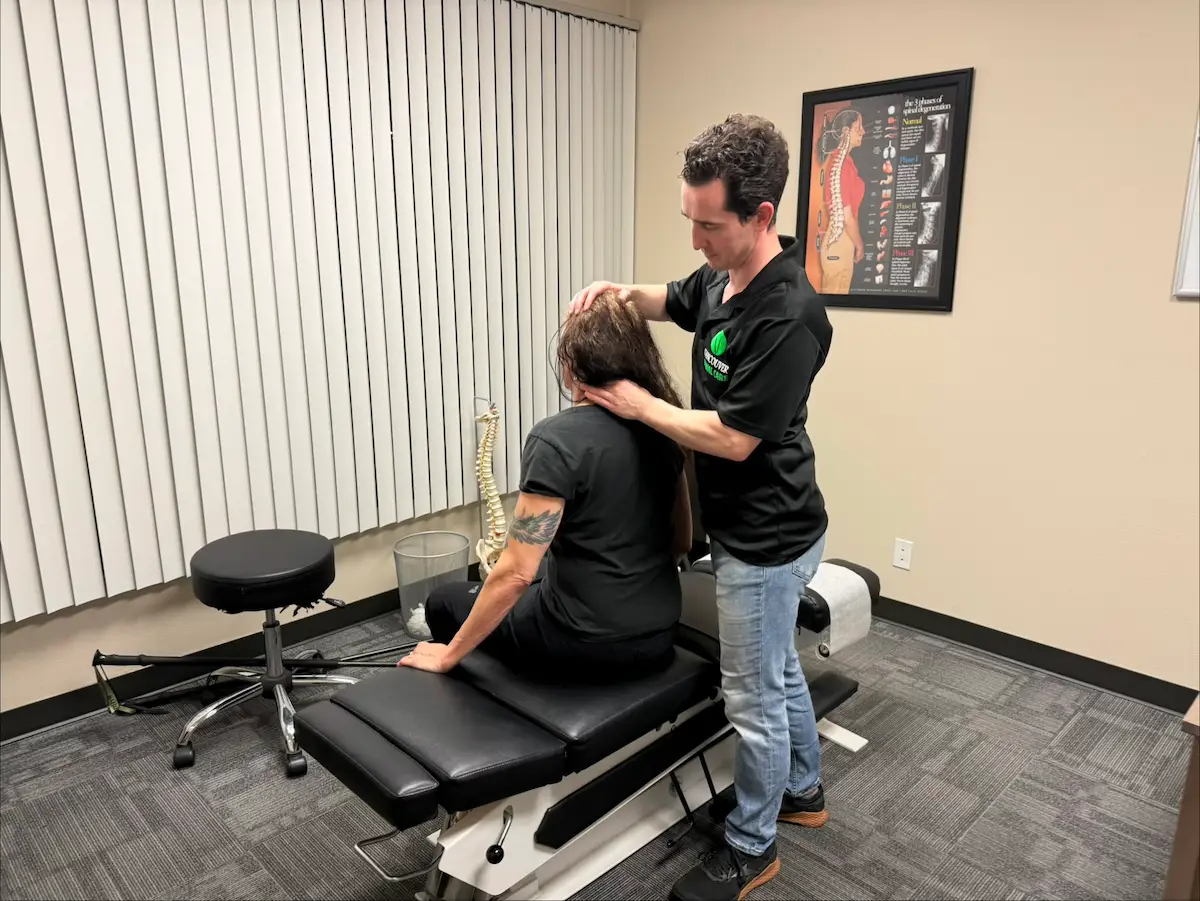
Whiplash treatment at our clinic starts with a thorough evaluation – reviewing the mechanism of the collision, your current symptoms, and your cervical spine’s structural and functional status. Diagnostic X-rays identify any misalignment or bony injury. The Nervous System Scan reveals where muscle tension and neurological stress are concentrated along the cervical and upper thoracic spine.
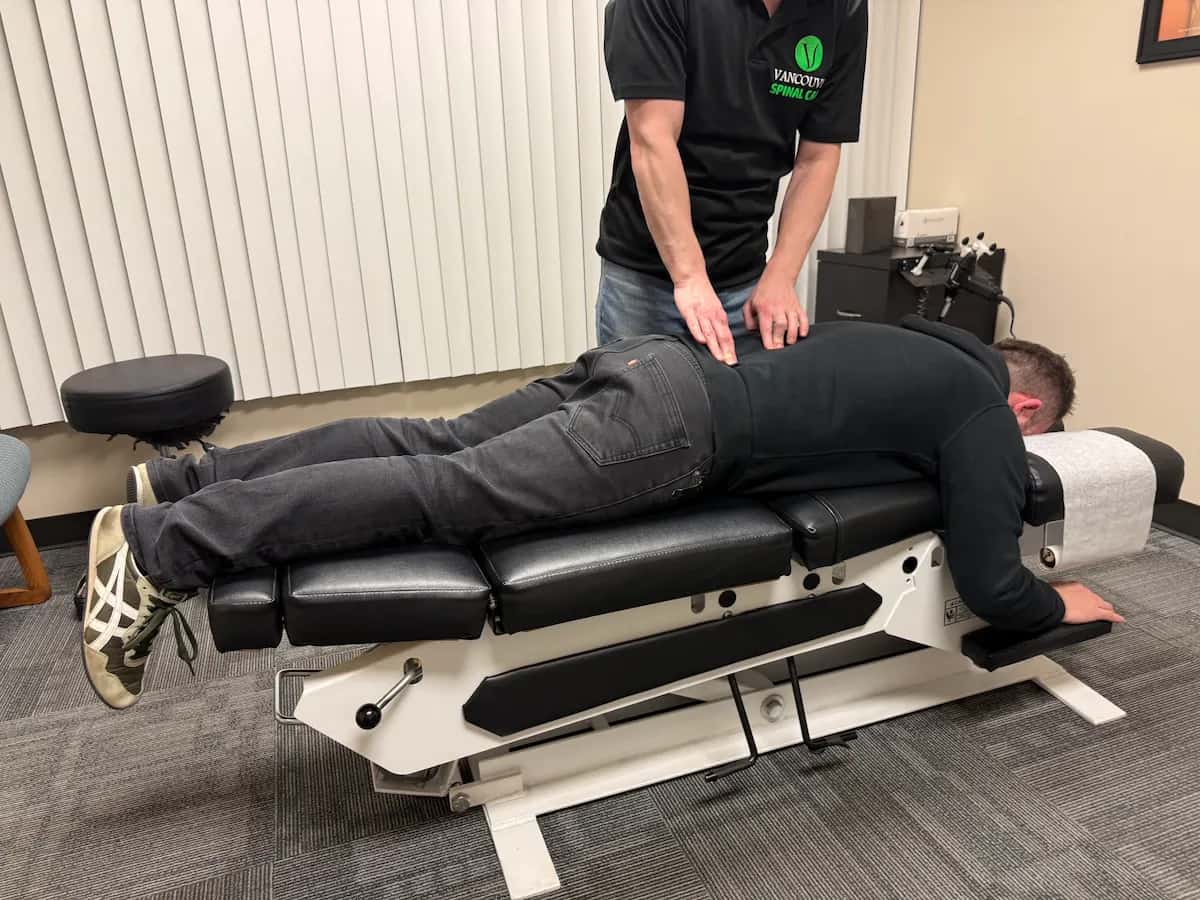
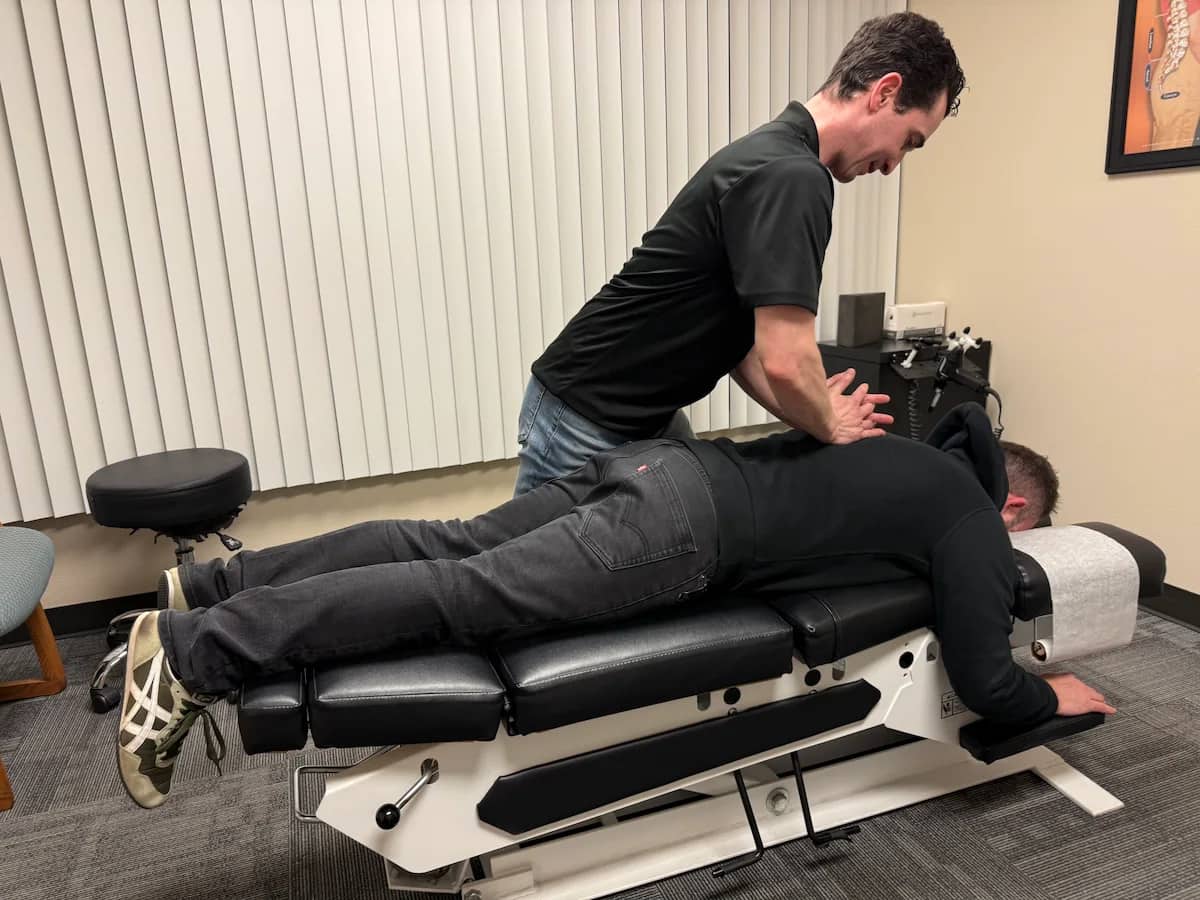
From there, Dr. Freeman builds a treatment plan specific to your presentation. For acute whiplash, the early phase of care typically focuses on reducing inflammation, restoring cervical joint mobility through gentle adjustments, and managing the muscle guarding that develops around the injured area. Instrument-assisted adjusting and other low-force techniques are often used in the acute phase when the cervical spine is particularly sensitive.
As the acute phase resolves, care shifts toward restoring full range of motion, addressing any remaining misalignments, and rehabilitating the strength and stability of the cervical and upper back muscles. The goal is a complete recovery – not just pain reduction – so that chronic neck problems don’t develop down the road.
We also handle all documentation for personal injury claims, which is important for patients who are working with an attorney or dealing with another driver’s insurance company.
What About Concussion After a Car Accident?
Concussion and whiplash often occur together in collisions – particularly rear-end impacts. A concussion doesn’t require a direct blow to the head; the same rapid acceleration-deceleration that causes whiplash can produce concussive brain injury. If you experienced any confusion, brief loss of consciousness, headache, nausea, or visual changes following the collision, tell us during your evaluation. We assess for concussion alongside cervical injury and coordinate care accordingly.
Frequently Asked Questions
How long does whiplash take to heal?
Mild whiplash cases often resolve within a few weeks with appropriate care. More significant injuries – particularly those involving ligament damage or disc involvement – may take several months to fully recover from. The key factor is how quickly treatment begins and how consistently the patient engages with the care plan.
I was in a low-speed collision. Can I still have a whiplash injury?
Yes. Research consistently shows that injury severity doesn’t reliably correlate with vehicle damage or collision speed. Low-speed rear-end collisions can produce significant cervical injuries because of the physics involved – the occupant’s head and neck continue moving after the vehicle is struck, regardless of how minor the vehicle damage appears.
Will my auto insurance or the other driver’s insurance cover chiropractic care?
In most cases, yes. Personal injury protection (PIP) coverage – which Washington State requires on auto insurance policies – covers medical treatment including chiropractic care after a collision, regardless of fault. If another driver was at fault, their liability coverage may also apply. Our team handles insurance coordination directly so you’re not managing that while you’re recovering.
Don’t Wait to Find Out if You’re Okay
If you were in a car accident in Vancouver, WA – even one that seemed minor – the smartest thing you can do is get evaluated promptly. Vancouver Spinal Care has been helping post-collision patients throughout Clark County recover fully for over 15 years, and we handle all the insurance and documentation so you can focus on getting better. Schedule an appointment online or call us at 360-694-0300.