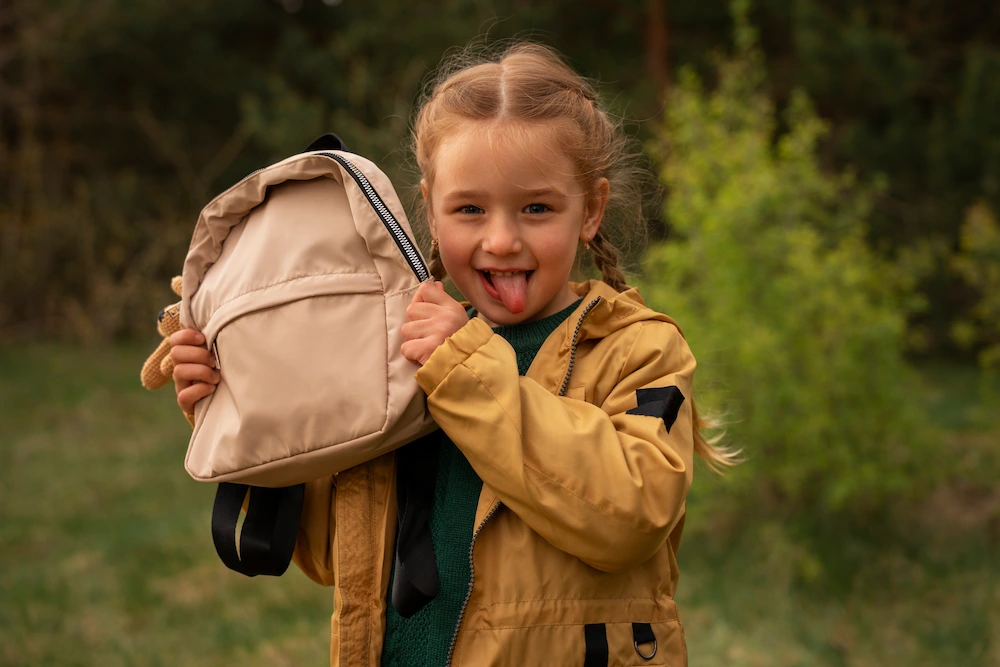
A backpack that’s too heavy, worn too low, or carried on one shoulder puts real stress on a growing spine – and the effects can build up quietly over an entire school year before a parent notices anything is wrong. Back pain, posture changes, and spinal misalignment in school-age children are more common than most parents realize, and the backpack is one of the most overlooked contributing factors. Here’s what to watch for and what to do about it.
How Much Is Too Much Weight?
The general guideline from pediatric health organizations is that a child’s backpack should not exceed 10 to 15 percent of their body weight. In practice, many school-age children are carrying significantly more than that – particularly in middle school, where textbooks, binders, a laptop, and a lunch bag can easily push a pack past 20 or 25 pounds.
To put that in perspective: a 70-pound child carrying a 15-pound backpack is already at the upper limit of the recommended range. If that same child habitually wears the pack low on their back or on one shoulder, the effective load on the spine is substantially higher than the scale weight suggests.
The problem isn’t just the weight itself – it’s the sustained, repetitive nature of the load. A child carrying that pack five days a week, walking to and from school and through the hallways between classes, is putting cumulative stress on the lumbar and thoracic spine during some of the most critical years of spinal development.
What That Load Does to the Developing Spine
Children’s spines are still developing through adolescence – the vertebral growth plates don’t fully close until the late teens. During this window, the spine is both more adaptable and more vulnerable than an adult spine. Sustained asymmetrical loading during growth can contribute to postural adaptations and muscle imbalances that become structural over time.
The most common effects of chronic backpack overload include forward head posture (the head drifts forward to compensate for the backward pull of the pack), increased lumbar curve as the low back arches to counterbalance the load, shoulder elevation and neck tension from single-strap carrying, and spinal misalignments that the surrounding muscles work to stabilize – creating chronic tension and sometimes pain.
Many of these changes are subtle at first. The child adapts without consciously realizing it, and parents may not notice until the posture shift becomes pronounced or the child starts complaining of pain.
Warning Signs to Watch For in Your Child
These are the signs that suggest the backpack – or some other postural stressor – may be affecting your child’s spine:
One shoulder sitting visibly higher than the other, particularly when the pack is off. A forward head posture where the ears are in front of the shoulders rather than directly above them. Complaints of back, neck, or shoulder pain – especially pain that appears or worsens on school days. Fatigue or reluctance to walk that seems disproportionate to the activity level. Leaning to one side when standing or walking. Tingling or numbness in the arms, which can indicate nerve involvement in more significant cases.
Pain is not always present, and its absence doesn’t mean everything is fine. Some of the most meaningful postural changes in children develop without any pain signal until they’re well established.
Backpack Habits That Reduce Spinal Stress
Use Both Straps, Worn High
This is the single most impactful change most families can make. Wearing both straps distributes the load symmetrically across both shoulders rather than pulling one side down. The pack itself should sit against the upper back – the bottom of the pack should rest at the waist, not hang below it. A low-hanging backpack acts like a pendulum that pulls the spine backward and forces compensatory forward lean.
Use the Waist Strap If There Is One
Many larger backpacks have a waist strap that transfers a portion of the load to the hips. Most kids don’t use it, but it makes a meaningful difference in how the spine absorbs the weight. If your child’s pack has one, make sure they use it.
Lighten the Load When Possible
Take stock of what’s actually going in the pack each day. Many kids carry everything all the time out of habit rather than necessity. If the school allows it, leaving non-essential books in a locker can reduce the daily load significantly. Digital textbook options, where available, are worth requesting.
Choose the Right Pack
Wider, padded shoulder straps distribute load more evenly than thin straps. A pack with multiple compartments allows weight to be distributed front-to-back rather than concentrated in a single heavy pouch. Frame packs designed for hiking apply these principles and can be a good option for children who carry heavier loads regularly.
When to Bring Your Child In for an Evaluation
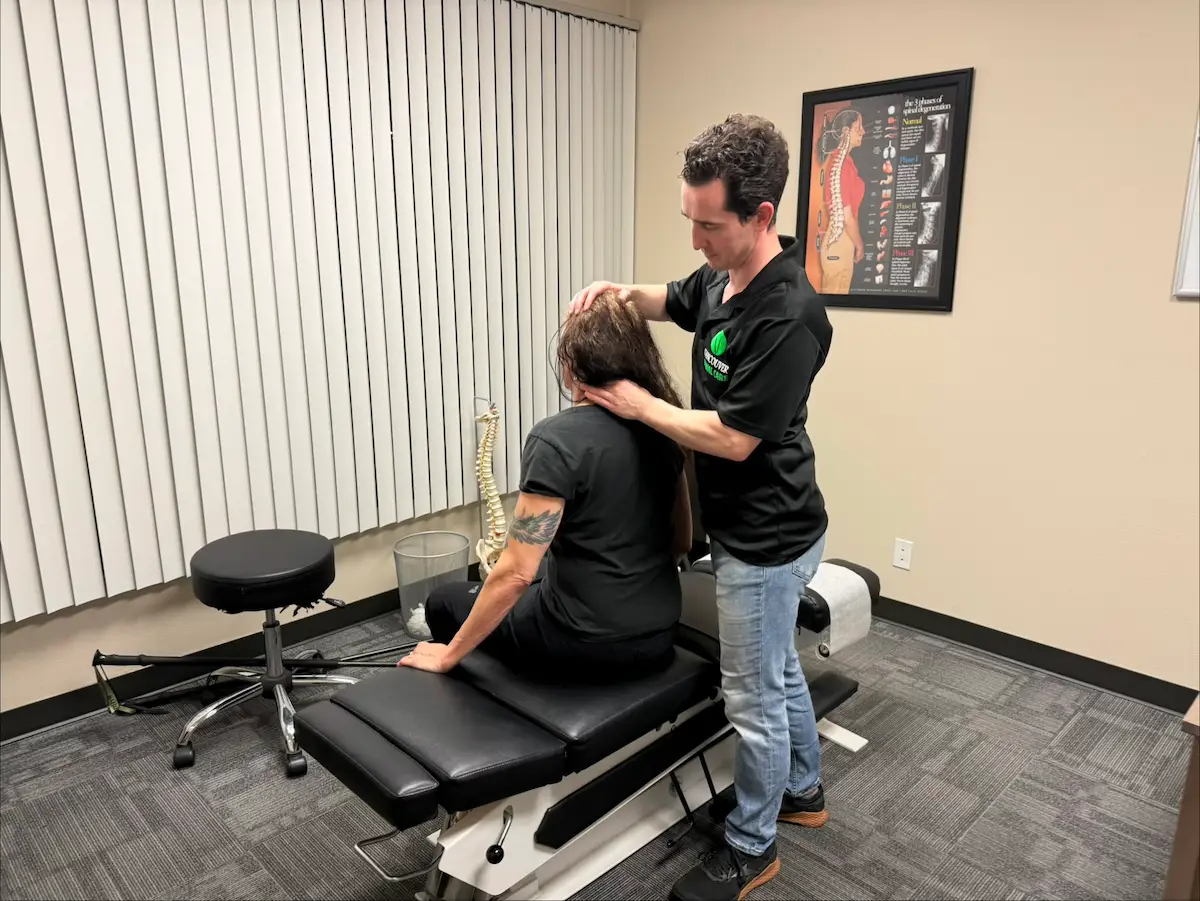
If your child has been complaining of back or neck pain, or if you’ve noticed postural changes that concern you, a chiropractic evaluation is a practical next step. At Vancouver Spinal Care, Dr. Freeman sees children regularly and tailors both the assessment and the care to each child’s age and developmental stage.
The evaluation looks at spinal alignment, posture, range of motion, and areas of muscle tension – building a picture of whether the spine is developing normally or whether compensatory patterns have started to take hold. For children with significant postural findings, chiropractic adjustments for pediatric patients use very light, age-appropriate techniques that bear little resemblance to adult care.
Early intervention matters because growing spines respond faster to correction than adult spines. Postural patterns caught in childhood or early adolescence are far easier to address than the same patterns left to develop through the teen years and into adulthood.
This Isn’t Just a Backpack Problem
It’s worth naming the bigger picture here. Backpack load is one piece of a larger set of postural stressors that today’s school-age children face – prolonged desk sitting, smartphone and tablet use with the head bent forward, gaming postures, and reduced outdoor activity that would otherwise build the core and postural strength that supports the spine naturally.
The backpack is a concrete, actionable factor that parents can address directly. But if your child’s posture is showing strain, it’s likely the backpack is just the most visible part of a broader pattern worth evaluating. Dr. Freeman’s background in Exercise Science means the assessment goes beyond the spine to look at how the whole body is moving and what functional patterns need attention.
Give Your Child’s Spine the Attention It Deserves
Most parents wouldn’t hesitate to take their child in for a dental checkup or an eye exam. A spinal evaluation deserves the same consideration – especially during the years when the spine is still developing and small interventions can prevent big problems later.
Vancouver Spinal Care serves families throughout Vancouver, WA and the Orchards area, and we see patients of all ages from children through seniors. If you have concerns about your child’s posture or spine, we’d be glad to take a look. Schedule an appointment online or call us at 360-694-0300.