
Whether you’re a high school athlete trying to earn a college scholarship, a weekend competitor looking to stay healthy through a long season, or a parent watching your kid play club sports and wondering if they’re moving well, functional movement screening is one of the most underused performance tools available in Vancouver, WA. At Vancouver Spinal Care, it’s a cornerstone of how we approach athletic care — and it’s why D1 and D2 college coaches have come to rely on our athlete assessments as part of their recruitment process.
What Is Functional Movement Screening?
Functional movement screening — often called FMS — is a systematic evaluation of how your body moves through fundamental patterns: squatting, lunging, stepping, reaching, rotating, and stabilizing. It’s not a strength test or a fitness assessment. It’s a movement quality test designed to identify asymmetries, compensations, and limitations that create injury risk and limit performance.
The core idea is straightforward: before you can perform at your best, your body needs to move the way it was designed to move. When it doesn’t — when one hip is tighter than the other, when your shoulder mobility is restricted on one side, when your core can’t stabilize your spine under load — you compensate. Those compensations work until they don’t, and when they break down, injury follows.
FMS finds those patterns before injury happens. That’s what makes it such a powerful tool for athletes at every level.
Dr. Freeman’s Exercise Science Background Makes a Difference
Most chiropractors treat injuries after they happen. Dr. Scott Freeman holds a Bachelor of Science in Exercise Science from Eastern Washington University in addition to his Doctor of Chiropractic degree from Life West Chiropractic College. That dual background means he approaches athletes differently — through both a clinical lens and a movement lens simultaneously.
When Dr. Freeman evaluates an athlete, he’s not just asking “where does it hurt?” He’s asking “how do you move, and why are you moving that way?” Those are different questions, and they lead to different — and more complete — answers.
The Athlete Assessment: What’s Included
Our comprehensive athlete assessment at Vancouver Spinal Care goes well beyond the standard sports physical. Here’s what the process looks like:
Movement Pattern Analysis
We evaluate your fundamental movement patterns across multiple planes of motion. This reveals mobility restrictions, stability deficits, and asymmetries — left-to-right imbalances that are often the hidden factor behind overuse injuries and recurring pain.
Spinal and Joint Evaluation
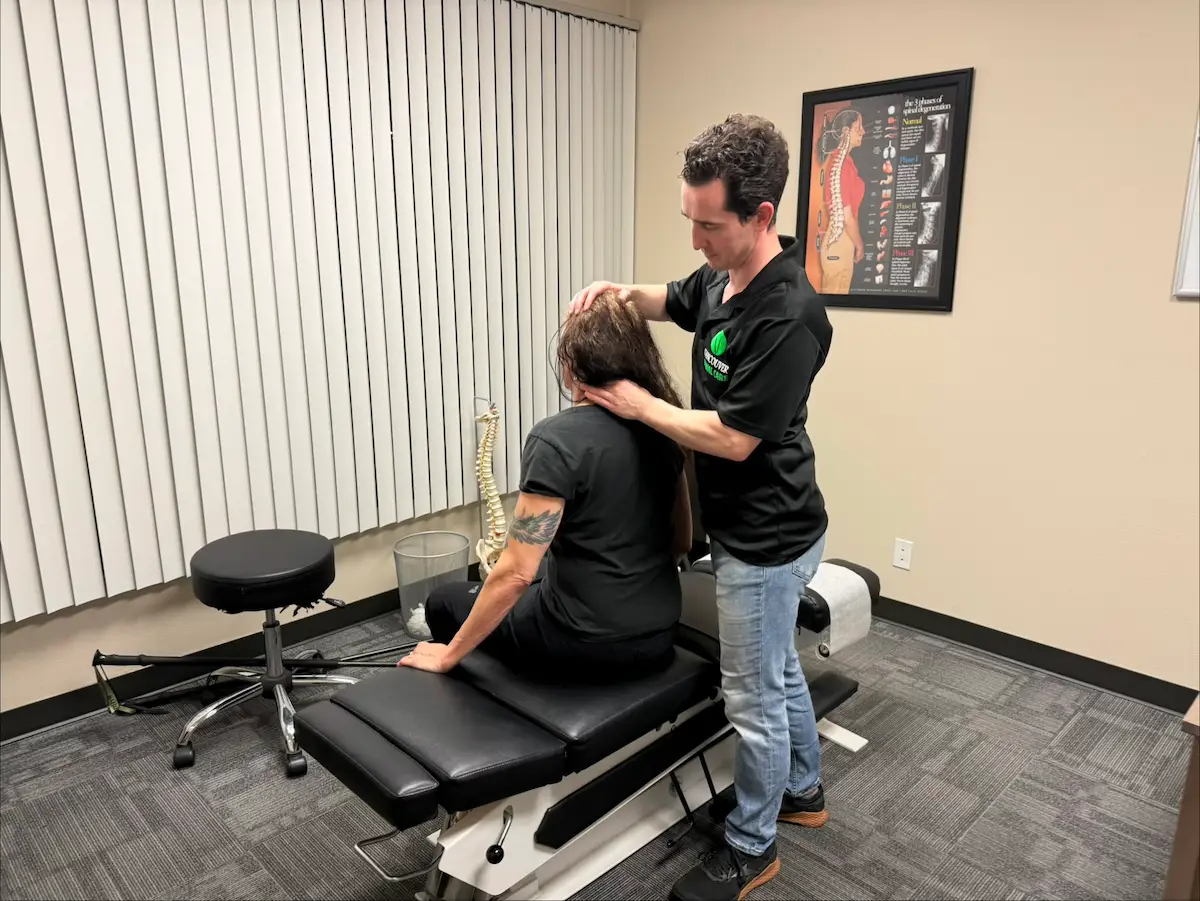
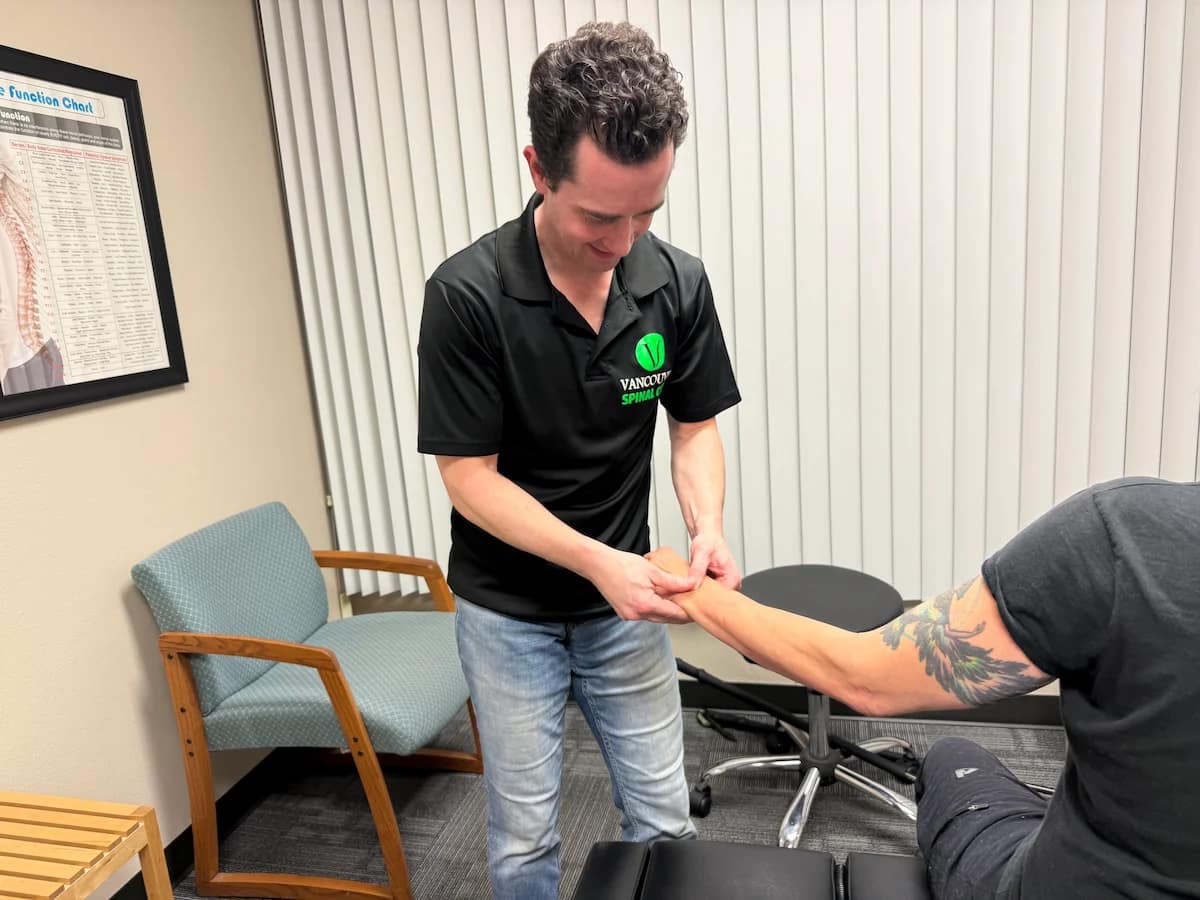
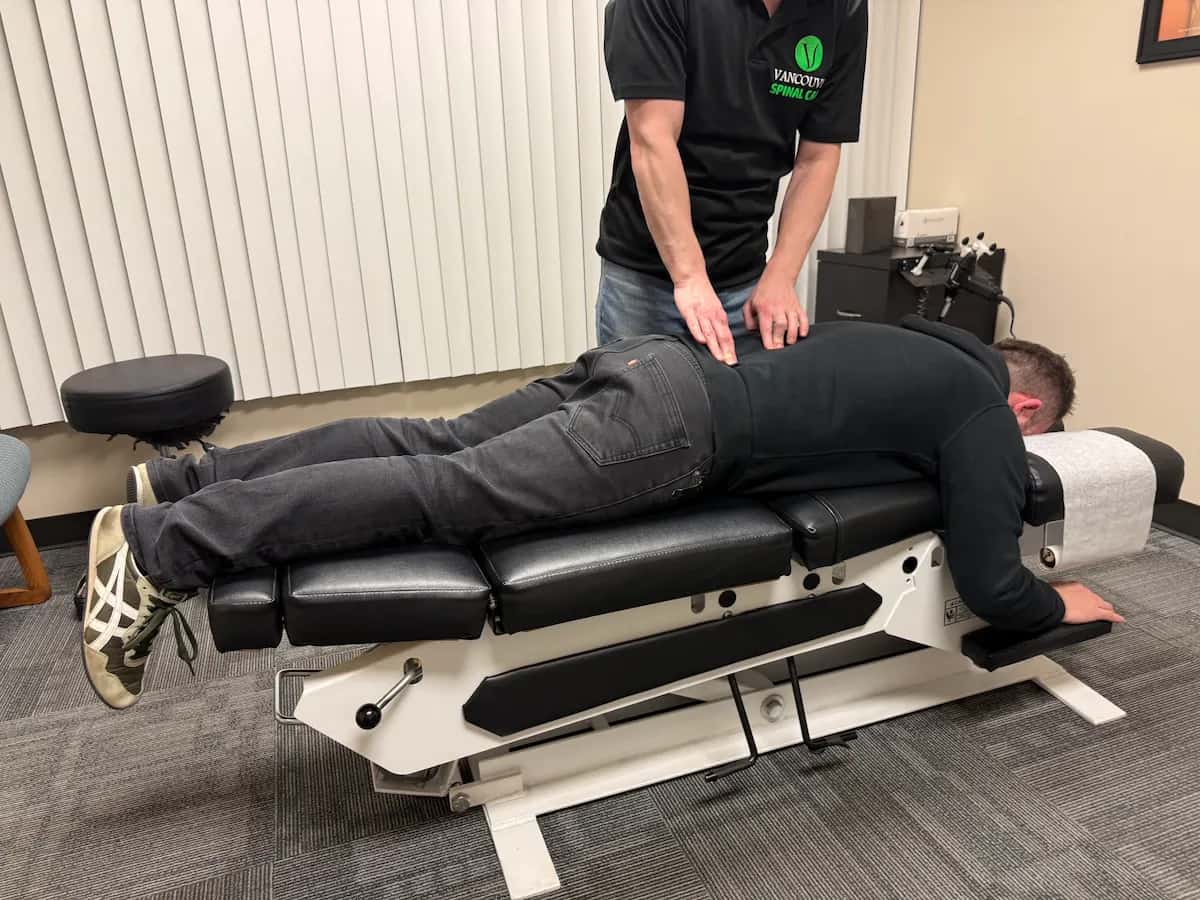
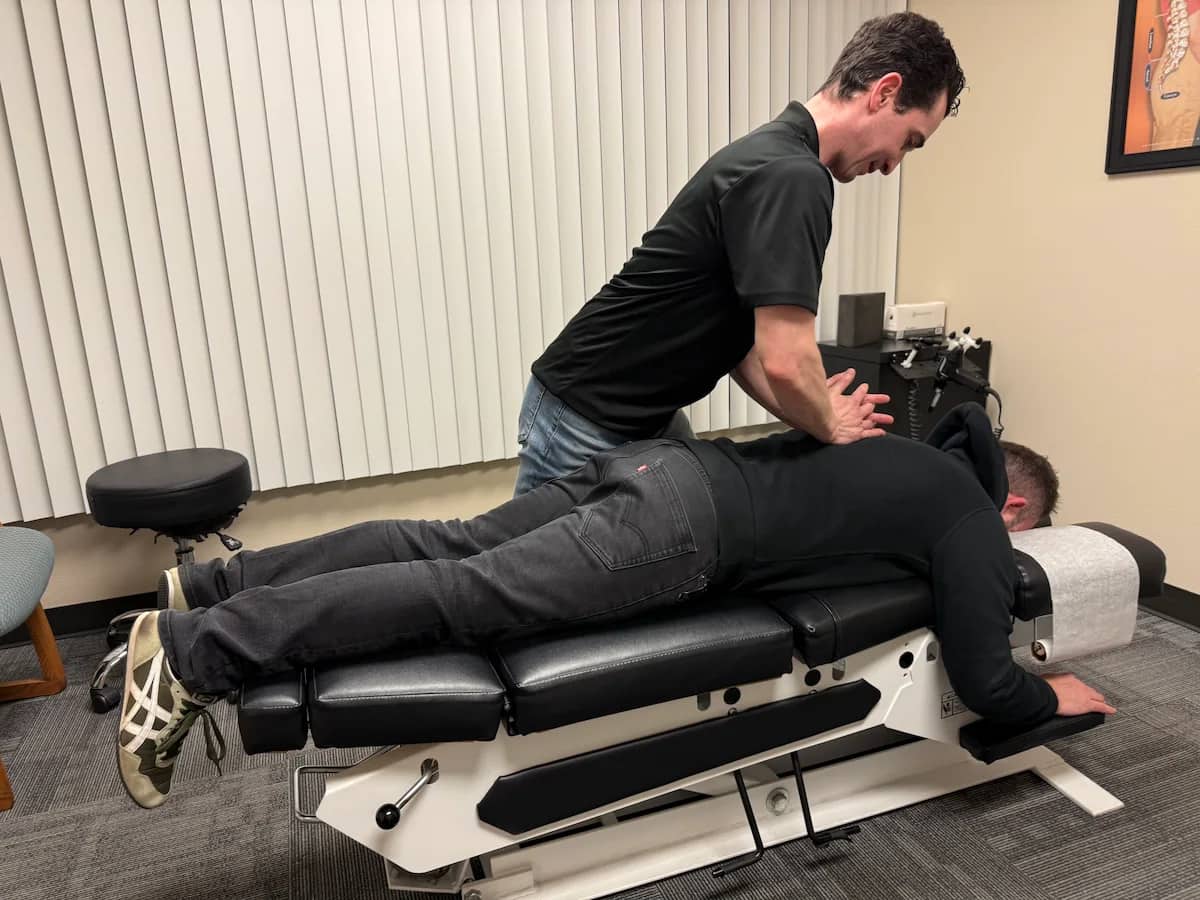
Dr. Freeman conducts a hands-on assessment of spinal alignment and joint function. Athletes put significant demands on their spine and peripheral joints, and even minor misalignments can compound into major problems over a competitive season. We identify and address these before they become performance limiters or injury risks.
Nervous System Assessment
The Nervous System Scan provides a data-driven look at how your nervous system is responding to the physical demands you’re placing on it. For athletes, this can reveal stress patterns and inflammation that affect recovery time, coordination, and overall athletic output — often in areas that don’t feel painful yet.
Sport-Specific Considerations
The demands of a baseball pitcher’s shoulder are different from a soccer player’s hip or a wrestler’s cervical spine. Dr. Freeman’s assessments are tailored to the specific movement demands of your sport, not a generic template applied to every athlete who walks through the door.
Why D1 and D2 Coaches Trust Our Assessments
College coaches at the Division I and Division II level use our athlete assessments as medically backed confirmation during the recruitment process. That’s not a marketing claim — it reflects the clinical rigor and practical detail of what we provide.
When a coach is making a scholarship decision, they want to know that an athlete’s body can hold up to the demands of collegiate competition. A comprehensive assessment from a Doctor of Chiropractic with an exercise science background gives them documentation that goes beyond what a standard sports physical provides. It speaks to movement quality, structural integrity, and injury risk in language that matters to athletic programs.
For athletes pursuing college recruitment, having this documentation in your portfolio is a genuine differentiator.
Injury Prevention vs. Injury Treatment
Most athletes come to a chiropractor when something hurts. The smarter play — and the approach elite programs are increasingly adopting — is proactive assessment before injury occurs.
Here’s why it matters: by the time an injury is painful, the underlying dysfunction has usually been present for a while. A shoulder that finally breaks down mid-season didn’t fail overnight — it was compensating for a movement restriction or stability deficit for months. Identifying that pattern earlier means you can address it before it becomes a missed game, a shortened season, or a surgery.
Our sports performance program is built around this proactive philosophy. We work with athletes in the Vancouver and Clark County area throughout the year — not just when something goes wrong.
Who Benefits from Functional Movement Screening?
The honest answer is most athletes, at most levels. But here are the situations where we see the most meaningful impact:
High school athletes heading into their junior and senior years — the most important recruiting window — benefit from having a clean movement baseline and professional documentation of their physical readiness. Athletes returning from injury need to establish that their movement patterns have been properly restored before returning to full competition. Youth athletes in club sports, where training volumes have increased significantly in recent years, benefit from early identification of asymmetries that tend to worsen as they grow. And recreational athletes who compete regularly but train without professional oversight often have compensations they’ve had for so long they don’t notice them — until something snaps.
What Happens After the Assessment?
You leave with a clear picture of your movement strengths and limitations, and a specific plan to address what we found. That might include chiropractic adjustments to restore joint mobility, targeted rehabilitation exercises to build stability in the weak links, and recommendations for training modifications that reduce injury risk while you build the foundation back up.
Progress is trackable. We re-evaluate movement patterns as care progresses so you can see concretely what’s changing — not just feel it.
Schedule Your Athlete Assessment in Vancouver, WA
Whether you’re preparing for a season, recovering from injury, or pursuing college recruitment, our sports performance team is ready to help. Contact Vancouver Spinal Care online or call 360-694-0300 to schedule your functional movement screening or athlete assessment in Orchards and Vancouver, WA.